Companion Plants
Chinese money plant light requirements: exact hours by growth stage
The Chinese Money Plant (Pilea peperomioides) thrives in bright indirect light, but its needs change as it grows. Seedlings require gentler conditions than mature plants, and even flowering stages demand adjustments. Understanding these phases ensures your plant stays compact and vibrant—not leggy or stressed.
For seedlings, aim for 4-6 hours of filtered light daily (1,000-1,500 lux). Place them near an east-facing window or under a grow light for 12 hours/day. Too much direct sun at this stage can scorch delicate leaves, while low light causes weak stems.
Mature Chinese Money Plants (6+ months old) need 6-8 hours of bright indirect light (1,500-2,500 lux). A north-facing window or 3-5 feet from a west-facing window works best. Rotate the pot weekly to prevent uneven growth toward the light source.
During flowering season (spring/summer), increase exposure to 8-10 hours of light if possible. However, avoid harsh afternoon sun, which can bleach leaves. Use sheer curtains to diffuse light if needed.
Outdoor growers should place their plants in partial shade (dappled sunlight). Direct sun for more than 2-3 hours/day risks leaf burn, while full shade slows growth and causes pale foliage.
Here’s a quick reference for light intensity by stage:
| Growth Stage | Light Type | Hours/Day | Lux Range | Best Location |
|---|---|---|---|---|
| Seedlings | Bright Indirect | 4-6 | 1,000-1,500 | East window or grow light |
| Mature Plant | Bright Indirect | 6-8 | 1,500-2,500 | North or west window |
| Flowering | Bright Indirect to Partial Sun | 8-10 | 2,000-3,000 | Outdoor shade or filtered sun |
Monitor your plant’s leaves for color changes—dark green indicates ideal light, while yellow or pale hues signal adjustments are needed. In winter, supplement with a 12-hour grow light if natural light drops below 4 hours/day.
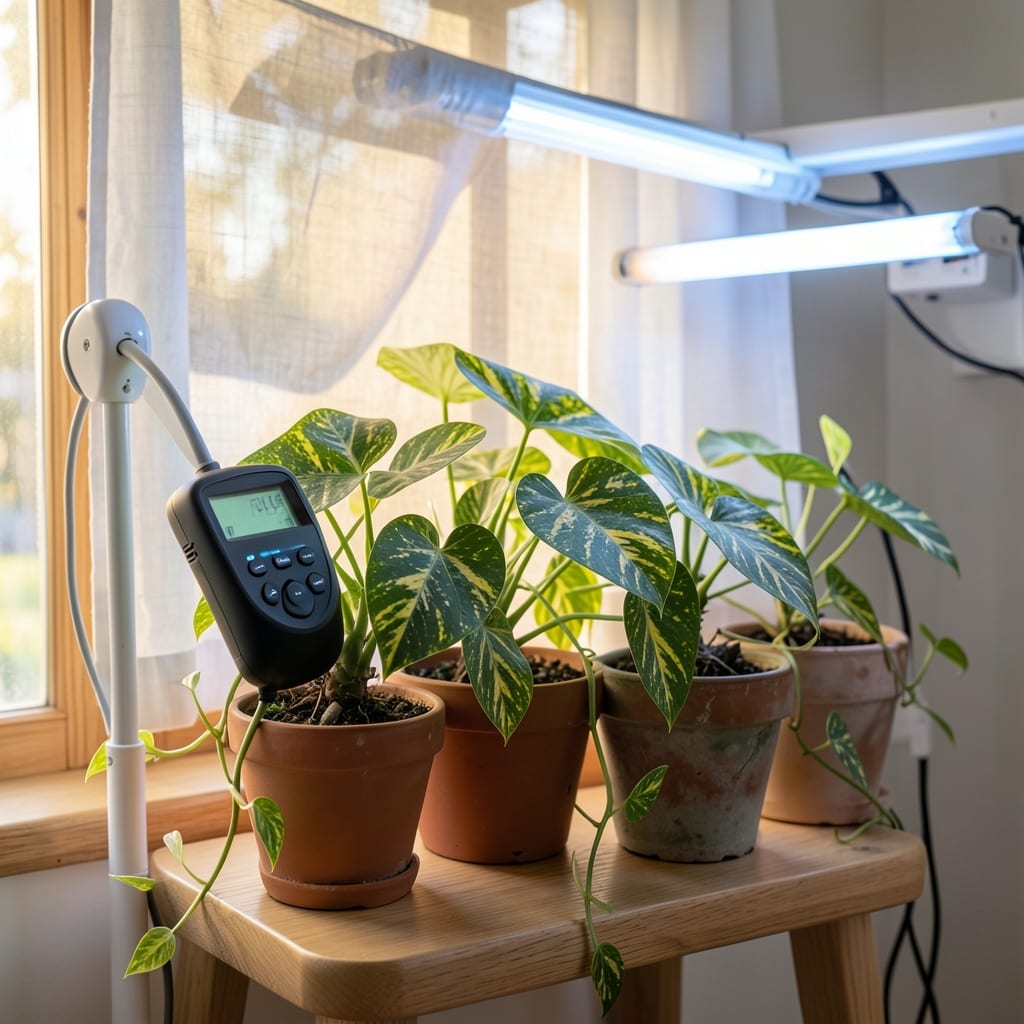
Pro tip: Use a light meter or phone app (like "Light Meter") to check lux levels. Aim for 1,500-2,500 lux during active growth phases to prevent etiolation (stretched stems).
If your plant starts leaning toward a window, it’s begging for more even light. Rotate it quarter-turns weekly to encourage balanced growth. Consistency is key—sudden light changes can shock the plant, causing leaf drop.
🌿
Signs your chinese money plant has too much or too little light
Your Chinese Money Plant speaks volumes through its leaves—pay attention to these visual cues to diagnose light issues. Yellowing leaves or brown tips often signal stress, while stretched stems (etiolation) mean it’s reaching for more light. These symptoms help you adjust exposure before damage becomes permanent.
If your plant’s leaves develop crispy brown edges or white patches, it’s getting too much direct sun. This often happens near south-facing windows or under harsh afternoon sunlight. Move it to a spot with filtered light or add a sheer curtain to diffuse intensity.
On the flip side, pale or yellowing leaves and long, leggy stems indicate insufficient light. This is common in low-light offices or corners far from windows. Rotate the pot to expose all sides evenly, or supplement with a 12-hour grow light.
Seasonal changes also affect light needs. In winter, natural light drops below 4 hours/day, causing slowed growth. Use a LED grow bulb (6,500K color temperature) to mimic sunlight and prevent dormancy. In summer, afternoon sun can overpower your plant—watch for bleached or sunburnt spots.
🌿
🌱 Light Issues & Fixes
- Brown crispy edges
- White/yellow patches
- Bleached or sunburnt spots
🔹 Move to indirect light or add sheer curtain
- Pale yellow leaves
- Leggy, stretched stems
- Slow growth
🔹 Rotate pot weekly or add grow light
For outdoor plants, watch for leaf burn after just 2-3 hours of direct sun. If your plant is in a shade garden, pale foliage means it’s not getting enough light—relocate it to a dappled sunlight spot for 4-6 hours/day.
Pro tip: Use your hand as a light guide. If your plant’s leaves are smaller than your palm, it needs more light. If they’re larger and thin, it’s getting too much. Adjust gradually—sudden light changes can cause leaf drop or shock.
🌱