Plants
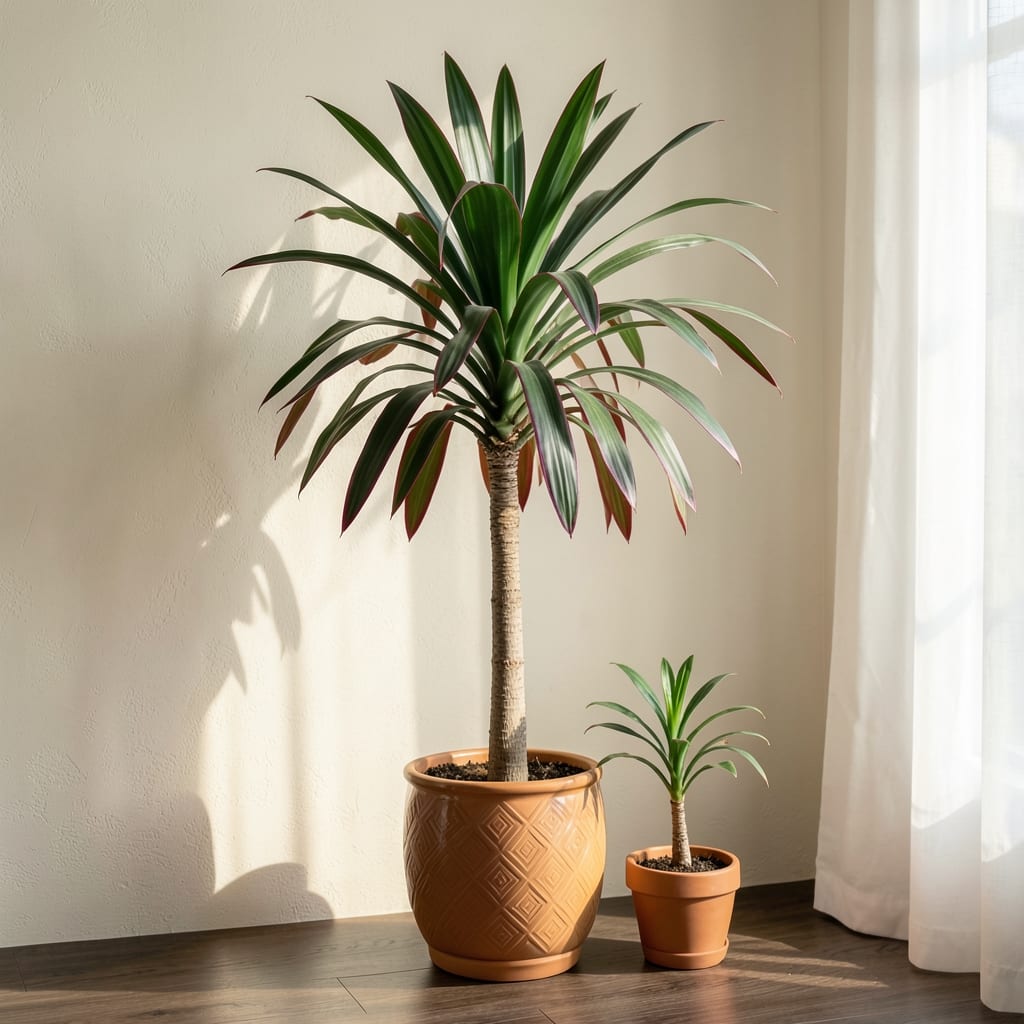
If you're dreaming of adding a dracaena 🌿 to your space but wondering how tall these tropical beauties can actually grow, you're in the right place. Some varieties stretch toward the sky like living skyscrapers, while others stay compact enough for cozy corners—making the difference between a bold statement plant and a manageable houseplant.
The answer depends on the variety you choose, as well as whether you're growing it indoors or outdoors. For example, Dracaena marginata can reach 15-20 feet in ideal outdoor conditions, while Dracaena fragrans typically stays between 5-10 feet indoors. This variation means you can find the perfect fit for everything from a small apartment to a spacious garden.
What you might not realize is that factors like light exposure, pot size, and pruning habits play a huge role in how tall your dracaena becomes. With the right care, you can control its height—or let it grow wild. Let's explore the key differences between indoor and outdoor growth, plus tips to keep your plant at your ideal height.
Whether you're a plant parent with limited space or a gardener with room to spare, understanding these growth patterns will help you make the best choice. Ready to discover how to maximize—or minimize—your dracaena's height?

Dracaena variety height guide: from compact to towering giants
When choosing a dracaena, size matters—especially if you're balancing space constraints with your desire for lush foliage. The Dracaena marginata, also called the dragon tree, is the tallest variety, often reaching 15-20 feet outdoors in tropical climates. Its slender trunk and arching leaves make it a dramatic focal point, but it needs room to stretch its legs—literally.
On the smaller end, Dracaena fragrans 'Massangeana' (also called the corn plant) typically stays between 5-10 feet indoors, making it ideal for living rooms or offices. Its broad, variegated leaves add a tropical vibe without dominating the space. If you're working with limited square footage, this variety is your best bet.
For something in between, Dracaena deremensis 'Warneckii' (the Janet Craig) grows 3-6 feet tall indoors, perfect for bedrooms or hallways. Its dense foliage and compact growth habit make it a versatile choice for smaller homes or apartments.
Outdoor growth potential varies widely—Dracaena sanderiana (the lucky bamboo, though not a true bamboo) stays under 3 feet but thrives in water gardens. Meanwhile, Dracaena cinnabari, native to Socotra Island, can reach 15-20 feet outdoors in warm, arid climates, resembling a miniature palm tree.
If you're eyeing a dracaena for your home, consider the Dracaena compacta, which tops out at 3-5 feet indoors. Its bushy, compact form makes it perfect for shelves or desks. Meanwhile, Dracaena surculosa (the spider plant dracaena) grows in a unique, multi-stemmed habit, reaching 4-6 feet and adding architectural interest without overwhelming a room.
For outdoor gardens in USDA zones 10-12, Dracaena arborea (the tree dracaena) can grow up to 30 feet in ideal conditions, resembling a small palm tree. Its thick trunk and broad canopy make it a stunning landscape specimen, but it requires ample space and protection from cold snaps.
Remember, these heights are mature sizes—it can take 5-10 years for a dracaena to reach its full potential. With proper care, including bright indirect light, well-draining soil, and occasional pruning, you can encourage healthier, more controlled growth. Whether you're after a towering giant or a compact companion, there's a dracaena variety to fit your vision.
Pro tip: If you're unsure about long-term height, start with a smaller variety like Dracaena deremensis 'Janet Craig'—it’s forgiving, adaptable, and won’t outgrow your space overnight. Happy planting! 🌱
Indoor vs. outdoor growth limits: why your dracaena’s height depends on location
Your dracaena’s height isn’t set in stone—it’s heavily influenced by whether you grow it indoors or outdoors. In outdoor conditions, these tropical plants often grow 30–50% taller than their indoor counterparts due to better light, humidity, and space. For example, a Dracaena marginata might reach 15–20 feet outdoors but only 6–10 feet indoors. Understanding these differences helps you set realistic expectations and plan your space accordingly.
The key difference lies in light exposure—outdoor dracaenas bask in full sun or partial shade, while indoor plants often struggle with low-light conditions. Even a north-facing window might not provide enough light for optimal growth. Without sufficient light, your plant will grow slowly and leggy, reaching for sunlight rather than developing a sturdy, bushy form. This is why outdoor dracaenas often have thicker stems and denser foliage.
Another critical factor is pot size. Indoor dracaenas are often root-bound in small containers, which restricts their growth. If you want your indoor dracaena to reach its full potential, consider upgrading to a larger pot every 1–2 years or repotting into the ground if you’re in a warm climate. A 5-gallon pot can support a 6-foot-tall plant, while a 10-gallon pot might accommodate a 10-foot giant over time.
Indoor vs. Outdoor Growth: Pros and Cons
- Pros: Compact size, easier to control height with pruning
- Cons: Slower growth, leggy stems, limited height potential
- Pros: Faster growth, taller stature, denser foliage
- Cons: Requires more space, vulnerable to pests/disease
- Indoor: 2–4 hours indirect light daily
- Outdoor: 6+ hours sunlight or partial shade
- Indoor: Often dry air from HVAC, needs misting
- Outdoor: Natural humidity boosts growth
If you’re growing your dracaena outdoors, your climate zone plays a huge role in its height. In USDA Zones 10–12, where temperatures stay warm year-round, dracaenas can grow uninterrupted and reach their maximum height. However, in cooler zones (6–9), they may enter dormancy in winter, slowing growth. To encourage taller growth, plant your dracaena in a sheltered spot where it can enjoy winter protection from frost.
For apartment dwellers or those with limited space, don’t worry—you can still grow a healthy dracaena indoors. The secret is maximizing light with grow lights if natural light is insufficient. A full-spectrum LED grow light for 12–14 hours daily can mimic outdoor conditions and help your plant grow 2–3 times taller than it would in low light. Pair this with regular pruning to maintain a manageable size while encouraging bushier growth.
No matter where you grow your dracaena, remember that pruning and training are your best tools for controlling height. With the right approach, you can keep your plant at 4 feet for a small space or let it soar to 20 feet in a garden setting. The choice is yours—just match your care to your goals! 🌿