
Trees
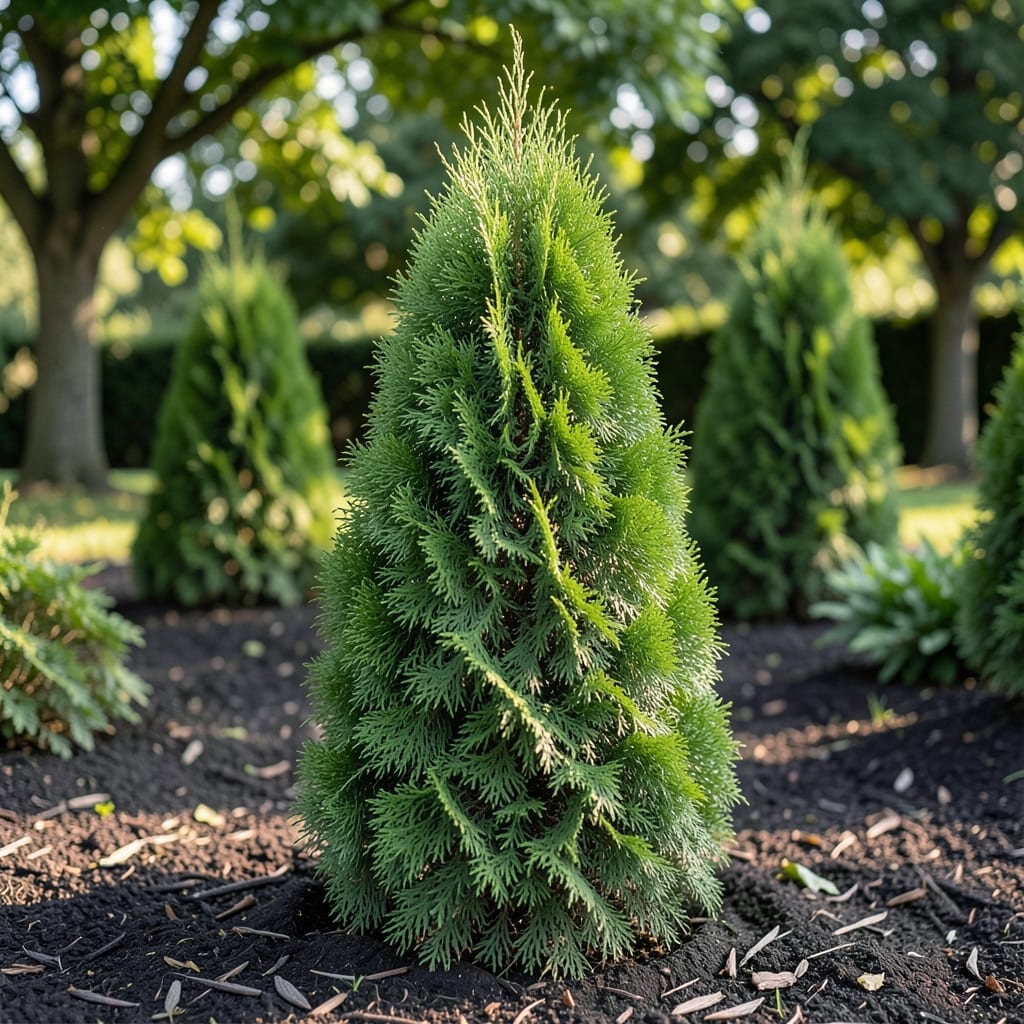
Emerald Green Arborvitae height by year: exact growth rates for full maturity
Understanding the Emerald Green Arborvitae growth rate is key to planning your landscape—this evergreen grows 2-3 feet per year in ideal conditions, reaching its mature height of 12-20 feet within 10-15 years. The first three years are critical for establishing root depth, while years 4-10 see rapid vertical growth. Regional climate plays a role: cooler zones (USDA 5-6) may see slightly slower growth, while warmer zones (7-9) can accelerate height gains by 10-20%.
For precise planning, consider these growth milestones: your 1-year-old sapling will be 2-3 feet tall, while a 5-year-old plant typically stands 8-10 feet. The 10-year mark is when most reach their maximum height potential, though some may continue growing slowly into their teens. Proper spacing (3-5 feet apart) at planting ensures they have room to develop their signature pyramidal shape without crowding neighbors.
Here’s how to visualize growth over time—this summary table breaks down height expectations by year, including adjustments for pruning impacts and regional climate variations:
| Age (Years) | Height Range (Feet) | Growth Rate (Feet/Year) | Pruning Impact | Climate Note |
|---|---|---|---|---|
| 1 | 2-3 ft | 2-3 ft | Minimal | Establishment phase |
| 3 | 6-8 ft | 2-3 ft/year | Shape early | Warmer zones grow faster |
| 5 | 8-12 ft | 2-3 ft/year | Prune to maintain shape | Cooler zones may slow |
| 10 | 12-18 ft | 1-2 ft/year | Regular pruning needed | Peak growth phase |
| 15+ | 15-20 ft | 0.5-1 ft/year | Minimal growth | Mature height reached |
If you’re planting near power lines or structures, plan for height control from year 3 onward. The Emerald Green’s natural growth rate makes it ideal for privacy screens or windbreaks, but without pruning, it can easily outgrow its intended space. For example, a 10-foot-tall plant at year 5 will need 12-15 feet of clearance above by year 10 if left unpruned. This is why many gardeners start light pruning in year 3 to encourage bushier growth and manage height.
Your local climate zone directly affects growth speed. In USDA Zone 7 or warmer, expect 10-20% faster growth compared to Zone 5 or cooler, where growth may slow in winter. For instance, a Zone 7 plant might reach 15 feet in 8 years, while a Zone 5 plant could take 10-12 years to hit the same height. Adjust your spacing and pruning schedule accordingly—warmer climates may require more aggressive pruning to prevent overgrowth.
One common mistake is underestimating the base width. While the Emerald Green Arborvitae is narrow (typically 3-5 feet wide at maturity), its root system spreads widely. Planting too close to sidewalks or driveways can lead to root competition with nearby plants. Always allow at least 5 feet of clearance on all sides to avoid future crowding issues. This spacing also improves air circulation, reducing the risk of fungal diseases like canker or blight.
For urban landscapes, consider container growing if space is limited. While potted Emerald Green Arborvitae will grow 30-50% slower than in-ground plants, they’re ideal for patios or balconies. Use a large container (20+ gallons) with drainage holes and repot every 2-3 years to accommodate root growth. Container plants typically max out at 8-12 feet tall unless regularly pruned.
To maximize growth, focus on three key care factors: well-draining soil, consistent moisture, and balanced fertilization. Amend heavy clay soil with compost or sand to prevent root rot, and mulch around the base to retain moisture. A 2-inch layer of mulch also suppresses weeds and regulates soil temperature. Fertilize in early spring with a 10-10-10 balanced formula to support steady growth without overstimulating foliage.
If you’re using Emerald Green Arborvitae as a hedge, space plants 3-4 feet apart for a dense, uniform screen. In this configuration, they’ll fill in by year 5, creating a privacy barrier that
Emerald Green Arborvitae vs. other arborvitae varieties: height Comparison & growth habits
When comparing the Emerald Green Arborvitae to other popular arborvitae varieties, you’ll notice distinct differences in height, width, and growth rates. While Emerald Green is a medium-sized evergreen, some cultivars tower over it, while others stay compact. Understanding these differences helps you choose the perfect fit for your landscape design.
Emerald Green typically reaches 12–20 feet tall at maturity, with a 3–5-foot spread. Its upright, columnar shape makes it ideal for narrow spaces like privacy screens or foundation plantings. However, if you need a taller hedge or windbreak, other varieties may be better suited.
Visual Comparison of Emerald Green Arborvitae vs. Other Varieties:
If you’re working with limited space, the Leap Year Arborvitae is a great alternative to Emerald Green, offering similar compact growth while requiring less maintenance. On the other hand, the Green Giant Arborvitae grows twice as tall and is perfect for large properties needing a quick privacy solution.
For those who love the holiday charm of red berries, the American Holly Arborvitae is a stunning choice—though it grows slower and wider than Emerald Green. If you’re looking for a low-maintenance, small-scale option, the Dwarf Emerald Arborvitae stays under 5 feet tall and thrives in containers.
When selecting an arborvitae, consider not just height and width, but also your climate zone and sunlight exposure. Emerald Green performs best in USDA Zones 3–8 with full sun to partial shade, while some varieties like Green Giant tolerate hotter, drier conditions better. Always check the specific needs of your chosen variety before planting!