
Light Requirements
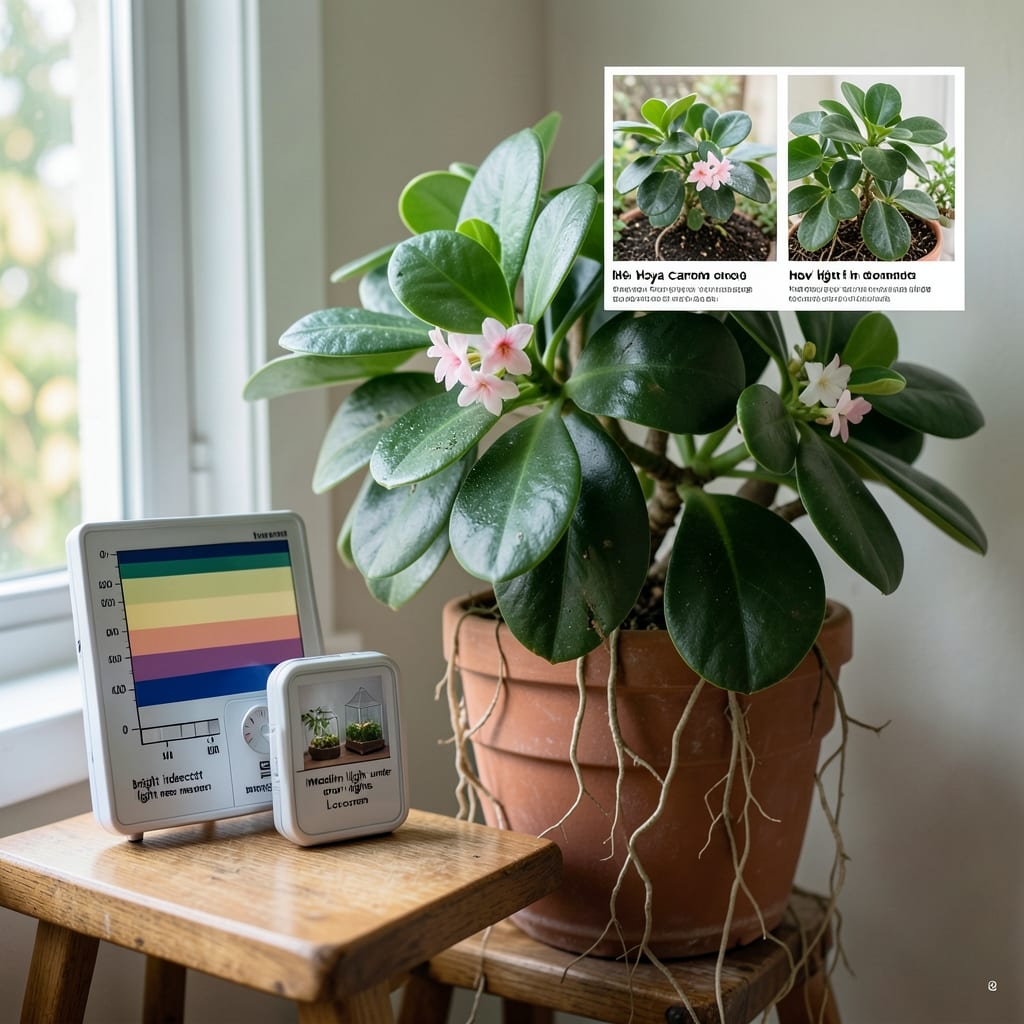
If your Hoya 🌿 plant looks sad—stretched, pale, or refusing to bloom, how much light does a Hoya plant need might be the key to fixing it. These tropical vines thrive in bright indirect light, but too little or too much can stress them out. The right balance keeps leaves glossy and encourages those stunning waxy flowers.
Most Hoyas do best with 4-6 hours of filtered sunlight daily, like an east-facing window or a few feet from a west window with sheer curtains. Too little light? You’ll see leggy growth. Too much? Watch for crispy brown edges. The key is finding that sweet spot where your plant feels just right.
Don’t worry if your space isn’t naturally bright—grow lights can save the day. I’ll show you how to test your plant’s light needs and adjust without guessing. Whether you’re dealing with dim offices or harsh midday sun, these tips will help your Hoya flourish.
Ready to transform your plant’s health? Let’s dive into the exact light conditions your Hoya craves—and how to give it just what it needs.

Hoya light requirements by variety: bright indirect vs. low-light tolerance
Not all Hoyas are created equal when it comes to light needs. While most varieties thrive in bright indirect light, some like Hoya carnosa and Hoya obovata can handle slightly lower conditions, while others like Hoya imperialis demand more intensity. The key is understanding your specific variety’s tolerance range—typically between 1,000-2,500 lux—to prevent common issues like yellowing leaves or bleached spots.
For example, Hoya kerrii (the popular "sweetheart plant") is one of the most forgiving, often thriving in moderate indirect light like a north-facing window. Meanwhile, Hoya linearis needs stronger filtered light to show off its striking variegation. Even a small misplacement can turn vibrant foliage dull or cause growth to stretch unnaturally.
Here’s how to match your Hoya’s needs to your space. Most indoor environments fall into three light categories: low light (under 1,000 lux), moderate light (1,000-2,000 lux), and bright light (2,000+ lux). Hoyas generally prefer the moderate to bright range, but some varieties can adapt to lower conditions—though they may skip blooming entirely.
| Variety | Ideal Light | Low-Light Tolerance | Signs of Stress |
|---|---|---|---|
| Hoya carnosa | Bright indirect (1,500-2,000 lux) | Moderate (can adapt to 1,000 lux) | Leggy growth, pale leaves |
| Hoya kerrii | Moderate indirect (1,000-1,500 lux) | High (tolerates 500 lux) | Slow growth, no blooms |
| Hoya obovata | Bright indirect (2,000+ lux) | Low (struggles under 1,000 lux) | Brown leaf tips, crispy edges |
| Hoya linearis | Very bright indirect (2,500 lux) | None (needs high light) | Faded variegation, weak stems |
| Hoya imperialis | Bright indirect to partial sun | Moderate (avoid deep shade) | Stunted growth, no flowers |
Real-world examples help clarify these ranges. A east-facing window typically provides moderate light (ideal for Hoya kerrii), while a south-facing window can deliver bright light (perfect for Hoya obovata but may scorch others). If your space lacks natural light, a grow light 6-12 inches above your plant can mimic these conditions—just use a full-spectrum LED for best results.
Pro tip: Rotate your Hoya quarter-turns every 2 weeks to ensure even light exposure. Uneven growth (like lopsided leaves) often signals one side is getting more light than the other. This simple habit keeps your plant balanced and healthy.
For outdoor Hoyas, partial shade (like under a tree canopy) works well in hot climates, while morning sun is ideal in cooler zones. Just avoid harsh afternoon rays, which can cause sunburn on delicate foliage. If you’re unsure about your space’s light levels, use a light meter app or the shadow test—hold a ruler near your plant and measure the shadow’s length at noon.
Remember, even the hardiest Hoyas won’t bloom without sufficient light. If your plant is healthy but not flowering, it’s likely craving more brightness. Try moving it closer to a window or supplementing with a 12-hour grow light cycle during winter months.
🌿
How to adjust light for seasonal changes and indoor vs. outdoor growth
Seasonal shifts can throw off your Hoya’s light balance. During winter months, shorter days mean weaker sunlight—your plant might stretch toward any light source, a sign of etiolation. I’ve found rotating my Hoyas quarter-turn weekly helps them grow evenly, even with limited light. Pair this with a 12-hour grow light (like a 6500K LED bulb) 12 inches above the plant to mimic natural daylight.
Summer brings intense afternoon sun, which can scorch delicate leaves. If your Hoya sits near a south-facing window, move it back 3-4 feet or use a sheer curtain to diffuse the light. I’ve seen Hoyas develop sunburn spots when left unprotected—tiny white or yellow patches that look like freckles. A quick fix? Trim the affected areas and relocate the plant to a brighter but indirect spot.
💡 Numbered Highlights: Adjusting Light Like a Pro
- 🌱 Test Light Intensity: Hold a white sheet of paper near your plant. If you can read text easily, the light is too bright. If it’s hard to see shadows, your Hoya needs more light.
- ☀️ Rotate Plants Weekly: Turn pots 90 degrees every 7 days to prevent lopsided growth from uneven light exposure.
- 🪴 Use Reflective Surfaces: Place a mirror or white shelf behind your Hoya to bounce extra light onto its leaves.
- 💡 Supplement with Grow Lights: A 10W LED bulb on a timer (6 AM–8 PM) works for low-light areas like north-facing rooms.
- 🌿 Transition Gradually: Move outdoor Hoyas inside 2 weeks before frost to avoid shock from sudden light changes.
Transitioning between indoor and outdoor environments? Do it slowly. Start with 1-2 hours of outdoor light per day, then increase by 1 hour weekly until fully acclimated. I once rushed my Hoya carnosa outside and ended up with crispy leaf edges—a painful lesson! Harden off your plant by placing it in a shady spot first, then gradually introduce more sunlight.
For outdoor Hoyas, choose a spot with dappled shade, like under a tree canopy or a perennial garden border. Avoid full sun, which can cause leaf scorch. I’ve grown Hoya obovata outdoors in USDA Zone 9 by tucking it near a fence or trellis where it gets morning sun and afternoon shade. Mulch around the base to keep roots cool and hydrated.
Pro tip: Monitor leaf color as your Hoya adjusts. Deep green leaves mean it’s happy, while purple or yellow hues signal stress. If you notice stretched stems, it’s craving more light—time to move it closer to a window or add a grow light. The goal? Keep those leaves plump and glossy, not stretched or dull.
With these adjustments, your Hoya will thrive year-round—whether it’s basking in filtered morning sun or basking under a grow light in a dim corner. The key is observation and patience, not guesswork. Your plant will thank you with vibrant foliage and stunning blooms! 🌿