
Companion Plants
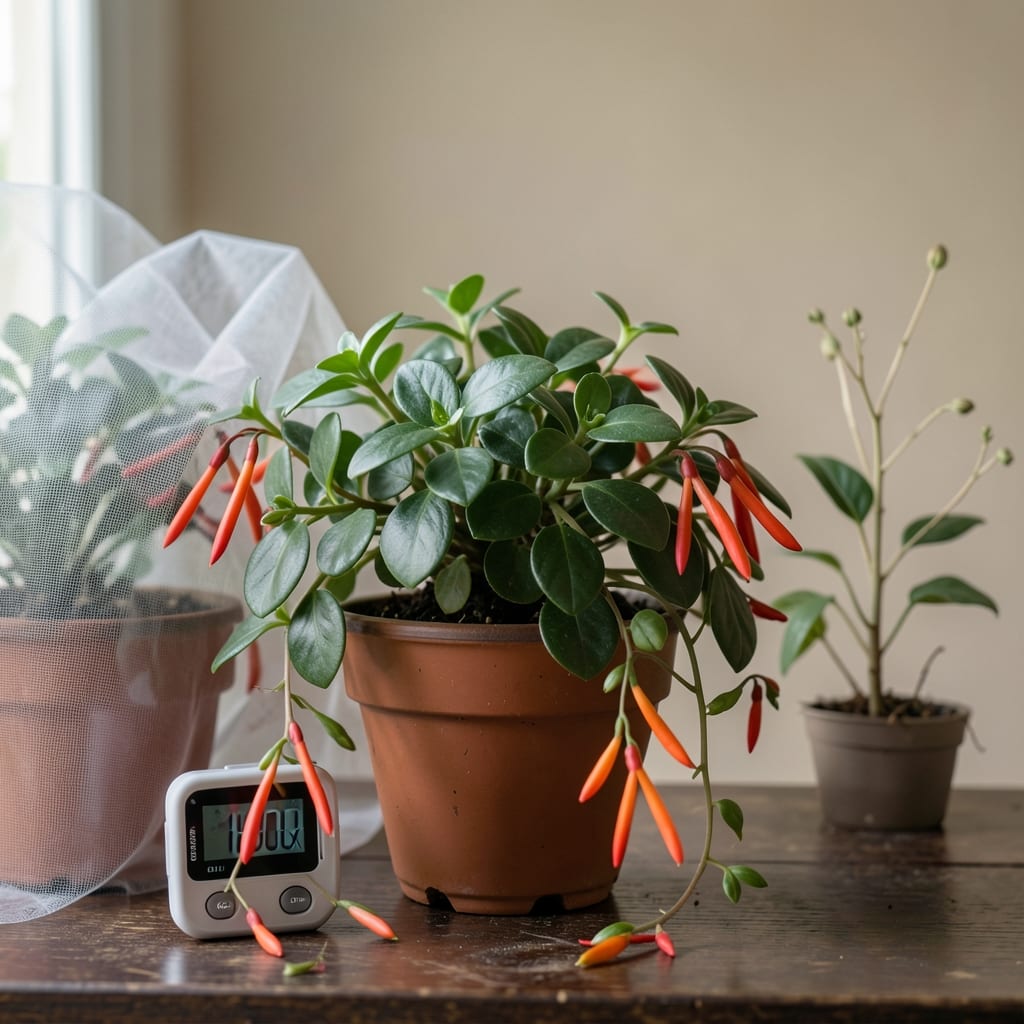
Ideal light requirements for lipstick plant growth and blooming
The lipstick plant (Aeschynanthus radicans) thrives in bright indirect sunlight, mimicking its natural tropical habitat. Too little light leads to leggy growth and sparse blooms, while too much causes leaf scorch. Aim for 4-6 hours of filtered light daily, like dappled shade under a canopy. This balance ensures vibrant foliage and those signature red tubular flowers that earned its name.
Think of your lipstick plant’s light needs like a goldilocks scenario—not too harsh, not too dim. A east-facing window is ideal, offering gentle morning sun without the intense afternoon rays. If you notice yellowing leaves or stretched stems, it’s a cry for more light. Conversely, brown leaf tips or wilting signal sunburn from direct exposure.
🌱
Seasonal adjustments are key—your lipstick plant will appreciate extra brightness in winter when natural light fades. Rotate the pot quarter-turns weekly to ensure even growth, preventing lopsided stems. For indoor setups, LED grow lights (6000K color temperature) work wonders, especially in north-facing rooms or basements.
Pro tip: Place your lipstick plant near a west-facing window in spring to encourage blooming, but move it back 3 feet by summer to avoid leaf bleaching. The goal is to replicate the filtered sunlight of its rainforest roots, where it grows under taller trees.
If you’re unsure about your space, test with a light meter app (aim for 1000-3000 foot-candles). Most smartphones can measure this—just point the camera at the plant’s leaves during peak sunlight hours. This data helps fine-tune placement for optimal photosynthesis without guesswork.
Remember, blooming is light-dependent. A well-lit lipstick plant rewards you with continuous flowers from spring to fall, while a deprived one may only produce a few sad blooms. Think of light as the fuel for those stunning red tubes—don’t skimp!
For outdoor growers, provide morning sun only in summer, using a lacy curtain to diffuse harsh afternoon rays. Even a 50% shade cloth can prevent sun damage while keeping the plant happy.
🌿
Lastly, humidity plays a role in light absorption. In dry indoor air, your lipstick plant may close its stomata (leaf pores) to conserve water, reducing photosynthesis efficiency. Pair bright indirect light with a pebble tray or humidifier to maximize growth potential.
Ideal light requirements for lipstick plant growth and blooming
Your lipstick plant (Aeschynanthus radicans) thrives in bright indirect sunlight, mimicking its natural tropical habitat. Too little light leads to leggy growth, while too much causes leaf scorch. The sweet spot is 4-6 hours of filtered light daily, like dappled shade under a canopy.
Direct afternoon sun can burn delicate leaves, especially in hot climates. Instead, position your plant near an east-facing window for gentle morning rays or use sheer curtains to diffuse harsh light. If outdoors, partial shade with morning sun exposure works best.
Here’s how to optimize lighting for vibrant blooms and lush foliage:
| Light Condition | Daily Hours | Growth Impact | Bloom Effect |
|---|---|---|---|
| Bright Indirect Light | 4-6 hours | Compact, glossy leaves | Frequent, vibrant blooms |
| Low Light | <2 hours | Leggy, sparse growth | No blooms |
| Direct Sun (Afternoon) | >3 hours | Brown leaf tips | Stunted blooms |
Seasonal adjustments are key. In winter, supplement with a grow light (12-14 hours/day) to maintain energy for spring blooming. Rotate your plant quarter-turns weekly to ensure even light exposure and prevent lopsided growth.
For outdoor cultivation in USDA Zone 6a, bring your lipstick plant indoors before first frost (October 30). Its tropical roots can’t tolerate temperatures below 50°F, so a sunny indoor spot becomes critical for survival.
Pro tip: Watch for reddish stems—a sign your plant is stretching for more light. This is your cue to move it closer to a brighter window or add a LED grow bulb for instant improvement.