
Light Requirements
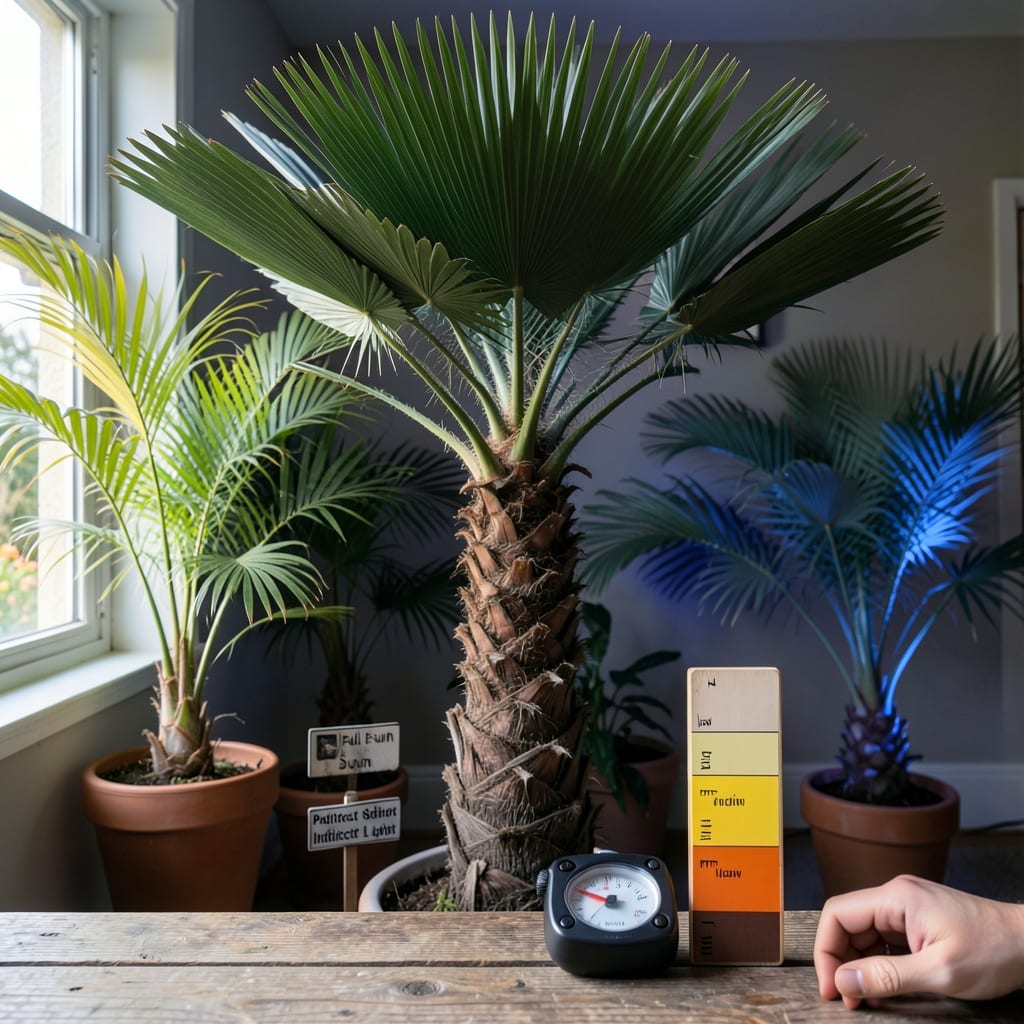
If your 🌴 palm plant looks more sad than stunning, you might need to get the light all wrong. Unlike most houseplants, palms thrive on a specific balance of sunlight—too little and they stretch pitifully, too much and they crisp at the edges. The good news? Understanding exactly how much light does a palm plant need can transform it from a struggling survivor to a lush, leafy showstopper.
Not all palms are created equal—some varieties, like the hardy Kentia, happily bask in bright indirect light, while others, such as the Majesty Palm, crave full sun to reach their towering potential. The key is knowing your palm’s personality and adjusting its spot accordingly, whether indoors near a south-facing window or outdoors in a sheltered microclimate.
Yellowing fronds, slow growth, or brown tips? These are your palm’s way of saying, “I’m not getting this right.” Let’s break down the exact light requirements for 12+ popular palm varieties, plus practical tips to fix common lighting mistakes—so you can finally give your palm the perfect glow.
Ready to turn your palm from “meh” to “magnificent”? I’ll walk you through everything you need to know, from indoor placement hacks to seasonal adjustments that keep your palm thriving year-round—no guesswork required.


Palm plant light requirements by variety: exact hours for optimal growth
Palm plants are tropical divas that crave specific light conditions—too little and they sulk with yellow fronds, too much and they scorch like a summer sidewalk. The good news? Most palms thrive with bright indirect light or filtered sunlight, but the exact needs vary wildly between varieties. For example, a Majesty Palm basking in 6-8 hours of morning sun will grow 3x faster than one stuck in a dim corner.
Indoor palms often suffer from under-lighting because home lighting is rarely strong enough. My Parlor Palm nearly died last winter until I moved it to a south-facing window with sheer curtains—now it’s thriving! Outdoor palms, meanwhile, need protection from harsh afternoon rays, especially in USDA Zones 9-11 where direct sun can burn fronds.
Here’s the golden rule: Observe your palm’s fronds. Healthy leaves should be medium green with no brown edges or pale patches. If you notice slow growth or drooping fronds, it’s time to adjust lighting—whether that means moving closer to a window or adding a grow light.
🌴
Outdoor palms like the Bismarck Palm or Date Palm need full sun exposure to thrive, but even they benefit from afternoon shade during peak summer months. In my Zone 9b garden, I use shade cloth (30-50% coverage) to protect fronds from UV damage while still allowing plenty of light.
For indoor palms, east-facing windows provide the perfect balance of morning sun without harsh afternoon rays. If your home lacks natural light, a grow light (LED or fluorescent) placed 6-12 inches above the plant can mimic sunlight. I use a 15W LED grow bulb for my Kentia Palm in the winter, and it’s made all the difference!
Pro tip: Rotate your palm quarter-turn weekly to ensure even growth. Uneven lighting causes fronds to lean toward the light source—a classic sign your plant is light-deprived on one side. This simple habit keeps your palm symmetrical and healthy.
🪴
Seasonal adjustments are key. In winter, when sunlight is weaker, move indoor palms closer to windows or supplement with grow lights. Outdoor palms in cooler climates (Zones 8-10) may need winter protection, like wrapping the trunk with burlap to prevent cold damage.
Remember: No two palms are alike
Palm plant light requirements by variety: exact hours for optimal growth
Not all palms are equal when it comes to light—some thrive in bright indirect light, while others crave full sun exposure. The Areca palm, for example, loves medium to bright indirect light (think east or north-facing windows), while the Canary Island Date Palm needs 6+ hours of direct sunlight daily to reach its full height. Getting this wrong can cause yellow fronds, slow growth, or even plant death.
Here’s the breakdown: Low-light palms (like the Kentia) tolerate 2-4 hours of indirect light, while sun-loving palms (like the Mediterranean Fan Palm) need full sun to prevent leaf scorch. The key is matching your palm’s native habitat—tropical palms prefer filtered light, while desert palms thrive in harsh sun.
| Variety | Light Needs | Ideal Hours | Notes |
|---|---|---|---|
| Areca Palm | Bright Indirect | 4-6 hrs | East/west windows; avoid harsh sun |
| Kentia Palm | Low to Medium Indirect | 2-4 hrs | North-facing windows; tolerates fluorescent light |
| Majesty Palm | Medium to Bright Indirect | 4-6 hrs | South-facing windows; rotate for even growth |
| Parlor Palm | Low Light | 1-2 hrs | Best for offices; avoids direct sun |
| Canary Island Date Palm | Full Sun | 6+ hrs | Outdoor only; drought-tolerant |
| Mediterranean Fan Palm | Full Sun | 8+ hrs | Heat-loving; needs afternoon shade in summer |
For indoor palms, place them near south-facing windows for maximum light, but avoid placing them in direct afternoon sun, which can scorch delicate fronds. If your home lacks natural light, supplement with LED grow lights (12-14 hours/day) to mimic sunlight. Outdoor palms, on the other hand, should be acclimated gradually to full sun to prevent shock.
Watch for signs of light stress: yellowing fronds often mean too much sun, while slow growth or pale leaves signal insufficient light. Adjusting your palm’s placement seasonally—moving it indoors during winter or providing shade cloth in summer—can keep it thriving year-round. The goal is balance: enough light for growth, but not so much that it burns.
Remember, palm varieties differ wildly. A Bismarck Palm, for instance, needs bright indirect light (4-6 hours), while a Pygmy Date Palm can handle partial shade (2-4 hours). Always check your specific palm’s needs before committing to a spot—your plant will thank you with lush, vibrant fronds!