
Light Requirements
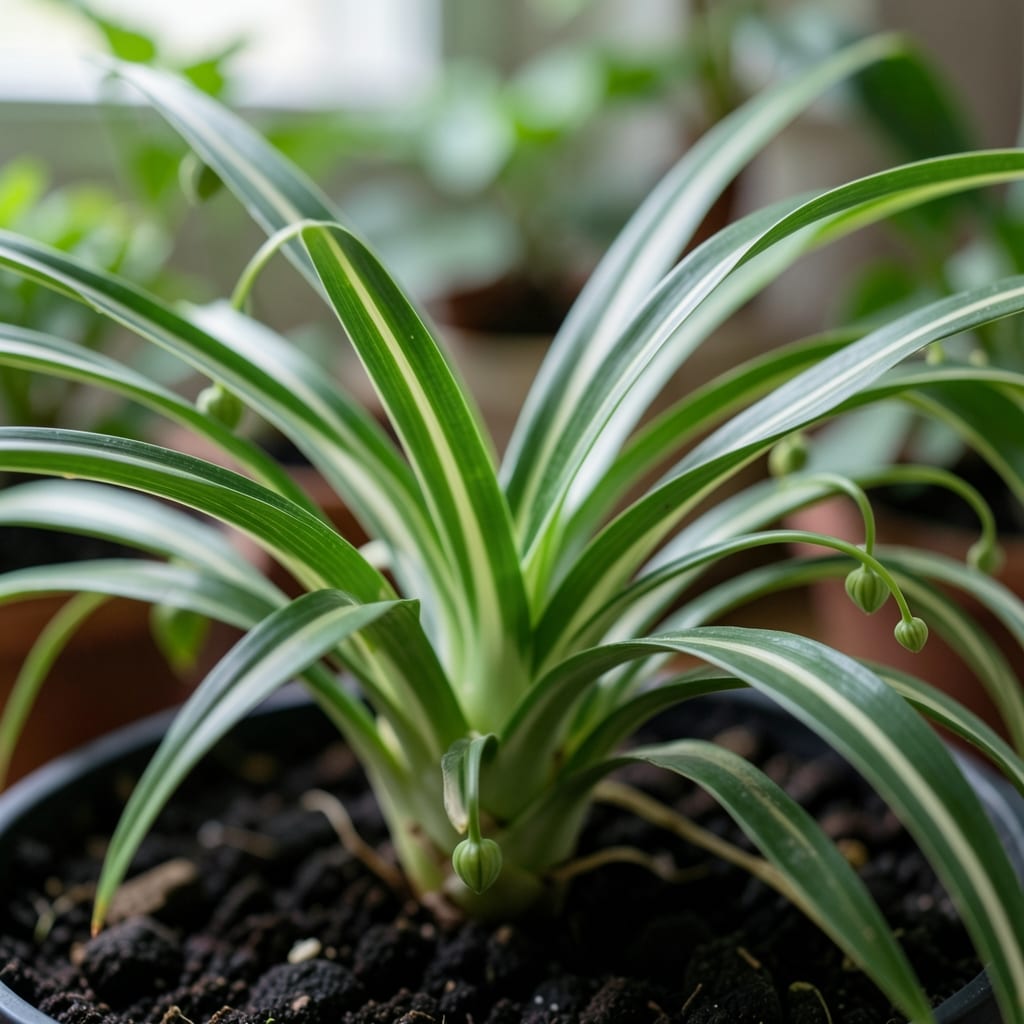
Ideal light conditions for spider plants: bright indirect sunlight explained
Spider plants thrive in bright indirect sunlight, making them perfect for most indoor spaces. Unlike sun-loving plants, they despise harsh rays that can scorch their leaves. The key is finding that sweet spot where light is abundant but filtered—think dappled shade under a tree, but indoors. This balance prevents common issues like brown tips or leggy growth, which often signal light stress.
For optimal growth, place your spider plant within 3-5 feet of an east-facing window. East windows provide gentle morning light that mimics their natural habitat in South Africa. If you only have a south- or west-facing window, position the plant 10-15 feet away to avoid direct afternoon sun, which can cause leaf burn. North-facing windows work too, but you may need supplemental lighting in darker months.
A 4-6 hour daily light exposure is ideal for maintaining vibrant green leaves. This duration ensures photosynthesis happens efficiently without overheating the plant. In rooms with artificial lighting, keep the spider plant within 6-8 feet of a well-lit area, like near a desk lamp or living room lighting. Just avoid dim corners or spaces with only fluorescent bulbs, which lack the full spectrum of light these plants need.
| Light Condition | Ideal Placement | Daily Light Hours | Signs of Correct Light |
|---|---|---|---|
| Bright Indirect | 3-5 ft from east window 10-15 ft from west window |
4-6 hours | Deep green leaves Compact growth Frequent "spiderettes" |
| Low Light | North window or 8+ ft from any window | 2-3 hours | Pale yellow leaves Leggy stems Slow growth |
| Direct Sunlight | South/west window without filter | >6 hours direct | Brown leaf tips White/yellow patches Crispy edges |
If your home lacks natural light, rotate your spider plant quarter-turn weekly to ensure even growth. Plants naturally lean toward light sources, so consistent rotation prevents lopsided development. For offices or bathrooms with minimal windows, consider placing the pot on a plant stand near a bright area to maximize light exposure. Even reflected light from nearby windows can help maintain healthier foliage.
Seasonal changes also affect light needs. During winter months, days are shorter, and indoor light may feel weaker. Move your spider plant closer to the brightest window or supplement with a grow light for 4-6 hours daily. In summer, watch for increased sunlight intensity—adjust placement if you notice leaf scorch. A sheer curtain can diffuse harsh rays while still allowing plenty of light through.
Pro tip: Observe your spider plant’s growth patterns to fine-tune its location. Healthy plants produce small white flowers followed by "spiderettes" (baby plants), which indicate thriving conditions. If you stop seeing these, it’s time to reassess the light situation. Even small adjustments, like moving a few inches closer to a window, can make a noticeable difference in just a few weeks.
For renters or those with limited window options, LED grow lights are a game-changer. A 10-15 watt bulb placed 6-12 inches above the plant for 6 hours daily mimics ideal sunlight. Just ensure the light isn’t too close—3 inches or less can cause heat stress. Test different distances to find the perfect balance for your specific setup.
Remember, spider plants are forgiving compared to many houseplants. While they prefer bright indirect light, they can tolerate moderate low light for short periods without permanent damage. The key is consistency—avoid drastic changes in light exposure, which can shock the plant. With the right light conditions, your spider plant will reward you with vibrant green stripes and those adorable hanging babies.
Ideal light conditions for spider plants: bright indirect sunlight explained
Your spider plant thrives in bright indirect light, which mimics its natural understory habitat. Think of it as the perfect balance between sunny and shady—too little light causes leggy growth, while too much leads to brown leaf tips. The ideal spot is near an east-facing window, where morning sun gently brightens the room without harsh afternoon rays.
For west-facing windows, position your plant 10–15 feet away to avoid direct sunlight, which can scorch delicate leaves. South-facing windows are trickier—place your spider plant 3–5 feet back from the glass to diffuse the intensity. Even a north-facing window works, though growth may slow slightly due to lower light levels.
If your home lacks natural light, aim for 4–6 hours of bright indirect light daily. Rotate your plant quarter-turn weekly to ensure even growth—this prevents one side from stretching toward the light source. A simple trick: Place your spider plant near a sheer curtain to soften light further if needed.
Pro tip: Observe your plant’s leaf color as a guide. Vibrant green leaves signal happy conditions, while pale or yellowing foliage means it’s time to move it closer to a light source. Conversely, crispy edges or white patches on leaves are clear signs of too much direct sun.
For office environments with fluorescent lighting, supplement with a grow light for 12–14 hours daily. LED grow lights are energy-efficient and mimic natural sunlight perfectly. Position the light 6–12 inches above the plant to avoid overheating.
Remember, spider plants are adaptable but thrive best with consistency. Adjust their position gradually—sudden changes can stress the plant. With the right light balance, you’ll enjoy thicker leaves and more frequent spiderettes (those adorable baby plants!).