
How To
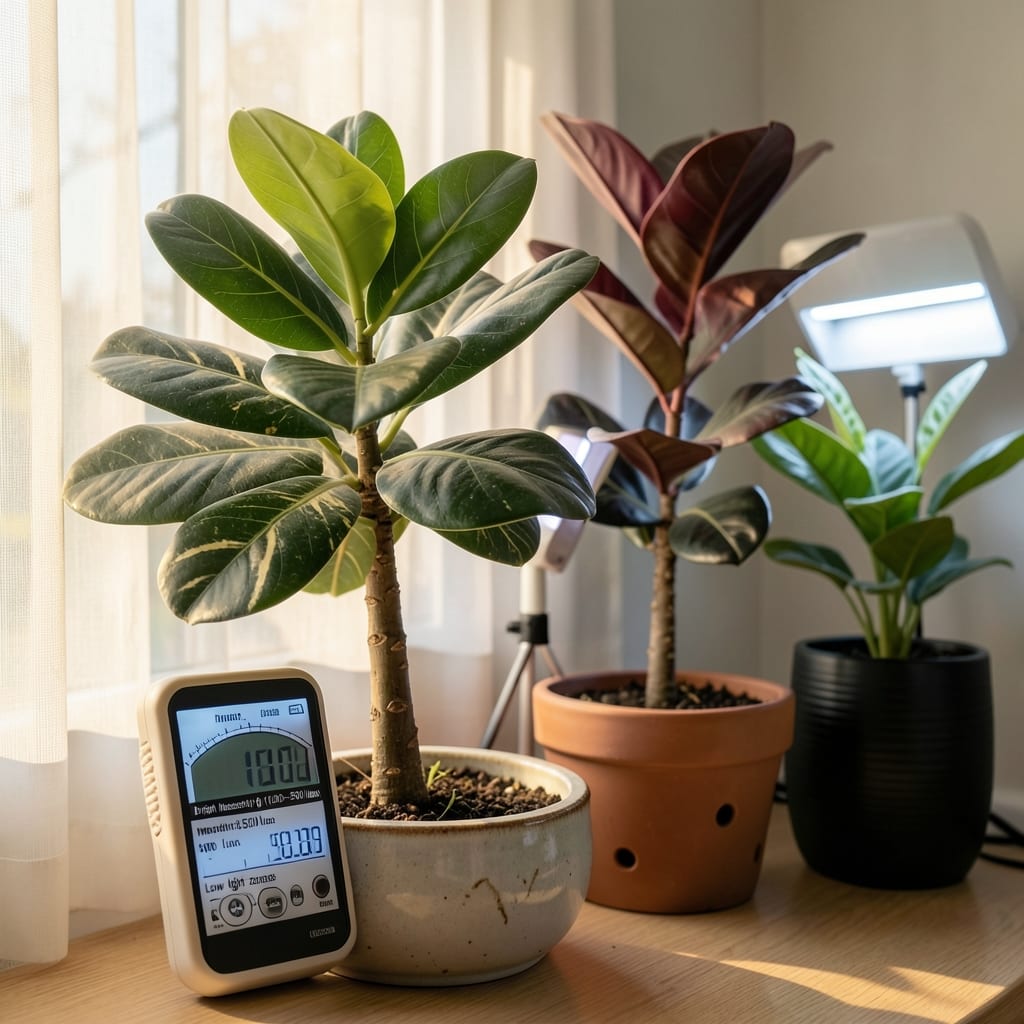
Figuring out how much light for rubber plant success can feel like solving a puzzle—too little and it stretches pitifully, too much and it gets sunburned. Your glossy 🌿 Rubber Plant thrives in the Goldilocks zone of brightness, and nailing this one factor makes all the difference for that bold, healthy foliage you adore.
I’ve watched countless plants struggle because their light needs were misunderstood, and the rubber plant is no exception. The good news? It’s one of the most forgiving houseplants out there, but that doesn’t mean you can toss it in any corner and expect miracles. Whether you’re dealing with a dim office or a sun-drenched living room, I’ll show you exactly where to place it for optimal growth—no guesswork required.
We’ll break down the ideal light spectrum, spot the telltale signs of light stress, and even tackle what to do when your space falls short of natural brightness. By the end, you’ll know whether that east-facing window is perfect or if you need to supplement with artificial light to keep your plant thriving year-round.
Ready to transform your rubber plant from struggling to stunning? Let’s dive into the light requirements that’ll have it reaching for the sky—literally—in no time.

Rubber plant light requirements: the ideal brightness spectrum for healthy growth
Your rubber plant (Ficus elastica) thrives in what I call the "Goldilocks zone" of light—not too dim, not too harsh. The key is bright, indirect sunlight, which mimics its natural understory habitat in tropical forests. This means positioning it where it gets filtered light, like near an east or north-facing window where the sun’s rays are gentler. Too little light, and your plant will stretch awkwardly toward any available source, a condition called etiolation. Too much direct sun, and you’ll see crispy brown patches on those gorgeous leaves.
To visualize the perfect setup, think of your rubber plant’s light needs on a spectrum: low light (10-20% brightness) is tolerable but will stunt growth, medium light (30-40%) is ideal for most homes, and high light (60%+) with direct sun risks damage. Most indoor spaces fall into that medium-light sweet spot with the right window placement. The goal is to provide 4-6 hours of bright, diffused light daily, which keeps leaves vibrant and compact.
Now, let’s talk windows—because not all are created equal. An east-facing window offers the perfect balance: morning sun that’s bright but not scorching. A north-facing window provides softer, consistent light all day, though it may be dimmer. South-facing windows can be tricky—they deliver intense afternoon sun, which can burn leaves unless you use a sheer curtain to diffuse the light. West-facing windows are the riskiest, as the late-afternoon sun is often too harsh. If you have no other choice, place your plant 6+ feet away from a west window to dilute the intensity.
Seasonal changes can throw off your rubber plant’s light balance, especially if you’re relying on natural light. During winter months, days are shorter and sunlight is weaker, so your plant may need a supplement like a grow light. In summer, the sun’s angle shifts, and what was once perfect morning light from an east window might become too intense by midday. I recommend rotating your plant quarter-turns every few weeks to ensure even growth and prevent it from leaning toward the light source. This simple habit keeps your rubber plant symmetrical and thriving.
If you’re still unsure about your space’s light conditions, try this quick test: Hold a piece of white paper near your plant’s spot for a few hours. If the paper shows visible shadows but no harsh glare, it’s likely the right brightness. If it’s too dark, your rubber plant will start sending you signals—like yellowing leaves or elongated stems—that it’s time to adjust. The beauty of rubber plants is their adaptability, but they still need that bright indirect light to truly shine.
Pro tip: Grouping your rubber plant with other low-to-medium light plants like pothos or snake plants creates a microclimate that can help regulate light exposure. These plants act as natural light diffusers, reducing the risk of harsh spots on your rubber plant’s leaves. Plus, it makes your space look intentionally designed—because it is!
Let’s address a common misconception: many people think rubber plants need direct sunlight to thrive, but that’s a fast track to crispy leaves. In their native habitat, these plants grow under the canopy of larger trees, where light is dappled and indirect. Recreating that environment indoors is the secret to keeping your rubber plant’s leaves glossy and vibrant for years. If you’ve ever seen a rubber plant with leaves that look like they’ve been sunburned, it’s almost always a sign of too much direct light.
One final thought: rotating your plant isn’t just about aesthetics—it’s a light management strategy. By turning it regularly, you ensure all sides get equal exposure, preventing the plant from growing lopsided. Aim for a slow rotation every 2-4 weeks, and you’ll maintain that perfect, balanced shape. Your rubber plant will reward you with bold, healthy foliage that’s the envy of every plant lover.
Ready to put this into action? Start by assessing your space’s light conditions today—your rubber plant’s future growth depends on it! 🌿
Rubber plant light requirements: the ideal brightness spectrum for healthy growth
Your rubber plant (Ficus elastica) thrives in bright indirect light, but it’s surprisingly adaptable—making it perfect for beginners. The key is finding that sweet spot where it gets enough light to fuel growth without scorching its leaves. I’ve learned that most indoor spaces can accommodate this plant, but the placement makes all the difference.
Think of your rubber plant’s light needs as a spectrum: low light (barely enough to survive), medium light (ideal for most homes), and high light (where it risks sunburn). The goal is to position it where it gets 4-6 hours of bright, filtered sunlight daily, like what you’d find near an east or north-facing window.
Seasonal changes can throw off your rubber plant’s light balance. During winter months, when sunlight is weaker, move it closer to the window (but never in direct sun). In summer, if you notice leaves getting too warm, use a sheer curtain to diffuse harsh afternoon rays. I’ve found that rotating the plant every few months ensures even growth—those glossy leaves deserve to shine on all sides!
Pro tip: If your rubber plant starts developing long, leggy stems, it’s a clear sign it’s reaching for more light. This happens when the plant stretches toward the nearest light source, creating weak, spindly growth. The fix? Move it to a brighter spot immediately or supplement with a grow light. Trust me, your plant will thank you with thicker, fuller foliage in just a few weeks.
For those with south-facing windows, be extra cautious—direct sunlight can cause leaf burn (those unsightly brown patches). If you love the idea of a sunlit spot but worry about damage, place your rubber plant 6+ feet away from the glass or use a translucent screen to filter the light. Your plant will reward you with vibrant, healthy leaves that keep their signature sheen.
Remember, every home’s light conditions are unique. If you’re unsure whether your space qualifies as "bright indirect," do this quick test: Hold a sheet of white paper near your plant’s usual spot. If the paper is well-lit but you don’t see harsh shadows, you’ve found the perfect rubber plant light zone! 🌿