
Light Requirements
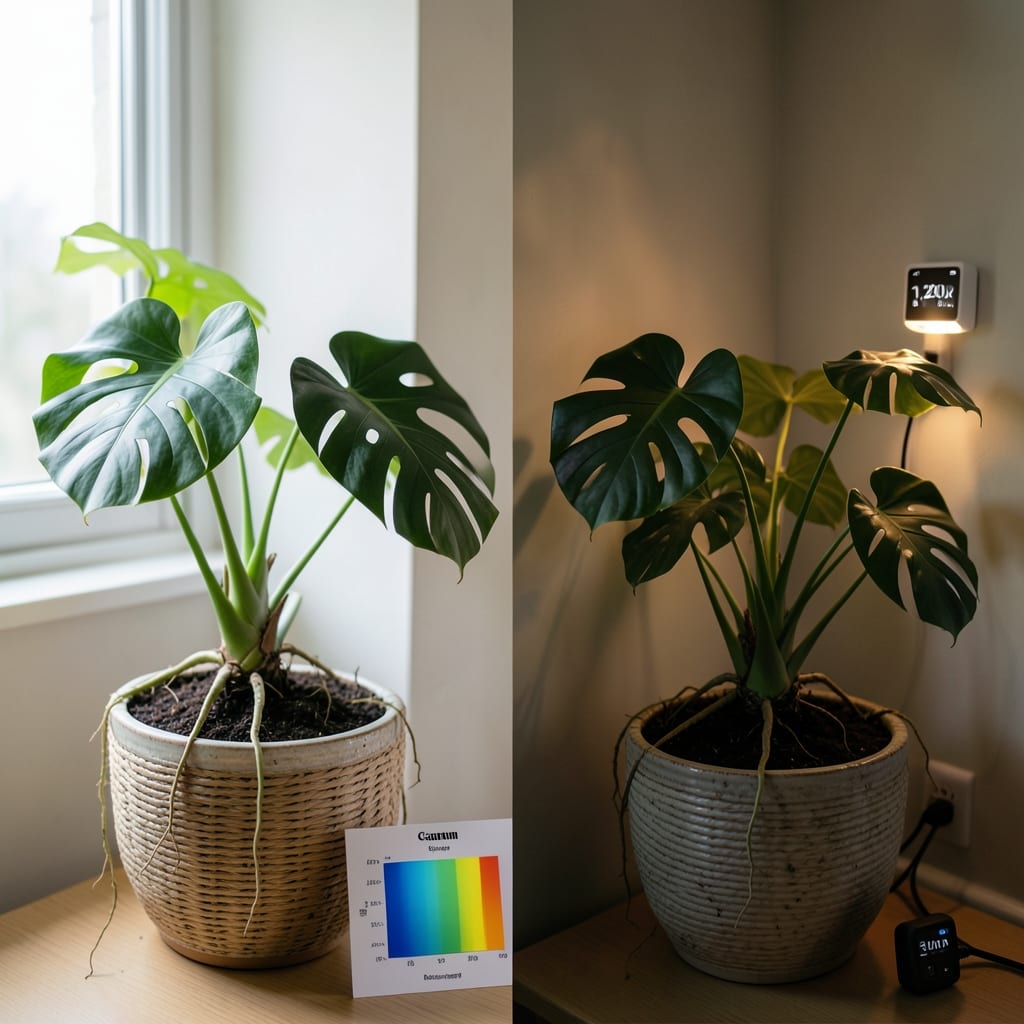
If your Swiss Cheese Plant 🌿 is growing leggy or losing its signature holes, you’re probably dealing with the wrong light conditions—and it’s easier to fix than you think.
Most people assume these tropical beauties thrive in any corner, but the truth is, bright indirect light is the secret to those iconic split leaves and lush vines. Without it, your plant will stretch toward any available light source, creating weak stems and sparse foliage.
Don’t worry—even if you’ve struggled before, I’ll walk you through the exact light hours and intensity your Monstera deliciosa needs to flourish, plus how to adjust your space for perfect growth.
Ready to transform that sad, stretched plant into a vibrant, thriving statement piece? Let’s get started with the light formula that works.

Ideal light requirements for Swiss cheese plant growth (hours & intensity)
The Swiss Cheese Plant (Monstera deliciosa) thrives in bright indirect light, mimicking its natural understory habitat. This tropical beauty needs 4–6 hours of filtered light daily, but direct sun can scorch its delicate leaves. Think of it like a sunbathing teen—too much burns them, but just the right amount keeps them healthy and happy.
For juvenile plants, start with 2–4 hours of bright indirect light to avoid overwhelming their young leaves. As they mature, gradually increase exposure to 6–8 hours to encourage those iconic fenestrations (the signature holes). The key is avoiding harsh afternoon rays, which can cause brown leaf tips or crispy edges.
Seasonal adjustments are crucial. In spring and summer, your plant may need more light due to longer daylight hours, while winter’s shorter days mean you might need to supplement with grow lights. A simple trick: rotate your plant quarter-turns weekly to ensure even light exposure on all sides.
If you’re unsure about your space’s light quality, here’s a quick test: Hold your hand near the plant. If you can read a book comfortably without straining, it’s likely the right brightness. If shadows are sharp and dark, you’re dealing with too much direct light.
Swiss Cheese Plant Light Requirements
| Stage | Light Type | Hours/Day | Ideal Window | Distance from Window |
|---|---|---|---|---|
| Juvenile | Bright Indirect | 2–4 hours | East or North | 3–4 feet |
| Mature | Bright Indirect | 6–8 hours | East or West | 2–3 feet |
| Low-Light Rooms | Artificial Grow Light | 12–14 hours | N/A | 6–12 inches |
Your plant’s leaf color is a dead giveaway for its light needs. Dark green leaves with prominent veins mean it’s thriving, while pale or yellowing leaves signal low light. Conversely, bronzed or crispy edges are a cry for shade. Pro tip: If your plant starts stretching toward the light (called etiolation), it’s begging for more brightness.
For direct sun tolerance, limit exposure to morning sunlight only (before 11 AM). Afternoon sun is too intense and can cause sunburn spots that ruin the plant’s aesthetic. If you notice white or yellow patches on leaves, immediately move it to a shadier spot or add a sheer curtain to diffuse the light.
In urban apartments with limited natural light, a south-facing window can work if you place the plant 6–8 feet back from the glass. For north-facing windows, supplement with a 15W LED grow light for 4–6 hours daily. The goal is to replicate the dappled sunlight of its rainforest home.
Remember, consistency is key. Sudden changes in light can stress your plant, leading to dropped leaves or stunted growth. If you’re moving your Swiss Cheese Plant to a new spot, do it gradually over 1–2 weeks to help it adjust. Think of it like a slow-motion dance—gentle transitions yield the best results.
Now that you’ve got the light formula down, let’s tackle how to adjust your space for perfect growth—even in tricky rooms. 🌿
How to adjust light for different rooms (and fix common mistakes)
Not every home has a sun-drenched south-facing window, but that doesn’t mean your Swiss cheese plant has to suffer. The key is understanding how to adjust light conditions based on your room’s natural setup—or even supplement with artificial light when needed. Most growers overlook this step, leading to plants that either burn in direct sun or stretch pitifully toward a dim corner.
Let’s tackle the most common scenarios: low-light rooms, north-facing windows, and artificial lighting setups. I’ll also share my go-to tricks for diagnosing light issues and fixing them fast—so you can finally stop guessing and start growing.
✅ Low maintenance
✅ Less risk of burn
❌ Small leaves
❌ Weak structure
🔄 Rotate plant
✂️ Prune leggy stems
✅ Less heat stress
✅ Good for beginners
❌ Slow leaf production
❌ Pale color
💡 Supplemental light
🌱 Fertilize lightly
✅ Bold leaves
✅ Strong vines
❌ Dry air
❌ Faded leaves
💧 Increase humidity
🔄 Rotate plant
First, let’s talk about diagnosing light issues. If your plant is stretching toward the window or developing small, pale leaves, it’s begging for more light. On the flip side, crispy edges or brown spots mean it’s getting too much direct sun. My pro tip? Rotate your plant every 2-3 weeks so all sides get even light exposure—this prevents lopsided growth and ensures those iconic Swiss cheese holes appear symmetrically.
For artificial lighting, I recommend LED grow lights over fluorescent bulbs—they’re energy-efficient and mimic natural sunlight. Place them 6-12 inches above your plant and keep them on for 12-14 hours daily. Fluorescent bulbs work too, but you’ll need to position them closer (3-6 inches) and run them longer. Just remember: no light at night, as your plant needs darkness to rest.
Lastly, if you’re dealing with a north-facing window, move your plant within 2-3 feet of the glass for maximum brightness. Pair this with a reflective surface like a white wall or aluminum foil behind the pot to bounce extra light onto the leaves. With these tweaks, your Monstera deliciosa will thrive—no matter where you place it in your home.