
How To
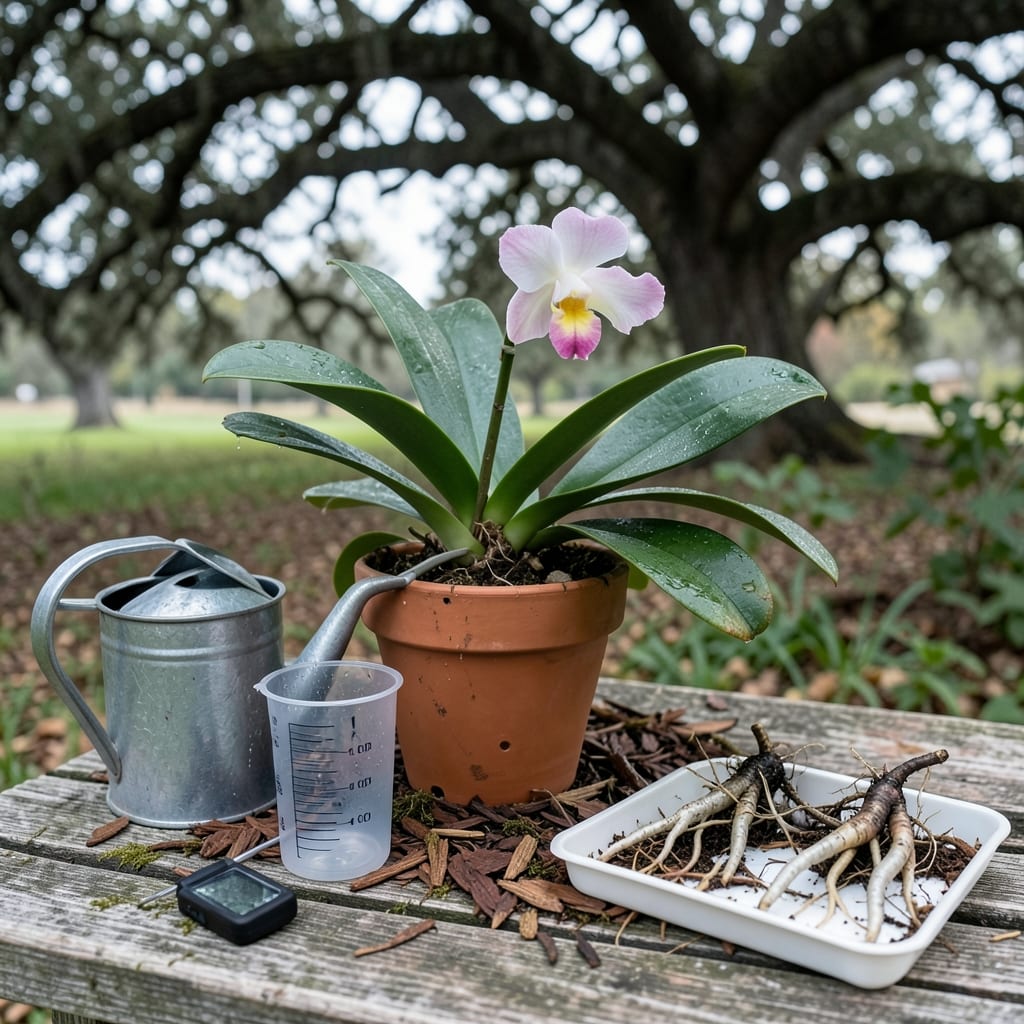
If you’ve ever wondered how much water do I need to give outdoor orchids a day, you’re not alone—getting it right can mean the difference between lush, blooming 🌸 orchids and struggling plants. These delicate beauties thrive on consistency, but their needs shift with the seasons, soil type, and even the pot they’re in.
Most outdoor orchids—especially epiphytic varieties—prefer their roots to dry out slightly between waterings, but that doesn’t mean they’re drought-tolerant. Overwatering is a silent killer, while underwatering stunts growth. I’ll break down the exact amounts (in cups!) based on your orchid’s type, climate, and even the time of year.
Think you’re watering just right? Watch for clues like yellowing leaves or mushy roots—these are your orchid’s way of saying, “Adjust your routine!” With the right approach, you’ll keep your 🌸 thriving without guesswork.
Ready to master the art of orchid hydration? Let’s dive into the science-backed watering schedule that’ll keep your plants happy year-round.
Daily water requirements for outdoor orchids by species type
Outdoor orchids aren’t one-size-fits-all when it comes to water. Their needs vary dramatically based on species type, pot size, and even climate zone. For example, Phalaenopsis orchids (moth orchids) love consistent moisture, while Cattleya orchids prefer a drier approach. Let’s break down the exact amounts you need to give your orchids daily, measured in cups for easy reference.
Most outdoor orchids thrive when their roots get a thorough soaking until water runs out the drainage holes, followed by a drying period. For a 6-inch pot, this typically means 1 cup (8 oz) of water per watering. Larger pots (8+ inches) may need 1.5 to 2 cups, while tiny orchids in 4-inch pots only require ½ to ¾ cup. Always adjust based on your orchid’s specific needs.
Here’s the key: water deeply but infrequently. Shallow watering encourages weak roots and fungal issues. I recommend using a watering can with a narrow spout to target the roots directly, avoiding soggy leaves. For epiphytic orchids (like Dendrobium), misting isn’t enough—they need their roots to absorb water, so a quick dunk in room-temperature water for 5-10 minutes can work wonders.
🌸 Outdoor Orchid Watering Guide by Species
| Orchid Type | Pot Size | Water Amount (Cups) | Frequency | Special Notes |
|---|---|---|---|---|
| Phalaenopsis | 6-inch | 1 cup | Every 2-3 days | Keep rhizomes moist; avoid soggy media. |
| Cattleya | 8-inch | 1.5 cups | Every 4-5 days | Dries out faster; water when top inch is dry. |
| Dendrobium | 5-inch | ½ cup | Every 3-4 days | Epiphytic; prefers misting + occasional dunk. |
| Oncidium | 7-inch | 1 cup | Every 3 days | Loves humidity; water in morning. |
| Paphiopedilum | 6-inch | 1 cup | Every 2 days | Terrestrial; keep soil evenly moist. |
💧 Pro Tip: Always water in the morning to prevent fungal growth.
If you’re growing orchids in hanging baskets or tree-mounted setups, the rules change slightly. Epiphytic orchids like Vandas or Cattleyas in baskets need less frequent watering—once every 5-7 days—because their roots dry out faster. Instead of pouring water, I recommend soaking the entire basket in a sink for 10-15 minutes to ensure even moisture distribution.
For terrestrial orchids (like Paphiopedilum), the goal is to mimic their natural forest floor environment. These orchids prefer consistently moist but never waterlogged soil. A good test is to stick your finger 1 inch deep into the soil—if it feels dry, it’s time to water. Aim for 1 cup every 2 days in warm weather, but reduce to every 3-4 days in cooler months.
One of the biggest mistakes I see is watering on a schedule without checking the plant. Orchids are sensitive to temperature and humidity fluctuations, so always adjust based on your environment. For instance, if you live in a hot, dry climate like Arizona, you might need to water daily, while a humid coastal area (like Oregon) could stretch waterings to every 5 days. Pay attention to your orchid’s leaves and roots—they’ll tell you what they need.
For new orchid owners, I recommend starting with a moisture meter (they’re cheap and lifesavers!). Insert it into the soil—if it reads below 30% moisture, it’s time to water. This takes the guesswork out of the equation and helps you avoid both overwatering (which causes root rot) and underwatering (which leads to shriveled pseudobulbs).
Remember, orchids are not desert plants—they need regular water, but they hate soggy conditions. The secret
Daily water requirements for outdoor orchids by species type
Not all orchids are created equal when it comes to hydration. Epiphytic orchids like Phalaenopsis and Oncidium cling to trees in nature and prefer their roots to dry out slightly between waterings, while terrestrial varieties such as Cymbidium need more consistent moisture. The key is understanding your orchid’s natural habitat and adapting your watering routine accordingly.
For most outdoor orchids, I recommend watering in the morning hours (before 10 AM) to allow excess moisture to evaporate during the day. This mimics their natural environment and prevents fungal issues. Always use room-temperature water—cold water can shock the roots, while hot water may damage delicate foliage.
Here’s a quick reference for common outdoor orchid varieties and their ideal watering amounts. Remember, these are guidelines—always adjust based on your local climate and pot size.
| Orchid Type | Water Amount (per watering) | Frequency (USDA Zone 6a) | Key Notes |
|---|---|---|---|
| Phalaenopsis (Moth Orchid) | 8–12 oz (1–1.5 cups) | Every 5–7 days (summer) / Every 10–14 days (winter) | Epiphytic; prefers slightly dry roots between waterings |
| Cattleya | 12–16 oz (1.5–2 cups) | Every 7–10 days (summer) / Every 2–3 weeks (winter) | Needs excellent drainage; reduce water in dormancy |
| Dendrobium | 10–14 oz (1.25–1.75 cups) | Every 7–10 days (growing season) / Every 3–4 weeks (dormant) | Water when pseudobulbs are firm; avoid soggy roots |
| Oncidium (Dancing Lady) | 6–10 oz (0.75–1.25 cups) | Every 5–7 days (spring/fall) / Every 10–14 days (winter) | Light feeder; prefers humidity and air circulation |
| Cymbidium (Terrestrial) | 16–20 oz (2–2.5 cups) | Every 3–5 days (summer) / Every 7–10 days (winter) | Loves moisture; ideal for ground planting in shaded areas |
Pot size plays a huge role in watering frequency. A 6-inch pot will dry out faster than an 8-inch pot, so adjust your schedule accordingly. For example, a Phalaenopsis in a 6-inch pot might need water every 5 days in summer, while the same plant in an 8-inch pot could stretch to 7 days.
Pro tip: Stick your finger about 1 inch into the potting mix. If it feels dry, it’s time to water. If it’s still moist, wait another day or two. Overwatering is the #1 killer of outdoor orchids—always err on the side of underwatering rather than drowning them.
Your orchid’s blooming stage also affects water needs. During active growth (spring/summer), increase frequency slightly, but reduce it when buds form to encourage longer-lasting blooms. And remember: rain counts as water! Adjust your schedule if your region gets frequent downpours.