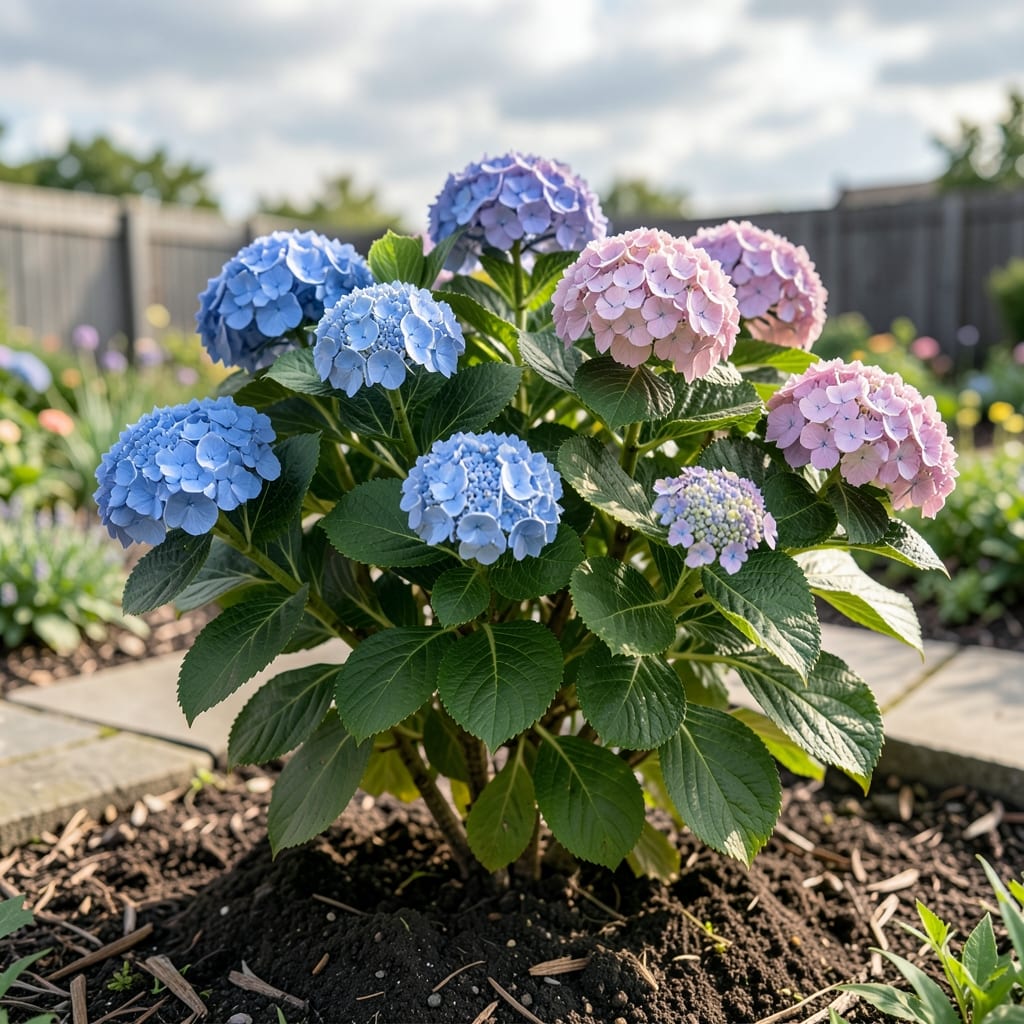
Ever wondered how tall and wide hydrangeas grow in your backyard—or if you’re stuck with a tiny, compact version? The truth is, these stunning 🌸 hydrangeas come in all sizes, from dwarf bushes to towering shrubs that reach 8 feet tall!
If you’re planning your garden layout in Zone 6a, knowing the exact dimensions of popular varieties is the key to success. Some types stay neatly under 3 feet, perfect for containers or small spaces, while others spread 6 feet wide or more, making them ideal for borders or focal points.
But size isn’t just about variety—soil, sunlight, and pruning play a huge role. A hydrangea planted in full sun might grow taller and bushier than one in partial shade, while aggressive pruning can keep even large varieties in check. Let’s break down the exact heights and spreads you can expect so you can pick the perfect fit for your space.
Whether you’re dreaming of a cascading hydrangea trellis or a low-maintenance patio shrub, understanding these growth patterns will help you create the garden of your dreams—without any surprises down the road.
📈
Hydrangea Growth Timeline
Hydrangea size guide: exact height and spread by popular varieties
Hydrangeas are one of the most versatile shrubs in your garden, but their mature size can vary dramatically depending on the variety. Some stay compact enough for container gardening, while others become towering landscape focal points. Let’s explore the exact dimensions of the most popular types so you can plan your garden layout with confidence.
If you’re in Zone 6a, where winters can be chilly, choosing the right variety isn’t just about aesthetics—it’s also about hardiness. Bigleaf hydrangeas, for example, thrive in cooler climates and often reach 3-6 feet tall, while panicle types can stretch up to 8 feet in ideal conditions. Oakleaf hydrangeas, on the other hand, are more compact and perfect for smaller gardens.
Below is a detailed comparison of 12+ hydrangea varieties, including their height, width, and growth habits. Whether you’re looking for a dwarf hydrangea for a patio or a giant variety to create drama, this guide will help you make the best choice for your space.
| Variety |
Type |
Height (ft) |
Width (ft) |
Growth Habit |
Notes |
| Bigleaf (H. macrophylla) |
Shrub |
3-6 |
3-5 |
Bushy, rounded |
Classic blooms; thrives in partial shade |
| Panicle (H. paniculata) |
Shrub |
6-8 |
4-6 |
Upright, cone-shaped |
Tolerates full sun; long bloom season |
| Oakleaf (H. quercifolia) |
Shrub |
4-6 |
4-6 |
Mounded, deciduous leaves |
Fall color; drought-tolerant |
| Smooth (H. arborescens) |
Shrub |
3-5 |
3-5 |
Round, dense |
Cold-hardy; great for borders |
| Dwarf Annabelle (H. arborescens 'Annabelle') |
Shrub |
2-3 |
2-3 |
Compact, rounded |
Perfect for containers; white blooms |
| Limelight (H. paniculata 'Limelight') |
Shrub |
6-8 |
5-6 |
Upright, vigorous |
Stunning lime-green blooms |
| Endless Summer (H. macrophylla) |
Shrub |
3-5 |
3-5 |
Bushy, repeat bloomer |
Blooms all season; disease-resistant |
| Little Lime (H. paniculata 'Little Lime') |
Shrub |
2-3 |
2-3 |
Compact, upright |
Dwarf panicle type; bright lime blooms |
| Nikko Blue (H. macrophylla) |
Shrub |
4-6 |
4-6 |
Bushy, rounded |
Classic
How to control hydrangea growth: pruning and care tips for compact or larger plants
Want to keep your hydrangea compact or encourage it to reach its full 8-foot potential? The secret lies in pruning techniques and soil conditions. Unlike many shrubs, hydrangeas respond dramatically to how and when you prune—so timing is everything!
For mophead hydrangeas, prune in late winter (just before buds swell) to shape them while preserving next year’s blooms. But if you’re growing panicle hydrangeas, wait until late spring after flowering—they bloom on new wood, so early pruning cuts off potential blooms.
Soil pH also plays a surprising role. Acidic soil (pH 5.5-6.0) produces blue flowers, while alkaline soil (pH 6.0-7.0) yields pink blooms. Adjusting pH won’t change height, but it can influence overall vigor—stronger plants grow fuller and may reach their mature size faster.
🌿 Light exposure is another game-changer. Hydrangeas in full sun (6+ hours) often grow taller and leggier, while those in partial shade (4-6 hours) stay bushier. If your plant is stretching too tall, move it to a shadier spot or trim back the longest stems by 1/3 in early spring.
⚠️ Never prune hydrangeas in fall—this removes next year’s flower buds! Also, avoid heavy pruning on oakleaf hydrangeas; they bloom on old wood and may skip flowering if cut back too aggressively.
For dwarf varieties (like Little Lime or Mini Penny), focus on light pruning to maintain their 1-3 foot height. Pinch back new growth in early summer to encourage bushier growth. Meanwhile, giant varieties (such as Annabelle) need annual pruning to control their 6-8 foot spread.
Pro tip: Mulch heavily around the base in early spring to retain moisture and encourage root growth. This helps hydrangeas reach their full potential—whether you’re aiming for a 3-foot patio bush or a 10-foot garden focal point. Just remember: patience pays off—hydrangeas typically reach 50% of their mature size by year 3.
★★★★★4.8(2 reviews)
|