
Size
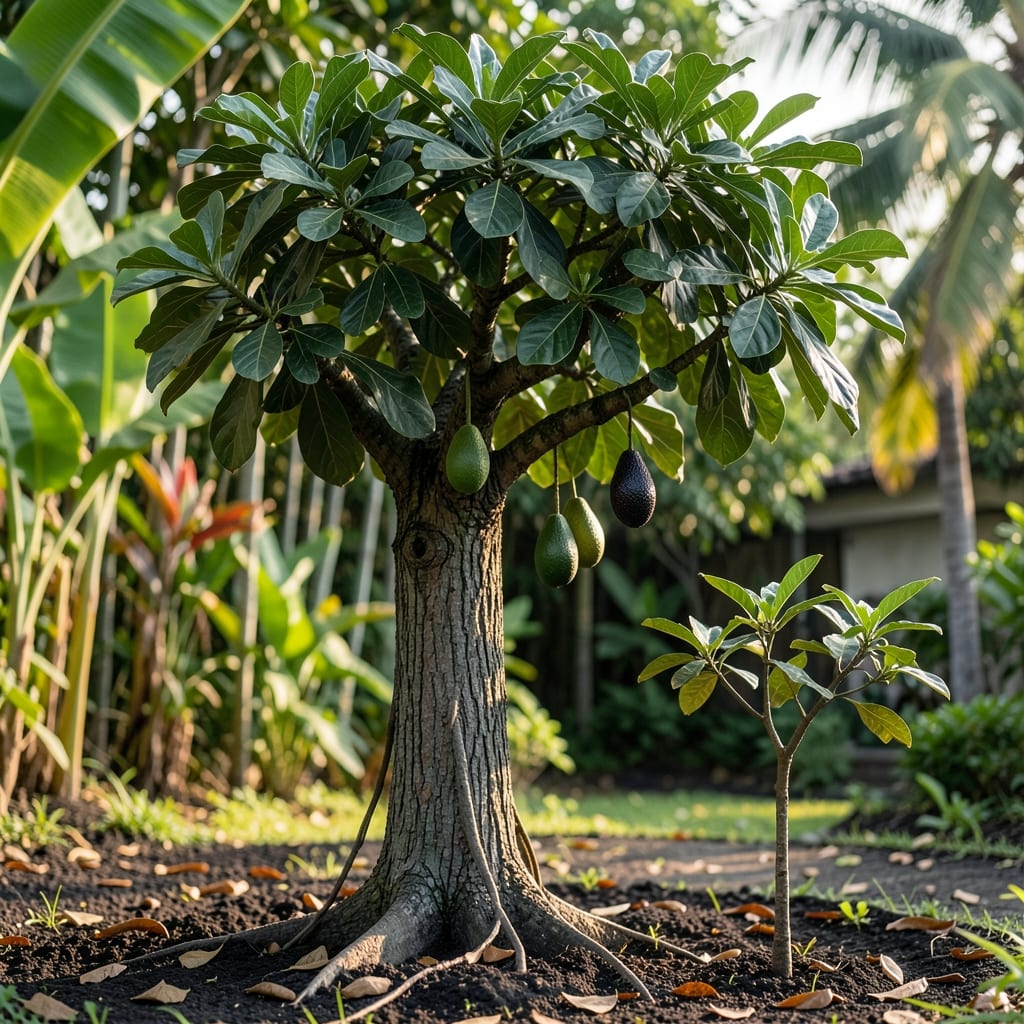
If you've ever dreamed of growing your own 🥑 avocado tree, you might be wondering just how tall an avocado tree can grow. The truth is, its height depends entirely on its variety—some stay manageable at just 10-15 feet, while others can soar to 80 feet or more in ideal conditions.
For most gardeners in Zone 6, this means planning ahead—whether you're working with a dwarf variety or a standard tree that needs space to stretch its branches. The good news? With the right care, you can influence your tree's height through pruning, grafting, and even container growing.
In this guide, I'll break down the growth stages of avocado trees, from sapling to mature giant, and share practical tips to manage their size. Whether you're dealing with a fast-growing Hass or a slower-reaching Reed variety, you'll learn how to keep your tree at the perfect height for your space.
Ready to turn your backyard into an avocado oasis? Let's dive into the science—and secrets—of controlling your tree's growth so you can enjoy fresh fruit without losing your yard to a jungle.

Avocado tree height by variety: from dwarf to giant sizes
Avocado trees are famous for their dramatic height differences—some varieties stay small enough for containers, while others grow into towering jungle giants. The key to managing your tree's size lies in choosing the right variety and understanding how rootstock influences growth. For example, a Hass avocado grafted onto a dwarf rootstock might stay under 15 feet, while the same variety on a standard rootstock can reach 60+ feet.
If you're gardening in Zone 6, where winters limit outdoor growth, selecting a dwarf variety is essential. These trees mature at 10-20 feet, making them perfect for patios or small backyards. Even in warmer climates like Zone 10, where trees grow faster, dwarf varieties remain manageable. The trade-off? Some dwarf trees produce slightly smaller fruit, but the convenience often outweighs this drawback.
Standard varieties like Fuerte or Bacon can grow 30-50 feet tall, requiring ample space and regular pruning to keep them in check. These giants thrive in tropical regions but need protection from frost in colder zones. Whether you're dealing with a fast-growing Hass or a slower-growing Reed variety, knowing your tree's potential height helps you plan for its future.
Here’s a quick comparison of popular avocado varieties and their mature heights to help you decide which fits your space:
| Variety | Mature Height (ft) | Growth Rate | Best For |
|---|---|---|---|
| Wurtz (Dwarf) | 10-15 ft | Slow to Moderate | Containers, Small Yards |
| Hass (Standard) | 30-60 ft | Moderate to Fast | Large Properties, Tropical Climates |
| Fuerte | 25-40 ft | Moderate | Subtropical Gardens |
| Reed | 40-60 ft | Fast | Large Backyards, Warm Climates |
| Bacon | 30-50 ft | Moderate | Commercial Orchards |
The rootstock you choose plays a massive role in your tree's height. Dwarf rootstocks like Mexican or West Indian varieties restrict growth, while standard rootstocks like Duke or Topa Topa allow trees to reach their full height. If you're growing in a container, always opt for a dwarf rootstock to prevent your tree from outgrowing its space.
One common misconception is that all avocado trees grow into giants. In reality, with the right grafting and pruning, even standard varieties can be kept under 20 feet. I’ve seen Hass trees in containers that stay under 12 feet with regular pruning and root restriction. The key is to start with a dwarf rootstock and prune aggressively in the first few years to shape the tree.
For gardeners in Zone 6, where winters are harsh, dwarf varieties are a must. These trees can be moved indoors during frost or grown in large containers with protective covers. Even in warmer zones, dwarf trees offer the advantage of easier harvesting and less maintenance. If you're dreaming of a homegrown avocado harvest but lack space, a dwarf variety is your best bet.
Remember, the height of your avocado tree isn’t set in stone—it’s influenced by your care routine. Pruning, grafting, and even the size of your container can all play a role in keeping your tree at a manageable size. Whether you're aiming for a compact patio tree or a towering backyard giant, the right variety and care will get you there.
Next, let’s explore how fast avocado trees grow at different stages of life and what you can do to influence their height over time.
How fast avocado trees grow: growth rate stages by age
Avocado trees don’t grow at a steady pace—their height depends heavily on their age and growth stage. In the first year, you’ll see just 1-3 feet of growth as the tree establishes its root system. This slow start is normal, but it’s also the most critical phase for setting the foundation for future height. If you’re growing in Zone 6, this early stage is especially important because cold snaps can stunt growth if the tree isn’t hardened off properly.
By year two, your tree enters its transitional phase, where growth accelerates to 3-6 feet. This is when you’ll notice the first signs of rapid vertical development, particularly in faster-growing varieties like Reed or Hass. During this stage, providing well-draining soil and full sun exposure can push your tree toward the higher end of this range. In contrast, dwarf varieties like Wurtz will grow more slowly, staying closer to the 3-foot mark.
Here’s a breakdown of what to expect at each growth stage, including how climate and care influence height milestones:
- Year 1: 1-3 ft (juvenile phase—focus on root development)
- Year 2: 3-6 ft (transitional phase—growth accelerates with proper care)
- Year 3-5: 6-15 ft (rapid vertical growth; prune to manage height)
- Year 6-10: 15-30 ft (mature phase—growth slows; standard varieties surge)
- Year 10+: 30-80 ft (full maturity; height depends on variety and rootstock)
The growth rate of your avocado tree is influenced by several factors beyond its variety. Climate plays a huge role—trees in Zone 10 or warmer can grow 3x faster than those in Zone 6 due to longer growing seasons. For example, a Hass tree in California might reach 10 feet by year 5, while the same tree in Ohio could take twice as long. Soil quality also matters: sandy, well-draining soil encourages faster growth, while clay-heavy soil can slow it down.
Pruning is another powerful tool for controlling height. If you prune your tree aggressively in the first 3 years, you can redirect its energy toward bushier growth instead of vertical expansion. I’ve seen Hass trees pruned to stay under 8 feet even after 5 years, while unpruned trees of the same age can reach 15 feet. The key is to prune in late winter or early spring, just before new growth begins. Avoid heavy pruning in summer, as this can stress the tree and slow its recovery.
One common misconception is that avocado trees grow at a consistent rate. In reality, their growth is exponential—meaning the biggest jumps in height happen between years 3 and 10. This is when standard varieties like Bacon or Fuerte can shoot up 10+ feet per year if given ideal conditions. If you’re growing a standard variety and want to keep it manageable, start pruning early and consider container cultivation to restrict root growth naturally.
For gardeners in Zone 6, where winters limit outdoor growing seasons, patience is key. Your tree’s growth will pause during cold months, so focus on protecting roots and mulching heavily to insulate them. Even in warmer zones, drought or nutrient deficiencies can stall growth. Always monitor your tree’s foliage color—yellowing leaves signal nitrogen deficiency, while dark green leaves indicate healthy, rapid growth.
Understanding these growth stages helps you set realistic expectations and plan your garden space accordingly. Whether you’re aiming for a compact patio tree or a towering backyard giant, knowing when and how your avocado tree grows will ensure you’re ready to manage its height at every stage.