Trees
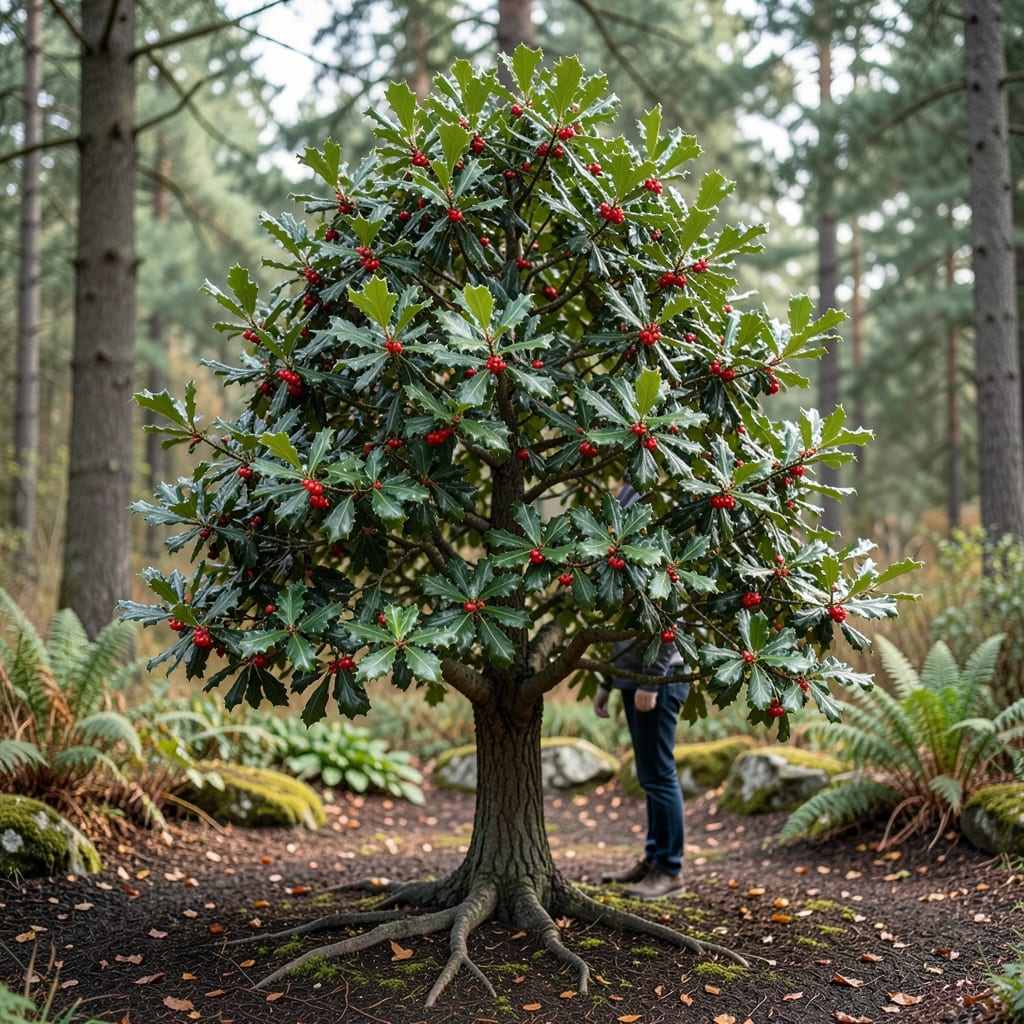
Curious about how tall can a holly tree grow before it becomes a backyard giant? The answer depends entirely on the variety you choose, with some reaching towering heights of 40 feet while others stay neatly under 10 feet—making them perfect for small spaces.
Holly trees like the classic American holly can grow up to 30 feet tall with a broad canopy, while dwarf varieties like 'Sky Pencil' remain slender and compact at just 12-15 feet. This means your choice could fit under power lines or become a stunning focal point in your landscape.
But height isn't just about variety—climate, soil, and pruning habits play a role too. In USDA Zone 6a, where spring planting is ideal, proper care can help you manage growth and keep your holly tree at your desired size.
Whether you're planning for a tall, majestic specimen or a manageable shrub, understanding these factors will help you make the best choice for your garden. Let's explore the specifics so you can pick the perfect holly for your space.


Holly tree height by variety: from dwarf to giant species
Choosing the right holly tree means understanding its mature height, as varieties range from compact shrubs to towering giants. The classic American Holly (Ilex opaca) typically reaches 20-30 feet, while the English Holly (Ilex aquifolium) can soar up to 40-50 feet—making it a statement piece for large landscapes.
For smaller spaces, dwarf varieties like 'Sky Pencil' stay slender at 12-15 feet, while 'Dwarf Burford' tops out around 8-10 feet. Even within species, growth habits vary—some grow tall and narrow, while others develop broad, bushy canopies.
Here’s a quick comparison to help you visualize: A standard American Holly at 30 feet could rival a two-story house, while a 'Little Gem' (a columnar variety) stays under 25 feet but with a tight, upright form.
| Variety | Mature Height | Growth Habit | Best For |
|---|---|---|---|
| American Holly | 20-30 ft | Broad, rounded | Large yards, focal points |
| English Holly | 30-50 ft | Tall, pyramidal | Mature landscapes, privacy screens |
| 'Sky Pencil' | 12-15 ft | Narrow, columnar | Small gardens, narrow spaces |
| 'Dwarf Burford' | 8-10 ft | Compact, bushy | Containers, foundation plantings |
| 'Little Gem' | 20-25 ft | Columnar, upright | Tight spaces, urban gardens |
| 'Blue Princess' | 10-12 ft | Broad, rounded | Small yards, mixed borders |
🌱 Note: Heights vary by climate and care.
Climate plays a surprising role in height—holly trees in warmer USDA Zones (7-9) often grow 10-20% taller than those in cooler zones like Zone 6a. For example, an American Holly might max out at 25 feet in Florida but stay closer to 20 feet in the Midwest.
Soil drainage also matters: Well-draining soil encourages faster growth, while clay-heavy soil can stunt height. If your yard has poor drainage, consider amending with compost or planting in a raised bed to promote healthier, taller growth.
Pruning habits can adjust height too—regular pruning in late winter can keep a 30-foot holly at 20 feet while encouraging a denser canopy. Conversely, leaving it unpruned lets it reach its full potential, which is ideal for wildlife-friendly or ornamental goals.
For urban gardens, columnar varieties like 'Little Gem' are game-changers—they fit under power lines and still provide year-round interest with glossy leaves and red berries. In contrast, broad-canopied holly trees like 'Blue Princess' are better suited for open spaces where their sprawling branches can shine.
If you’re debating between varieties, ask yourself: Do you need height for privacy, or compact size for containers? The right choice depends on your space, sunlight, and maintenance goals—and the height chart above is your starting point.
🌿
Holly tree height by variety: from dwarf to giant species
Choosing a holly tree isn’t just about its glossy leaves and bright berries—it’s also about how tall can a holly tree grow in your specific space. Some varieties stretch toward the sky like natural skyscrapers, while others stay cozy and compact. For example, the American Holly (Ilex opaca) typically reaches 20-30 feet tall, making it a statement piece for larger yards, while the English Holly (Ilex aquifolium) can soar even higher, up to 30-50 feet.
The key to selecting the right holly lies in understanding these mature height ranges. Dwarf varieties like 'Sky Pencil' or 'Blue Prince' stay between 8-15 feet, perfect for small gardens or container growing. Meanwhile, semi-dwarf types like 'Hillier's Blue' hit 15-25 feet, offering a middle-ground option for medium-sized landscapes.
Here’s a quick reference to help you visualize how these heights compare to common garden features:
| Variety | Mature Height (ft) | Growth Rate (ft/year) | Best For |
|---|---|---|---|
| American Holly | 20-30 | 1-2 | Large yards, focal points |
| English Holly | 30-50 | 1.5-2.5 | Privacy screens, large estates |
| Sky Pencil (dwarf) | 12-15 | 0.5-1 | Small gardens, containers |
| Blue Prince (dwarf) | 8-12 | 0.3-0.5 | Urban gardens, hedges |
| Hillier's Blue (semi-dwarf) | 15-25 | 1-1.5 | Medium yards, hedgerows |
If you’re wondering whether a holly tree will fit under your power lines or against your house siding, consider these height benchmarks. A 20-foot holly will easily clear a two-story home (typically 15-20 feet tall) but may brush against power lines in suburban areas (often 25-30 feet high). For tight spaces, dwarf varieties like 'Blue Prince' stay well below 12 feet, making them ideal for patios or foundation plantings.
Another factor influencing height is your USDA Zone 6a climate. Holly trees in cooler regions may grow slightly slower but reach their full height potential over time. In warmer zones, they can grow faster, especially with full sun exposure and well-draining soil. Always check local regulations before planting near structures or utility lines to avoid future headaches.
For those who love the idea of a holly tree but need a low-maintenance, compact option, consider columnar varieties like 'Green Lustre', which grows just 10-12 feet tall but stays narrow—perfect for narrow garden beds or as a living privacy screen. The trade-off? These varieties may produce fewer berries than their taller counterparts, but their year-round structure and glossy foliage make them a standout choice.
🌳