How To
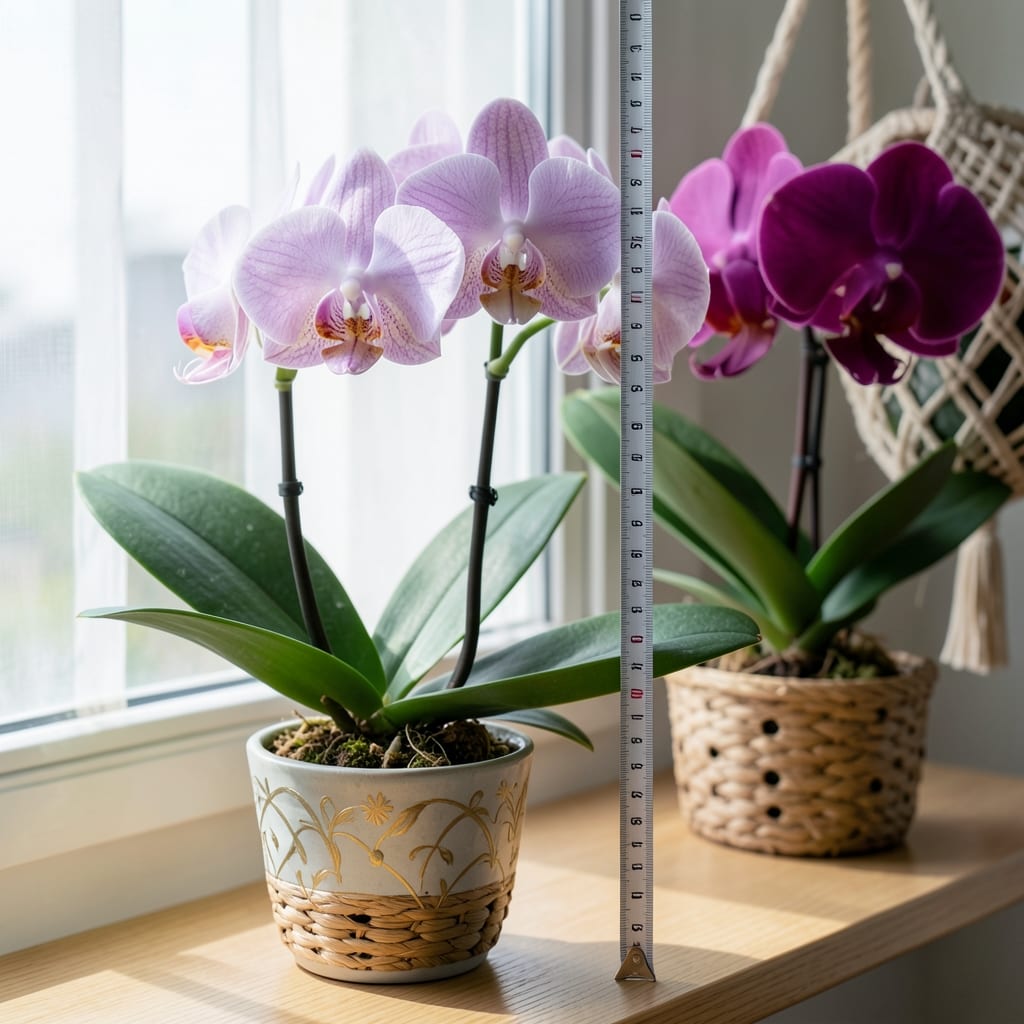
If you’ve ever wondered just how tall your orchid can grow—whether it’ll stay a dainty 🌸 tabletop plant or stretch toward the ceiling—you’re not alone. Some orchids barely reach knee height, while others climb like jungle vines, demanding support to reach their full potential. The answer depends entirely on the variety, and knowing the differences can help you choose the perfect orchid for your space or even train a compact one to grow taller.
For example, the classic Phalaenopsis (moth orchid) typically stays between 1 to 2 feet tall, making it ideal for shelves or countertops, while Vandas or Dendrobiums can soar up to 3 feet or more—sometimes needing a trellis or moss pole to thrive. Whether you’re a beginner or a seasoned grower, understanding these height ranges will help you set realistic expectations and avoid common care mistakes that stunt growth.
In this guide, I’ll break down the height potential of popular orchid varieties, explain when and how to support them, and share 5 key factors that influence their growth. You’ll learn how sunlight, pot size, and even fertilizer choices can make the difference between a dwarf orchid and a towering showstopper. Ready to turn your orchid care into a precision science?
Let’s dive into the numbers—because knowing your orchid’s height range is the first step to growing it exactly how you envision it, whether that’s a compact centerpiece or a dramatic vertical statement piece. The choice is yours, and the possibilities are endless.

Orchid height chart: tallest varieties and their maximum growth potential
Orchids aren’t one-size-fits-all when it comes to height—some varieties stay small enough for desk decor, while others need ceiling-height support. The Phalaenopsis (moth orchid), for example, typically maxes out at 1.5 to 2 feet, making it perfect for shelves or countertops. But if you’re growing a Vanda or Dendrobium, expect heights of 3 to 6 feet or more, especially with proper support.
Height differences come down to two key factors: the orchid’s growth habit (terrestrial vs. epiphytic) and its natural climbing tendencies. Epiphytic orchids, which grow on trees in the wild, often stretch taller to reach sunlight, while terrestrial types like Paphiopedilums (lady slipper orchids) stay closer to the ground. Knowing these distinctions helps you choose the right variety for your space and care style.
Below is a height comparison chart for popular orchid varieties, including their mature sizes and whether they typically need support. Use this as your guide to pick an orchid that fits your home’s layout—or train a compact one to grow taller with the right care.
| Variety | Mature Height | Growth Habit | Support Needed? |
|---|---|---|---|
| Phalaenopsis (Moth Orchid) | 1.5–2 ft | Terrestrial/Epiphytic | No (self-supporting) |
| Cattleya (Cattleya Orchid) | 2–3 ft | Epiphytic | Sometimes (for taller blooms) |
| Dendrobium (Stem Orchid) | 3–6 ft | Epiphytic | Yes (trellis or stake) |
| Vanda (Vanda Orchid) | 2–4 ft (spread wider) | Epiphytic | No (but benefits from height) |
| Paphiopedilum (Lady Slipper) | 0.5–1.5 ft | Terrestrial | No |
| Oncidium (Dancing Lady) | 1–2.5 ft | Epiphytic | Sometimes (for sprawling types) |
| Vanilla (Vanilla Orchid) | Up to 10 ft (vines!) | Epiphytic/Climbing | Yes (strong trellis) |
If you’re working with limited space, Phalaenopsis or Paphiopedilums are ideal for small apartments, while Dendrobiums or Vanilla orchids will thrive in greenhouses or sunrooms with vertical space. Pro tip: Even compact orchids like Phalaenopsis can grow taller with a moss pole if you want to encourage upward growth for dramatic blooms.
Now that you know the height ranges, the next step is understanding when and how to support your orchid’s growth. Some varieties, like Dendrobiums, will flop over without a trellis, while others, like Cattleyas, can stand alone but benefit from extra height for showier blooms. I’ll cover support solutions in the next section, including DIY trellis ideas and when to prune for better structure.
Remember, orchid height isn’t just about aesthetics—it
Do orchids need support? When and how to use trellises, stakes, OR moss poles
Not all orchids need support, but some varieties will flop or bend without it, especially as they mature. For example, Dendrobiums and Vanilla orchids are natural climbers, while Phalaenopsis and Paphiopedilums usually stand on their own. The key is understanding your orchid’s growth habit—epiphytic types (like Cattleyas) often benefit from extra height, even if they don’t require it.
Support isn’t just for tall varieties—even compact orchids like Phalaenopsis can grow taller and produce longer stems with a moss pole or bamboo stake. This is especially useful if you want dramatic blooms or are training your orchid to climb a vertical garden. Without support, sprawling varieties may develop weak stems or broken pseudobulbs.
Here’s a quick guide to when to use support and what works best for each orchid type:
Support Solutions for Orchids
- Use moss poles for epiphytic orchids like Phalaenopsis or Oncidium.
- Install trellises for Dendrobiums or Vanilla orchids to encourage upward growth.
- Choose bamboo stakes for lightweight support in Cattleyas.
- Secure vines with soft ties (avoid wire, which can damage stems).
- Skip support for climbing orchids—they’ll flop without it.
- Use metal hooks or wire, which can scar stems.
- Over-tighten ties—loosen them as the orchid grows.
- Ignore pruning—trim dead stems to redirect energy to supported growth.
For DIY solutions, a moss pole (wrapped in damp sphagnum moss) is ideal for orchids like Phalaenopsis, while bamboo stakes work well for Cattleyas. If you’re growing Vanilla orchids, invest in a strong trellis—these vines can reach 10 feet or more! Always position support near the orchid’s base to prevent stem breakage.
Pruning plays a crucial role in managing height. After blooming, trim spent stems just above a node to encourage new growth upward. For Dendrobiums, prune old canes to promote fresh shoots. Just remember: less pruning means taller stems, while more pruning keeps orchids compact.
If your orchid isn’t growing as tall as expected, check these 3 common mistakes: underwatering (which stunts roots), low light (weak stems), or overcrowded pots (limiting upward growth). Adjusting these factors can make a big difference in height—sometimes adding just a few inches of extra support or light can transform a floppy orchid into a showstopper. 🌿