How To
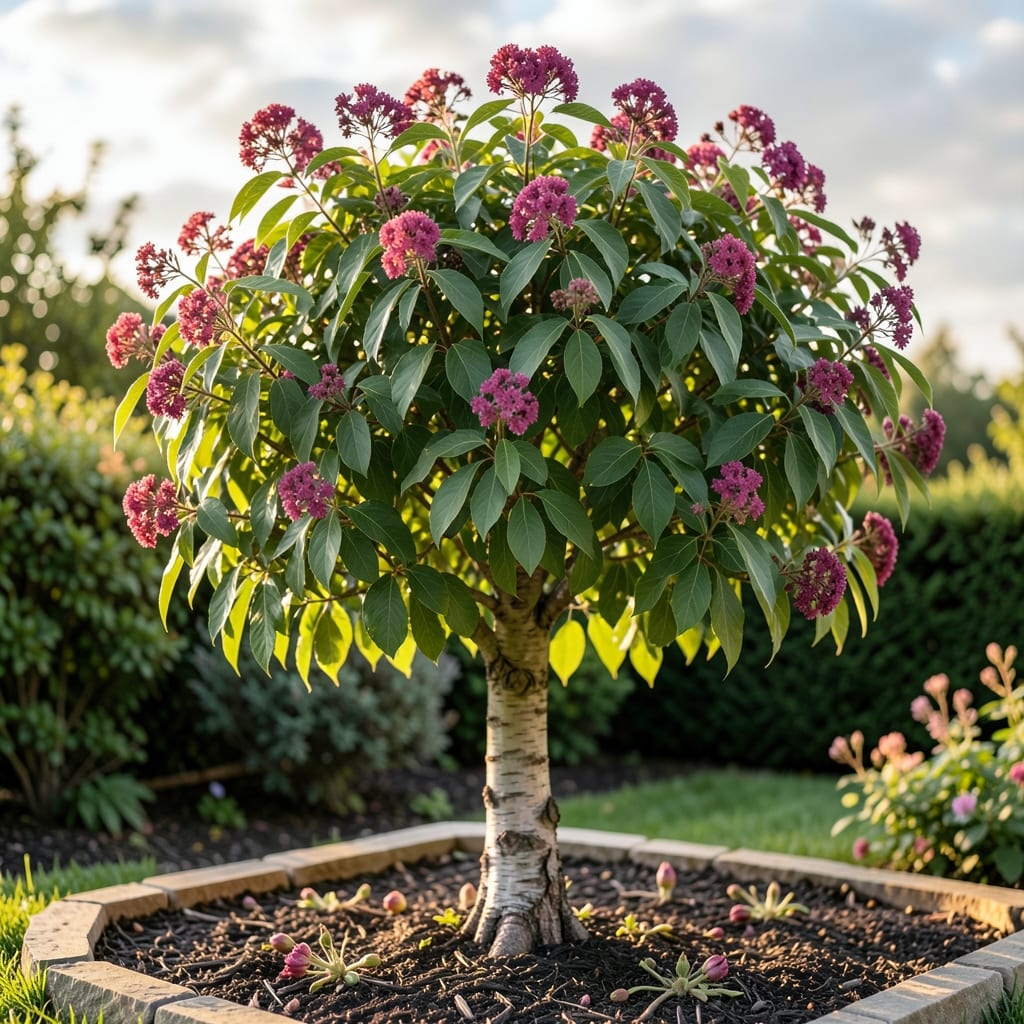
Wondering how tall crepe myrtle grow before you commit to planting one? These stunning 🌸 trees can range from compact shrubs to towering giants, depending on the variety and care you provide.
If you're dreaming of a small, manageable tree for your front yard, some crepe myrtle varieties stay under 12 feet tall, while others can reach heights of 30 feet or more. The right choice depends on your space and long-term vision for your landscape.
In this guide, I'll break down the height expectations for popular crepe myrtle types, share pruning secrets to control their growth, and help you understand what affects their final size.
Whether you want a privacy screen or a showstopping centerpiece, knowing these details is the key to planting with confidence and avoiding surprises down the road.


Crepe myrtle height by variety: small trees vs. towering giants
Crepe myrtles are famous for their dramatic height variations, making them perfect for everything from small urban yards to sprawling rural landscapes. The right variety can transform your space without overwhelming it—if you know what to expect.
I’ve planted crepe myrtles in my own garden for years, and the difference between a 6-foot dwarf and a 30-foot giant is night and day. Let’s break down the most popular types so you can choose wisely.
Here’s a quick comparison of height ranges for the top crepe myrtle varieties, including their mature sizes and ideal uses:
| Variety | Mature Height | Spread | Best For |
|---|---|---|---|
| 'Tonto' | 6–12 ft | 6–10 ft | Small yards, containers, urban landscapes |
| 'Natchez' | 15–20 ft | 12–15 ft | Medium yards, privacy screens, focal points |
| 'Arapaho' | 20–25 ft | 15–20 ft | Large landscapes, shade trees, statement plants |
| 'Muskogee' | 25–30 ft | 20–25 ft | Rural properties, privacy hedges, bold accents |
| 'Catawba' | 20–25 ft | 15–20 ft | Shade trees, large patios, woodland edges |
| 'Sioux' | 12–15 ft | 10–12 ft | Small to medium yards, mixed borders |
If you’re working with limited space, varieties like 'Tonto' or 'Sioux' are my top picks—they stay compact while still delivering those iconic summer blooms. For a dramatic focal point, 'Muskogee' or 'Arapaho' will give you that wow factor.
Pro tip: Always check the nursery tag for exact height expectations, as growing conditions can influence final size by up to 20%. In my experience, crepe myrtles in full sun and well-draining soil tend to reach their maximum potential faster.
For container growing, opt for dwarf varieties like 'Tonto'—they thrive in large pots and can be moved seasonally. Just ensure the container is at least 18 inches deep to accommodate root growth.
Now that you know the height ranges, let’s talk about how to manage growth if your space has strict limits. Pruning plays a huge role—and I’ll share my go-to techniques in the next section.
How to control crepe myrtle height: pruning secrets for shaping & health
Once you’ve chosen your crepe myrtle variety, pruning becomes your best tool to control height and shape. I’ve pruned these trees for over a decade, and the difference between proper pruning and haphazard cuts is dramatic—especially for varieties like 'Muskogee' that can reach 30 feet without guidance.
Timing is everything. The best time to prune is late winter or early spring, just before new growth begins. This removes dead wood and encourages stronger blooms for summer. Avoid pruning in fall or winter, as this can stimulate late-season growth that’s vulnerable to frost damage.
Here’s my step-by-step pruning guide to keep your crepe myrtle at your desired height while maintaining its health and beauty:
-
Step 1: Remove Dead or Diseased Branches
Use clean, sharp pruners to cut out any dead wood or branches with signs of disease. This prevents the spread of pests and improves air circulation. -
Step 2: Thin Out Crowded Branches
Look for branches growing inward or crossing each other. Remove about 20-30% of these to open up the canopy and reduce future pruning needs. -
Step 3: Shape the Tree
For a compact look, cut back the tallest branches by 1/3 to encourage bushier growth. For a taller, narrower tree, prune the lower branches to create clearance. -
Step 4: Prune for Height Control
To limit height, focus on the topmost branches. Cut just above a bud or leaf node to redirect growth. Avoid cutting into the main trunk, as this can harm the tree. -
Step 5: Clean Up and Sterilize
Rake up and dispose of pruned branches. Wipe your pruners with rubbing alcohol to prevent the spread of disease between cuts.
One common mistake I see is over-pruning in a single session, which stresses the tree. Instead, spread pruning tasks over 2-3 sessions if needed. Another pitfall is pruning too late in the season, which can stunt flowering for the next year.
For dwarf varieties like 'Tonto', minimal pruning is usually enough—just remove dead wood and shape lightly. But for taller varieties, regular pruning is essential to keep them from becoming unmanageable. In my garden, I prune my 'Arapaho' every 2 years to maintain its height at 20 feet.
Remember, crepe myrtles bloom on new wood, so avoid heavy pruning in summer—this can reduce next year’s flowers. With the right approach, you can enjoy stunning blooms and a tree that fits perfectly in your space.