Trees
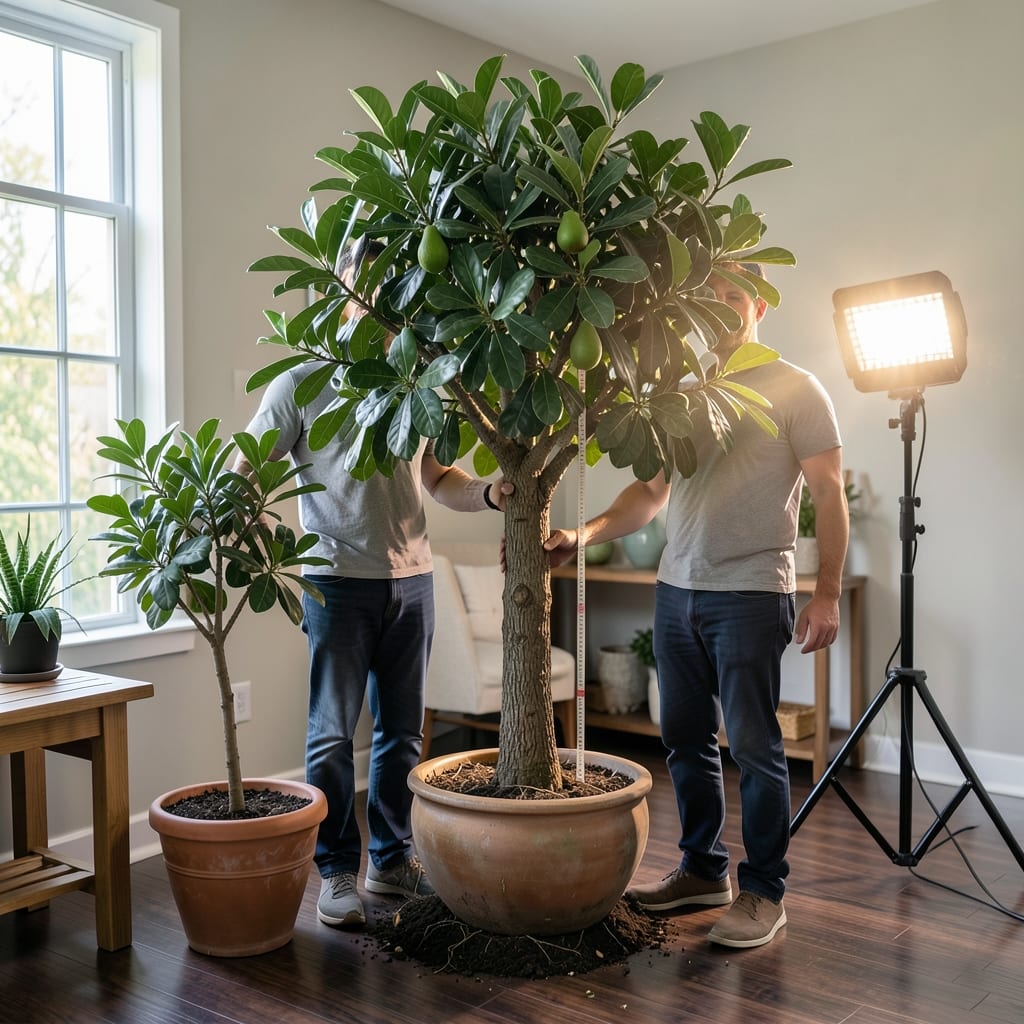
Indoor avocado tree height by variety: dwarf vs. standard growth
Indoor avocado trees can grow surprisingly tall—often exceeding 6 feet if left unchecked—but their height depends heavily on the variety and your care routine. While no true dwarf varieties exist for indoor cultivation, some types naturally stay more compact than others. Understanding these differences helps you choose the right tree for your space and manage its growth effectively.
Most avocado trees grown indoors originate from seedlings, which means their growth patterns are unpredictable. However, grafted varieties like Hass or Bacon tend to grow more predictably. Without pruning, these trees can reach 10-20 feet tall indoors, but with regular maintenance, you can keep them between 6-10 feet—ideal for living rooms or sunrooms.
Here’s how popular varieties compare in terms of indoor height potential:
If you’re working with limited space—like a small apartment or studio—opt for grafted varieties like Reed or Bacon, which grow slightly slower and respond better to pruning. Seedling-grown trees (like Hass) often outpace these, so plan for aggressive pruning if you choose this route.
Another key factor is the pot size. Root-bound trees grow taller faster because they’re stressed and reach upward for light. Using a large container (15+ gallons) can slow vertical growth by encouraging root expansion instead of height spikes. Pair this with a well-draining potting mix to prevent root rot, which can stunt growth entirely.
Light exposure also plays a critical role. Avocado trees need 6+ hours of bright indirect light daily to stay compact. Without enough light, they stretch toward windows, becoming leggy and top-heavy. Place your tree within 2-3 feet of a south- or west-facing window to maintain a balanced shape. If natural light is insufficient, supplement with a grow light for 12-14 hours daily.
Pruning isn’t just about height control—it’s also about air circulation and fruit production (though indoor trees rarely bear fruit). Prune in late winter or early spring to encourage new growth for the season. Remove dead or crossing branches first, then thin out 1/3 of the canopy to maintain an open structure. This reduces the risk of pests and diseases while keeping your tree manageable.
For apartment dwellers, consider training your avocado tree along a trellis or wall to grow horizontally instead of vertically. This technique works best with Reed or Bacon varieties and can keep your tree under 6 feet tall while maximizing your space. Just ensure the trellis is sturdy—avocado trees can get heavy as they mature!
One common misconception is that indoor avocado trees will stay small forever. Without intervention, they will grow tall, often faster than outdoor counterparts due to indoor warmth and humidity. The key is proactive care: prune regularly, repot every 2-3 years, and monitor light exposure. With these steps, you can enjoy a healthy, manageable indoor avocado tree that fits your space.
🌱
How to control avocado tree height indoors: pruning and training tips
Controlling your indoor avocado tree’s height starts with pruning, a skill that transforms unruly growth into a manageable, attractive plant. Unlike outdoor trees, indoor avocados grow faster due to consistent warmth and humidity, so regular pruning is essential. The goal isn’t just to cut back branches—it’s to shape the tree, improve air flow, and encourage a stronger structure. With the right techniques, you can keep your tree under 6 feet tall while maintaining its health.
Timing is everything when it comes to pruning. The best time to prune your indoor avocado tree is in late winter or early spring, just as new growth begins. This encourages balanced growth for the entire season. Avoid pruning in fall or winter, as the tree is dormant and may struggle to recover. If you notice leggy growth or overcrowded branches at other times, light pruning is still beneficial, but avoid heavy cuts that could stress the plant.
Here’s a step-by-step guide to pruning your indoor avocado tree for controlled height:
- Step 1: Gather Tools
- Clean, sharp pruning shears (for small branches)
- Sterilized hand pruners (for thicker branches)
- Disinfectant (like rubbing alcohol) to clean tools
- Gloves (to protect from sap and thorns)
- Step 2: Remove Dead or Diseased Branches
- Inspect the tree for brown, brittle, or moldy branches
- Cut these back to the main trunk or healthy growth
- Dispose of debris to prevent spread of disease
- Step 3: Thin Out the Canopy
- Focus on crossing branches or those growing inward
- Remove 1/3 of the canopy to improve air circulation
- Aim for an open, rounded shape for balanced growth
- Step 4: Control Height with Strategic Cuts
- Cut back the tallest branches by 1/3 to 1/2 their length
- Make cuts just above a leaf node or outward-facing bud
- Avoid cutting into the main trunk unless necessary
- Step 5: Train for Compact Growth
- Use a trellis or stake to guide branches horizontally
- Tie branches gently with soft plant ties to encourage spreading
- Rotate the pot quarter-turns weekly for even light exposure
- Step 6: Clean and Monitor
- Wipe tools with rubbing alcohol before and after pruning
- Check for pests or signs of stress after pruning
- Water thoroughly to reduce shock from pruning
Pruning isn’t just about height—it’s also about encouraging fruit production, though indoor avocado trees rarely bear fruit. If you’re aiming for a bushier, fuller tree, focus on pruning the top third of the tree to promote lateral growth. For a taller, more upright tree, prune the lower branches to direct energy upward. Always use sterilized tools to prevent bacterial or fungal infections, which can weaken your tree and stunt its growth.
One common mistake is pruning too aggressively, which can shock the tree and lead to stunted growth or even death. Never remove more than 1/3 of the canopy in a single session. Another pitfall is pruning at the wrong time—avoid heavy pruning in summer, as the tree is actively growing and may struggle to recover. If you’re unsure about where to cut, look for leaf nodes or buds just below the branch you’re removing. These are the best spots for new growth to sprout.
For apartment dwellers, training your avocado tree is a game-changer. Instead of letting it grow vertically, use a trellis or wall-mounted system to guide branches horizontally. This technique works especially well with Reed or Bacon varieties, which are more adaptable to training. Secure branches with soft plant ties and rotate the pot regularly to ensure even light exposure. With this method, you can keep your tree under 6 feet tall while adding a stunning vertical element to your space.
🪴