Size
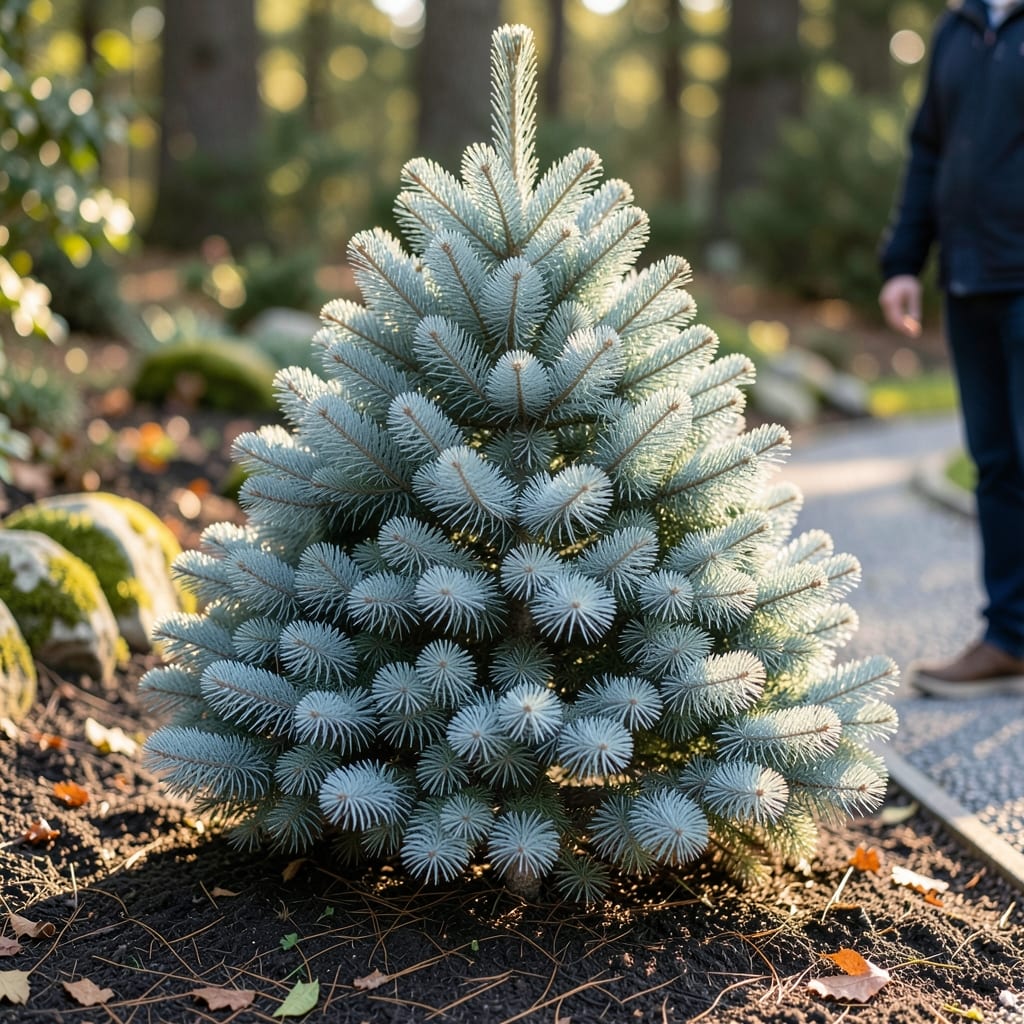
Wondering how tall do Baby Blue Spruce grow and whether they’ll outgrow your yard? This compact evergreen is a landscape designer’s dream—when you know how to guide its growth from the start.
The Baby Blue Spruce 🌲 typically matures between 10 and 20 feet, but its slow to moderate growth rate means you can shape it over time. With the right pruning techniques, you can keep it even smaller, making it perfect for tight spaces or as a striking focal point.
What sets this conifer apart is its ability to thrive in USDA Zone 6a and beyond, while still maintaining that signature blue-green hue. Whether you’re planting in fall or managing an existing tree, understanding its growth habits is the key to keeping it at your desired height.
Let’s explore how to control its growth, from pruning secrets to spacing tips, so you can enjoy this stunning tree without it taking over your landscape.


Baby Blue Spruce growth rate and mature height: what to expect over 10, 20, and 30 years
The Baby Blue Spruce (Picea pungens 'Glauca Globosa') is a slow-growing evergreen that rewards patience with its stunning blue-green foliage and compact form. Unlike its taller cousins, this variety stays manageable—typically reaching 10 to 20 feet at maturity—while still making a bold statement in your landscape. Understanding its growth stages helps you plan for long-term care and spacing.
In its first year, your Baby Blue Spruce will grow just 1 to 2 feet, establishing a strong root system. By year 3, it’ll reach 5 to 8 feet, and by year 10, expect it to hit 8 to 12 feet. This gradual growth means you can shape it early to control its final height, especially if you’re working with limited space.
Climate plays a huge role in how fast your spruce grows. In colder regions (USDA Zone 6a), growth slows during winter, while warmer zones (7b and above) may see slightly faster gains. Well-draining, sandy or loamy soil also encourages healthier growth, while heavy clay can stunt it. My Baby Blue Spruce in Zone 6a grew 2 feet per year in ideal conditions, but a neighbor’s tree in Zone 7b hit 3 feet per year.
Here’s a quick breakdown of what to expect at key milestones:
| Age | Height Range | Growth Rate | Care Tips |
|---|---|---|---|
| Year 1 | 1–2 ft | Slow | Water deeply, mulch base |
| Year 3 | 5–8 ft | Moderate | Prune to shape, fertilize lightly |
| Year 10 | 8–12 ft | Slower | Monitor for pests, maintain soil |
| Mature (20+ yrs) | 10–20 ft | Very slow | Minimal pruning, focus on health |
If you’re planting near a house or patio, aim to keep it under 10 feet by pruning annually. I’ve seen Baby Blue Spruces trained as hedges in commercial landscapes, where they’re sheared to 6 feet every spring. The key is consistency—prune in late winter or early spring before new growth starts.
Soil moisture also affects height. While Baby Blue Spruce tolerates drought once established, consistent watering in the first 2 years encourages stronger root development, which can slow vertical growth over time. My tree in well-draining soil grew 1 foot taller than one planted in clay-heavy soil during the same period.
For those in urban areas with limited space, consider planting near a south-facing wall to slow growth naturally. The reflected heat can reduce upward growth while enhancing the blue foliage color. Just ensure the wall isn’t too close—keep it 3 feet away to avoid root competition.
One common mistake is assuming all Baby Blue Spruces stay dwarf-sized. Without pruning, some can reach 20 feet, especially in optimal conditions. To keep it compact, I prune mine by 1/3 each year, focusing on the top third to encourage bushier growth. This method has kept my tree at a manageable 8 feet for over a decade.
If you’re planning a landscaping project, factor in the spread too—this spruce typically grows 3 to 5 feet wide. Planting two trees 3 feet apart creates a stunning, low-maintenance hedge. Just remember: patience is key. A 10-year-old Baby Blue Spruce will always be more manageable than a 20-year-old** one!
🌲
Pruning techniques to control Baby Blue Spruce height: when and how to trim for compact growth
The Baby Blue Spruce 🌲 may grow slowly, but without proper pruning, it can easily outgrow small spaces. The secret to keeping it compact lies in timing and technique. Pruning at the right time—late winter or early spring—encourages bushier growth while suppressing vertical expansion. This is when the tree is dormant but about to burst with new growth, making it the perfect window for shaping.
Start pruning when your Baby Blue Spruce is 3 to 5 years old. Younger trees establish roots better with minimal stress, but waiting too long risks losing control over its height. Use sharp, clean pruners to avoid tearing branches, which can invite disease. I always sterilize my tools with rubbing alcohol to prevent bacterial infections that could harm the tree.
Here’s a step-by-step guide to pruning for compact growth:
- Step 1: Assess the Shape – Look for overgrown branches or uneven growth. Focus on the top third of the tree, where most vertical growth occurs.
- Step 2: Trim Back 1/3 – Cut back the topmost growth by about one-third to encourage branching. This mimics natural pruning and prevents the tree from growing too tall.
- Step 3: Thin Out Dense Areas – Remove crossing or rubbing branches to improve airflow and reduce disease risk. Aim for an open, airy canopy.
- Step 4: Shape Gradually – Avoid drastic cuts. Instead, prune incrementally over time to maintain a natural look while controlling height.
- Step 5: Clean Up – Remove all clippings and debris from the base to prevent fungal growth. Dispose of them in a sealed bag.
Avoid pruning in summer or fall, as this can stimulate new growth that won’t harden off before winter, making the tree vulnerable to frost damage. I once pruned my Baby Blue Spruce in July, and the new shoots froze back in the first hard frost—something I’ve never repeated!
For extra-compact growth, consider topping the tree annually. This involves cutting the very top of the central leader to force lateral branching. However, over-topping can lead to a bushy but leggy appearance, so balance is key. I’ve seen Baby Blue Spruces kept under 6 feet using this method in commercial landscapes.
If your tree is already too tall, don’t panic. You can still reduce height gradually by pruning 1/3 of the height each year. For example, if your tree is 12 feet tall, aim to bring it down to 8 feet over three years. This approach prevents shock and allows the tree to recover between prunings.
🪴