
How To
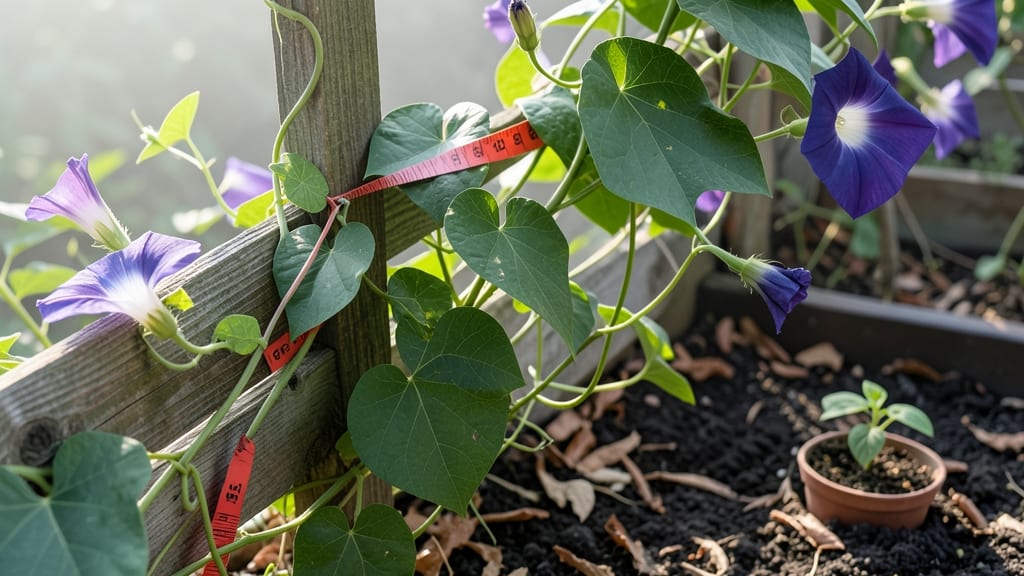
If you've ever wondered how tall do morning glories grow, you're not alone—these fast-climbing vines can turn a simple garden corner into a lush vertical masterpiece or a sprawling jungle, depending on the variety.
Some compact types barely reach 5 feet, while others stretch toward the sky, topping out at 15 feet or more with the right support.
The key to managing their height lies in understanding your specific Morning Glory 🌸 variety and growing conditions. Whether you're working with dwarf types for containers or sky-high climbers for trellises, knowing what to expect helps you plan your garden layout—avoiding tangled messes or wasted space.
Let’s break down the height ranges and how to guide their growth for the perfect display.
For gardeners in USDA Zone 6a, timing matters too—planting in April or May gives these vines the ideal window to reach their full potential before summer’s peak.
With the right trellis, sunlight, and soil prep, you can train them to climb exactly where you want, whether that’s a 10-foot fence or a cozy 3-foot trellis for a balcony.
Ready to transform your space? We’ll cover everything from variety-specific heights to trellis tips and seasonal growth patterns—so you can enjoy blooms from June through September without the guesswork. Let’s get started!

Morning glory height by variety: from compact to sky-high climbers
Morning glories aren’t one-size-fits-all when it comes to height—some varieties stay modest while others climb like they’re reaching for the sky. The standard morning glory (Ipomoea purpurea) typically grows 10–15 feet tall, but dwarf varieties can stay as short as 3–5 feet.
Choosing the right variety for your space ensures your trellis or fence isn’t overwhelmed—or left too small for those sky-high vines.
Height isn’t just about aesthetics; it also affects how you train your vines. Taller varieties need sturdy trellises or arbors, while dwarf types thrive in containers or along short fences. Even within the same species, growth habits vary—some sprawl aggressively, while others climb more vertically.
Let’s break down the most popular varieties and their mature heights to help you pick the perfect fit for your garden.
🌱 Visual Height Guide: Imagine a 10-foot morning glory towering over a basketball hoop (which is usually 10 feet tall). That’s the kind of dramatic growth you’re dealing with—unless you opt for a dwarf variety!
🌸 Morning Glory Height Comparison
| Variety | Mature Height | Growth Habit | Best For |
|---|---|---|---|
| Dwarf Morning Glory (e.g., 'Flying Saucer') | 3–5 feet | Bushy, trailing | Containers, short fences, window boxes |
| Semi-Dwarf (e.g., 'Heavenly Blue') | 5–8 feet | Moderate climbing | Trellises, arbors, small pergolas |
| Standard (e.g., 'Scarlet O’Hara') | 10–15 feet | Aggressive climbing | Tall fences, pergolas, strong trellises |
| 'Star of Bethlehem' (Ipomoea alba) | 12–20 feet | Fast, twining | Large structures, strong supports |
| 'Moonflower' (Ipomoea alba) | 10–15 feet | Night-blooming, vigorous | Privacy screens, large trellises |
💡 Pro Tip: Check seed packets for exact varieties—some "standard" seeds may surprise you with dwarf traits!
If you’re growing morning glories in containers or small spaces, dwarf varieties like 'Flying Saucer' are your best bet. These stay under 5 feet and produce abundant flowers without taking over your garden.
Their trailing habit makes them perfect for hanging baskets or window boxes where you want color without height.
For vertical gardens or trellis training, standard varieties like 'Scarlet O’Hara' or 'Heavenly Blue' will give you that classic 10–15-foot climb. These are ideal for covering fences, arbors, or even old wooden structures. Just be prepared for rapid growth—some vines can add 6–12 inches per day in ideal conditions!
One variety that often gets overlooked is the 'Star of Bethlehem' (Ipomoea alba). This one can reach 12–20 feet and is famous for its white, fragrant night-blooming flowers.
It’s a favorite for gardeners who want something dramatic and fragrant after dark. Pair it with a strong trellis or pergola to handle its weight.
For annual vs. perennial considerations, most morning glories are annuals in colder climates (USDA Zones 3–8), meaning they’ll die back to the ground in winter. However, in warmer zones (9–11), some varieties may return year after year.
Even if they’re annuals, their fast growth rate means you’ll still get that towering vine in a single season.
If you’re unsure which variety to choose, start with a mix of heights in your garden. Plant a dwarf variety in a container near your porch for easy access to flowers, and let a standard variety climb a trellis in the backyard for a stunning vertical display.
This way, you get the best of both worlds: compact beauty and sky-high drama.
Remember, height isn’t the only factor—color, bloom time, and disease resistance also play a role. For example, 'Heavenly Blue'
How to control morning glory growth: trellis tips & pruning tricks
Morning glories can grow wildly if left unchecked, but with the right trellis support and pruning techniques, you can guide their growth to your desired height. Whether you want a compact 5-foot vine or a towering 15-foot climber, control is key to a tidy, thriving garden.
Start by choosing the right trellis—metal cages work well for dwarf varieties, while tall wooden or bamboo poles suit sky-high climbers.
For optimal growth control, plant seeds near your trellis after the last frost. Morning glories thrive when their vines have something sturdy to cling to early on. Avoid overcrowding by spacing plants 12–18 inches apart—this prevents competition and encourages upward growth rather than sprawling.
If you notice vines growing in multiple directions, gently tie them to the trellis with soft plant ties or twine to direct their energy upward.
Soil and nutrients also play a critical role in managing growth. Morning glories prefer well-draining soil rich in organic matter. Add a balanced fertilizer (5-10-10) at planting and again mid-season to support steady growth without excessive leafy sprawl.
Over-fertilizing can lead to weak stems that struggle to support their own weight, so moderation is key. Mulch around the base to retain moisture and suppress weeds, which can compete for nutrients.
If your morning glories are outgrowing their space, don’t panic—you can still train them. For dwarf varieties, limit trellis height to 5–6 feet and prune aggressively to keep them contained.
For standard climbers, allow them to reach their full 10–15 feet but prune side shoots to maintain a single, strong vine. This not only controls height but also improves flower production by directing energy to blooms rather than excessive foliage.
One common mistake is assuming morning glories will stop growing on their own. In reality, they’ll keep climbing until frost or drought stress sets in. To prevent trellis overload, monitor growth weekly and adjust pruning as needed.
If you’re growing morning glories for cut flowers, focus on harvesting blooms in the morning and pruning spent flowers to encourage more blooms. This dual approach keeps the vine manageable while maximizing your harvest.
With the right balance of trellis support, pruning, and soil care, you can enjoy morning glories at the perfect height for your garden—whether that’s a compact 5-foot accent or a dramatic 15-foot focal point.
Experiment with different varieties and techniques to find what works best for your space! 🌿