
Flowers
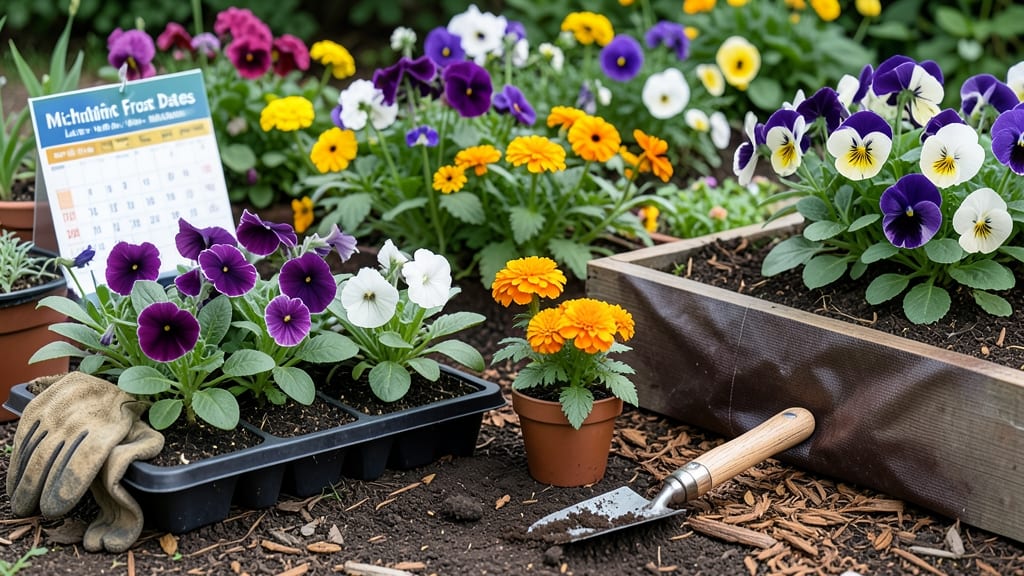
Timing your flower planting in Michigan can mean the difference between a vibrant garden and a frost-killed disappointment.
With Michigan’s 5b-6b hardiness zones and unpredictable spring weather, knowing exactly when to plant your 🌸 is the key to success. Too early, and a late frost will wipe out your tender seedlings. Too late, and you might miss the prime bloom window for annuals like marigolds or petunias.
I’ve researched frost dates, soil temperatures, and local gardening wisdom to create a foolproof guide—so you can confidently start seeds indoors, transplant seedlings, or sow directly into the ground without second-guessing.
From Detroit’s urban gardens to the Upper Peninsula’s cooler climates, we’ll break down the best planting windows for spring and fall, plus how to adjust for Michigan’s quirky weather patterns. Let’s get those flowers growing!
Michigan flower planting dates by hardiness Zone (2024 guide)
Michigan spans USDA hardiness zones 4-7, meaning frost dates vary dramatically from the Upper Peninsula (Zone 4) to southern regions like Detroit (Zone 6). Knowing your zone helps avoid late spring frosts that can devastate tender seedlings.
Most Michigan gardeners aim to plant annual flowers after May 15, while perennials can handle earlier soil exposure.
The last average frost date shifts from May 10 in Zone 4 to April 25 in Zone 6. For fall planting, aim for August 1-September 15 before the first frost—typically October 15 in Zone 4 and October 30 in Zone 6.
Always check local forecasts, as late frosts occur every 3-5 years even in Zone 6.
Here’s your zone-specific planting timeline, including ideal transplant windows and frost-resistant varieties:
For annual flowers, start seeds indoors 6-8 weeks before your last frost date. For example, in Zone 6 (Detroit), begin sowing petunias and marigolds by March 1. In Zone 4 (Upper Peninsula), delay until April 1 to avoid cold soil stunting.
Perennials like coneflowers and daylilies can be planted as early as April 1 in Zone 6 if the soil isn’t frozen. Use a soil thermometer—plant when temps hit 50°F for 3+ days. In Zone 4, wait until May 1 to ensure roots establish before summer heat.
Pro tip: Michigan State University Extension offers free frost-date maps and local planting calendars. Bookmark their Garden Hotline (888-678-3464) for real-time updates during spring’s volatile transition.
Regional variations matter! In Grand Rapids (Zone 5), late frosts linger until May 15, while Detroit (Zone 6) sees fewer delays. Always have row covers ready for late-May surprises—they can push planting dates 2-3 weeks earlier.
For fall planting, prioritize cool-season flowers like pansies and snapdragons. These thrive when planted 8-10 weeks before your first frost. In Zone 4, that means July 1; in Zone 6, you can extend to September 1.
Remember: Soil temperature > air temperature. A 60°F soil in April might fool you into planting too early—always dig down 2 inches to check. Use a clear plastic wrap test: Press it on the soil; if it fogs up in 10 seconds, it’s too cold.
🌱
How to adjust planting timing for Michigan’s unpredictable weather
Michigan’s late spring frosts can strike even after Memorial Day, leaving tender seedlings vulnerable. The key to success? Flexible timing based on soil temperature, not just calendar dates. I’ve learned to wait until the soil reaches 50°F—a simple test with a soil thermometer saves heartache later.
For annuals like petunias or tomatoes, I start seeds indoors 6-8 weeks before the last frost date. This gives me a head start, but I always keep a row cover handy for unexpected chilly nights.
Perennials like coneflowers are tougher—they’ll bounce back from light frosts, so I plant them as soon as the ground is workable.
🌱 Pro Tip: Use the 5-4-3 rule for frost risk: If your area has a 50% chance of frost 5 weeks out, 4 weeks out, or 3 weeks out, delay planting. Michigan State University Extension’s frost date maps are my go-to resource for real-time updates.
Here’s my 4-step risk assessment before planting:
- Check the 10-day forecast for nighttime temps above 32°F.
- Test soil temperature at 2-inch depth—wait if it’s below 50°F.
- Monitor local frost advisories via NOAA or your county extension office.
- Have row covers or a mini greenhouse ready for high-value plants like geraniums.
🌿 Warning: Cold-sensitive plants like impatiens or begonias should never go in the ground until after May 15 in most of Michigan. Even then, I harden them off gradually to avoid shock. For bulbs like tulips, I plant in fall (October) to let them establish roots before winter.
To extend your season, consider cold frames or hoop houses. I’ve had calendulas blooming in March under a simple plastic tunnel! For fall planting, aim for August 1—this gives flowers time to root before the first frost, usually around October 15.
💧 Remember: Overwatering stressed plants makes them more frost-susceptible. Reduce watering slightly before a frost warning, and mulch heavily to insulate roots. With these adjustments, you’ll beat Michigan’s weather and enjoy longer bloom seasons!
Frost Alert: Don’t Rely on Calendar Dates!
- Zone 4 (UP): Last frost can hit May 25—wait until June 1 for heat-loving annuals.
- Zone 5 (Detroit): May 10 is the average, but late frosts occur until May 20 30% of years.
- Zone 6 (Grand Rapids):** May 5 is safe for cold-hardy flowers like pansies, but tender plants need to wait until May 25.
🌡️ Use a soil thermometer—50°F is the magic number for most flowers!