
How To
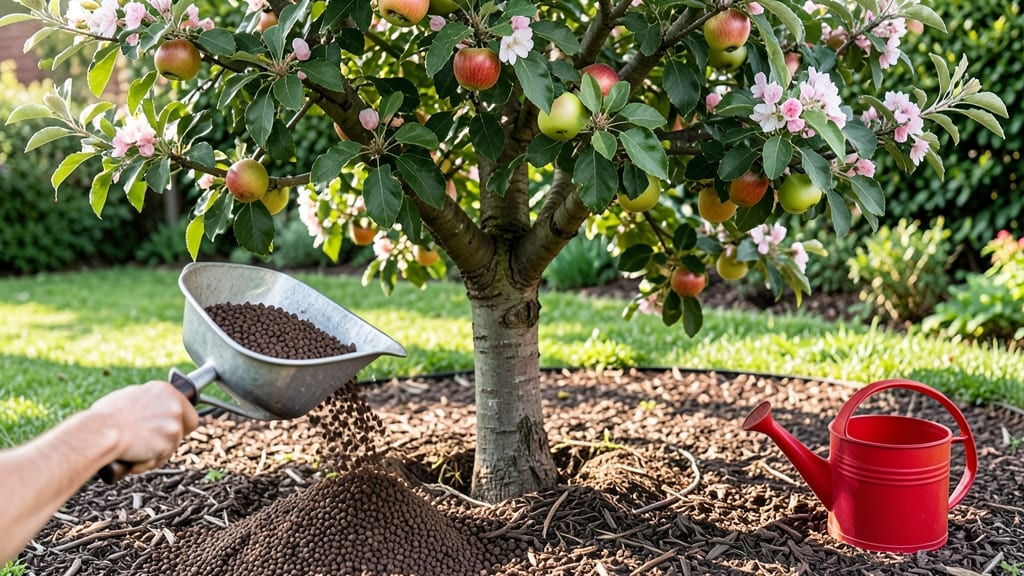
When to fertilize an apple tree can make or break your harvest—yet most gardeners either feed too early or miss the best windows entirely. If you’ve ever wondered why your tree looks healthy but produces sparse fruit, the answer likely lies in when (and how) you’re applying fertilizer.
In Zone 6, the ideal moments to fertilize are early spring and fall, but there’s a science to it. Young trees need a gentle boost to establish roots, while mature trees crave nutrients at specific growth stages.
I’ll break down the exact timing, from March-April when buds swell to post-harvest adjustments, so you never guess again.
You’ll also discover how organic vs. synthetic fertilizers play a role, plus how climate shifts (like cold snaps or dry spells) can throw off your schedule. Whether you’re a first-time grower or a seasoned orchard keeper, these insights will help you avoid common pitfalls and keep your tree thriving.
Ready to turn your apple tree into a fruit-bearing powerhouse? Let’s dive into the step-by-step schedule that’ll have your tree producing bushels of flavorful apples—without the trial and error.

Best times to fertilize apple trees for optimal fruit production
Fertilizing your apple tree at the right time is crucial for strong root growth, abundant blooms, and a bountiful harvest. Unlike annuals, fruit trees like apples have specific growth cycles that dictate when they need nutrients most.
I’ve learned the hard way—skipping this step or fertilizing at the wrong time can lead to poor fruit set or even tree stress.
For most regions, the ideal fertilization windows are early spring and late summer, but timing varies based on your USDA hardiness zone and the tree’s age.
In Zone 6 (like my garden), I start fertilizing as soon as the soil thaws in March or April, right when buds begin to swell. This kickstarts growth after winter dormancy.
Here’s the key: Never fertilize in late summer or fall. Doing so encourages tender new growth that won’t harden off before winter, leaving your tree vulnerable to frost damage. In my experience, a fall fertilizer application is a common mistake that can set back next year’s harvest.
🌱
In warmer climates (Zones 7–9), you can extend fertilization into early fall, but always stop at least 6–8 weeks before your first frost. For example, if frost hits by November 1st, your last fertilizer application should be in early September.
This gives the tree time to harden off before winter.
Young apple trees (1–3 years old) need more frequent feeding—every 4–6 weeks during the growing season—while mature trees can handle 2–3 applications per year. I use a slow-release fertilizer for my 5-year-old tree to avoid nutrient spikes that can burn roots or encourage weak growth.
Before applying fertilizer, always test your soil to check pH (ideal range: 6.0–7.0 for apples). If your soil is too acidic, amend it with lime before fertilizing. I test mine every 2–3 years—it’s a small investment that pays off in better fruit quality.
Pro tip: Water your tree deeply 24 hours before fertilizing to help nutrients penetrate the soil. I set up a drip irrigation system around my tree’s drip line to make this easier. After applying fertilizer, water again to wash any granules away from the trunk.
🌿
One mistake I see often is over-fertilizing nitrogen, which leads to lots of leaves but few apples. For fruit production, you need a balanced NPK ratio (10-10-10) or one slightly higher in phosphorus (10-20-10) to support flowering. Potassium is also key—it helps trees resist disease and stress.
If you’re in a drought-prone area, like much of the Southwest, reduce fertilization in summer months to prevent stress. Instead, focus on deep watering and mulching. My neighbor’s apple tree in Zone 8 nearly died from over-fertilization during a heatwave—now she follows a light summer schedule.
Finally, keep an eye on your tree’s foliage and fruit. Yellowing leaves? That’s often a sign of nitrogen deficiency or poor soil drainage. Small, misshapen apples? Your tree might need more phosphorus or potassium. Adjust your fertilization plan based on what you observe each season.
✂️
Best times to fertilize apple trees for optimal fruit production
Fertilizing your apple tree at the right time fuels fruit production and tree health. The ideal windows are early spring and late summer, but timing depends on your climate zone and tree age.
In Zone 6, I focus on March-April for spring feeding and September for any late-season adjustments.
Young trees (1-3 years old) need lighter applications to encourage root development rather than fruit bearing. Mature trees, however, benefit from balanced fertilization to support heavy fruiting. Over-fertilizing can lead to excessive leafy growth at the expense of fruit quality.
| Season | Best Time | Tree Stage | Fertilizer Type |
|---|---|---|---|
| Early Spring | March-April (after last frost) | All ages | Balanced (10-10-10) |
| Late Summer | August-September | Fruiting trees | Potassium-rich (5-10-10) |
| Fall | October (avoid) | All ages | None (dormancy) |
| Winter | December-February | All ages | None (dormancy) |
For cold climates (Zones 3-5), delay spring fertilization until after the last frost date—typically mid-April in Zone 6. In warmer zones (Zones 7-9), you can start as early as February when soil temperatures reach 50°F.
Always test your soil pH first; apple trees thrive in slightly acidic soil (6.0-6.5).
I apply fertilizer in early morning after watering to prevent root burn. For young trees, I use half the recommended dose to avoid shocking their root systems.
In my experience, organic fertilizers like compost or manure tea release nutrients slowly, reducing the risk of over-fertilization compared to synthetic options.
Watch for leaf color changes after fertilizing—dark green leaves indicate healthy growth, while yellowing suggests nitrogen excess. If your tree shows signs of nutrient deficiency (like small leaves or poor fruiting), adjust your schedule to focus on corrective feeding during the next growing season.
Timing matters most during bud break (early spring) and fruit set (late spring). These are critical periods when your apple tree needs nutrients for flowering and fruit development. Skipping spring fertilization can lead to smaller fruit or fewer blossoms next year.