
How To
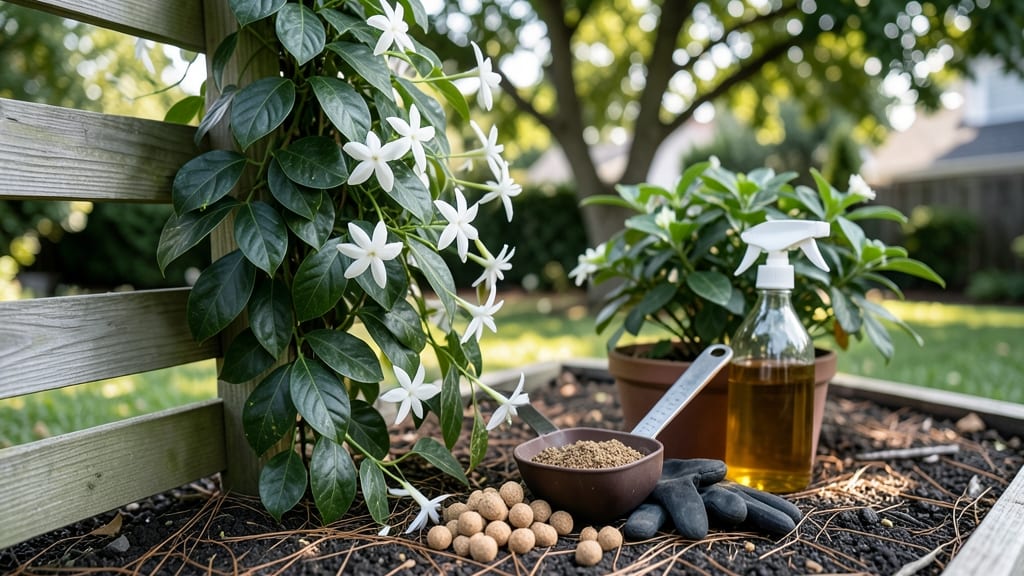
Timing your fertilizer for Star Jasmine 🌸 could mean the difference between a vine bursting with fragrant blooms and one struggling to keep up.
The best time to fertilize Star Jasmine isn’t just once a year—it’s a strategic schedule that aligns with its natural growth cycles, especially in USDA Zone 6a where spring awakening sets the stage for summer showstopping flowers.
Most gardeners make the mistake of feeding too late or too early, missing the critical window when Star Jasmine needs that nutrient boost. I’ve learned that early spring—right after the last frost—is when you should kickstart growth, while late summer gives your plant a final push before blooming winds down.
But there’s more to it than just timing; the type of fertilizer and how you apply it can transform your vine’s health.
Whether you’re dealing with a 5-foot climber or a mature 20-foot trellis, understanding these key moments will help you avoid common pitfalls like yellowing leaves or sparse blooms.
Let’s break down the exact schedule, from spring’s first feeding to fall’s final prep, so you can keep your Star Jasmine thriving all season long.
Ready to unlock the secret to nonstop blooms? You’ll discover how to choose the right fertilizer, spot when your plant needs a boost, and adjust for your local climate—so your Star Jasmine becomes the star of your garden every year.

Best times to fertilize star jasmine for maximum blooms
Star jasmine thrives when you time its fertilizer applications with its natural growth cycles. Unlike many plants, it responds best to a seasonal feeding schedule that aligns with blooming and dormancy phases.
The key windows are early spring for new growth, late spring/early summer for flowering, and a light fall feed for winter prep. Missing these can lead to sparse blooms or leggy vines.
In USDA Zone 6a (where star jasmine performs best), I start fertilizing after the last frost—typically mid-April—when soil warms to 60°F. This kickstarts root development and foliage growth before the first flowers appear. The plant’s fragrant blooms (June–September) depend on this early-season boost, so don’t skip it!
Here’s the science-backed schedule I follow for year-round blooms:
For tropical climates (Zones 8–10), adjust this schedule by fertilizing every 6 weeks year-round, but reduce amounts in winter to avoid salt buildup. In cooler regions (Zones 5 and below), delay the first feed until soil thaws—usually late May—to prevent root burn from cold soil.
Pro tip: Always fertilize in the early morning when temperatures are mild. This reduces leaf burn risk and ensures nutrients absorb efficiently. Water the soil 24 hours before and after applying fertilizer to prevent root damage.
Over-fertilizing in summer can lead to leaf burn or fewer blooms, while skipping spring feeds results in weak stems and sparse flowers. Balance is key—star jasmine rewards precision!
🌸
Best times to fertilize star jasmine for maximum blooms
Timing your star jasmine fertilization is everything—this fragrant vine thrives when fed at the right moments. The key windows align with its natural growth cycles, ensuring vibrant blooms and healthy foliage.
Miss these, and you risk weak stems or sparse flowers. Let’s break down the science-backed schedule that keeps your star jasmine flourishing year-round.
Start with a spring feeding in early April, just as new growth emerges. This jumpstarts your vine’s energy for the blooming season ahead. Think of it as giving your plant a growth boost before it enters its peak flowering phase.
In USDA Zone 6a, this aligns perfectly with post-frost conditions when soil temperatures hit 60°F+.
| Season | Fertilizer Action | Fertilizer Type | Key Benefit |
|---|---|---|---|
| Early Spring | Feed (April) | Balanced (10-10-10) | Promotes new growth |
| Late Spring | Light Feed (May-June) | Low-nitrogen | Encourages blooms |
| Summer | Feed (July-August) | Balanced | Maintains foliage |
| Fall | Light Feed (September) | Organic compost | Prepares for dormancy |
| Winter | Skip (October-March) | None | Allows natural rest |
After the initial spring feeding, switch to a light fertilizer in late May to support blooming. Use a low-nitrogen formula (like 5-10-10) to redirect energy toward flowers instead of leafy growth.
This is where many gardeners go wrong—over-fertilizing with nitrogen leads to lush foliage but fewer blooms. Aim for 1 tbsp per plant every 6 weeks during active growth.
Summer calls for another balanced fertilizer in July and August to sustain your vine’s energy. This is especially critical if your star jasmine is climbing a trellis or arbor, as it needs strength to support its 15-20 ft vines.
Water deeply before applying fertilizer to prevent root burn. In hot climates, reduce feeding frequency to every 8 weeks to avoid stress.
Don’t overlook fall fertilization in September! A light application of organic compost or a slow-release fertilizer prepares your star jasmine for dormancy. This step is often skipped but prevents winter stress.
In temperate zones, this final feed can extend your blooming season into early fall. Always apply by mid-September to allow roots to absorb nutrients before cold sets in.
Winter is the only time to skip fertilization entirely. Your star jasmine enters dormancy, and feeding could harm roots or encourage weak growth. Instead, focus on mulching with 2-3 inches of organic matter to insulate roots.
Resume feeding in early spring when you spot new leaf buds—a sure sign your vine is waking up.