
Plants
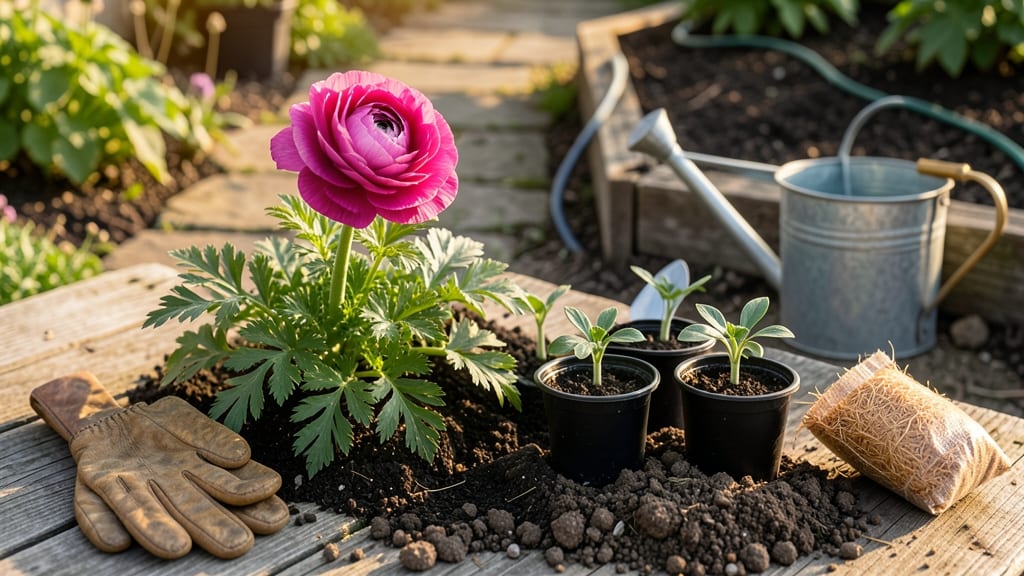
Timing your Ranunculus planting in Utah isn't just about the calendar—it's about beating the frost before it beats you. These delicate 🌸 blooms need a precise window to thrive in Utah's 5-8 USDA zones, where a late frost can wipe out months of effort in just one night.
Most gardeners in Utah plant their Ranunculus bulbs in September or October for stunning spring blooms, but that timeline shifts dramatically depending on whether you're in Salt Lake City or the high desert.
Get it wrong, and you'll either have flowers that never emerge or ones that arrive too late for Mother's Day.
What if I told you there's a frost-free strategy that guarantees vibrant blooms every year? From pre-chilling bulbs to adjusting for elevation, I'll walk you through the exact steps Utah gardeners use to turn their yards into springtime showcases—without the guesswork.
Let's dive into the zone-specific planting calendar that'll have your Ranunculus blooming right on schedule, no matter where in Utah you call home.
Utah Ranunculus planting timeline by USDA Zone: exact dates for frost-free success
Utah’s USDA Zones 5-7 create a unique challenge for ranunculus growers—high desert areas like St. George (Zone 7) have 150+ frost-free days, while mountain regions (Zone 5) like Park City face shorter growing seasons.
To guarantee vibrant spring blooms, timing is everything. Plant too early, and frost damage ruins your bulbs; too late, and you’ll miss Mother’s Day or Memorial Day deadlines for peak floral displays.
Ranunculus bulbs need 6-8 weeks of cold stratification before sprouting. In Utah, this means planting in late September to early October for spring blooms (April-May) or early March for summer blooms (June-July).
The key? Soil temperatures must stay below 60°F for at least 4-6 weeks post-planting to trigger dormancy. Use these zone-specific guidelines to adjust for your exact location.
⚠️ CRITICAL NOTE: Utah’s elevation variations (from 2,800 ft in Salt Lake City to 9,000+ ft in the mountains) shift frost dates by 2-4 weeks. Always check your local last frost date—Utah State University’s Extension Office provides updated maps.
For spring blooms, aim to plant 6-8 weeks before your last frost date. In Zone 5, this means late September; in Zone 7, you can push it to early November.
The soil temperature should be below 60°F for 4-6 weeks post-planting to ensure bulbs chill properly. Use a soil thermometer to monitor—50-55°F is ideal for dormancy.
If you’re targeting Mother’s Day (May 10–12) blooms, plant in mid-September (Zone 5) or early October (Zone 6). For Memorial Day (late May), extend to late September–early October. In Zone 7, you can even plant in November for February-March blooms, perfect for Valentine’s Day arrangements.
Utah’s high desert climates (like Moab or Price) have lower humidity and warmer days, which can accelerate growth. Adjust planting dates 1-2 weeks earlier in these areas. Conversely, mountain valleys (e.g., Ogden, Heber) may need 1-2 weeks later due to cooler nights and later soil warming.
After planting, mulch with straw (2-3 inches) to insulate bulbs and retain moisture during Utah’s winter dry spells. Remove mulch in early spring once shoots emerge to prevent rot.
In Zone 5, keep an eye out for late April frostsfrost cloth if temperatures dip below 28°F.
For summer blooms, plant in early March (Zone 5-6) or late February (Zone 7). This timing ensures bulbs bloom by June-July, extending your floral season. Stagger plantings every 2-3 weeks for continuous color through August.
In Zone 7, you can even plant in January for late spring blooms.
Remember: Ranunculus bulbs are delicate—overwatering causes rot, and poor drainage leads to mold. Amend
Utah’s diverse elevation zones and microclimates mean your ranunculus planting window can shift dramatically—even between neighborhoods. For example, Salt Lake City’s valley floor (Zone 6b) often warms faster than Park City’s mountain slopes (Zone 5a), creating a 2-3 week difference in safe planting dates. Always check your local frost dates from the National Weather Service or USDA Plant Hardiness Map. Elevation plays a major role in soil warming. At 5,000 feet (like Provo), soil may thaw by early September, while at 8,000 feet (like Park City), you might wait until late September. Use a soil thermometer to confirm temperatures reach 50°F—the ideal range for planting. 🌱 Don’t overlook urban heat islands in cities like Ogden or Layton, where pavement and buildings create 5-10°F warmer microclimates. These areas can support earlier planting by 1-2 weeks compared to rural zones. For high-desert areas (e.g., St. George), prioritize afternoon shade to prevent heat stress on bulbs. If you’re unsure about your local conditions, conduct a simple soil test in early August. Dig a 6-inch hole, fill it with water, and time how long it drains. Under 1 hour? Amend your soil immediately. Over 2 hours? Choose a raised bed or mound for planting. Pro tip: Use mulch (straw or pine needles) after planting to insulate bulbs from temperature swings. In Zone 7+, you can even push your window to late October for summer-blooming ranunculus—just cover bulbs with 4 inches of mulch before winter. 🌿5 Critical factors that determine your Ranunculus planting window in Utah
📌 Numbered Highlights: Utah-Specific Planting Factors