
Light Requirements
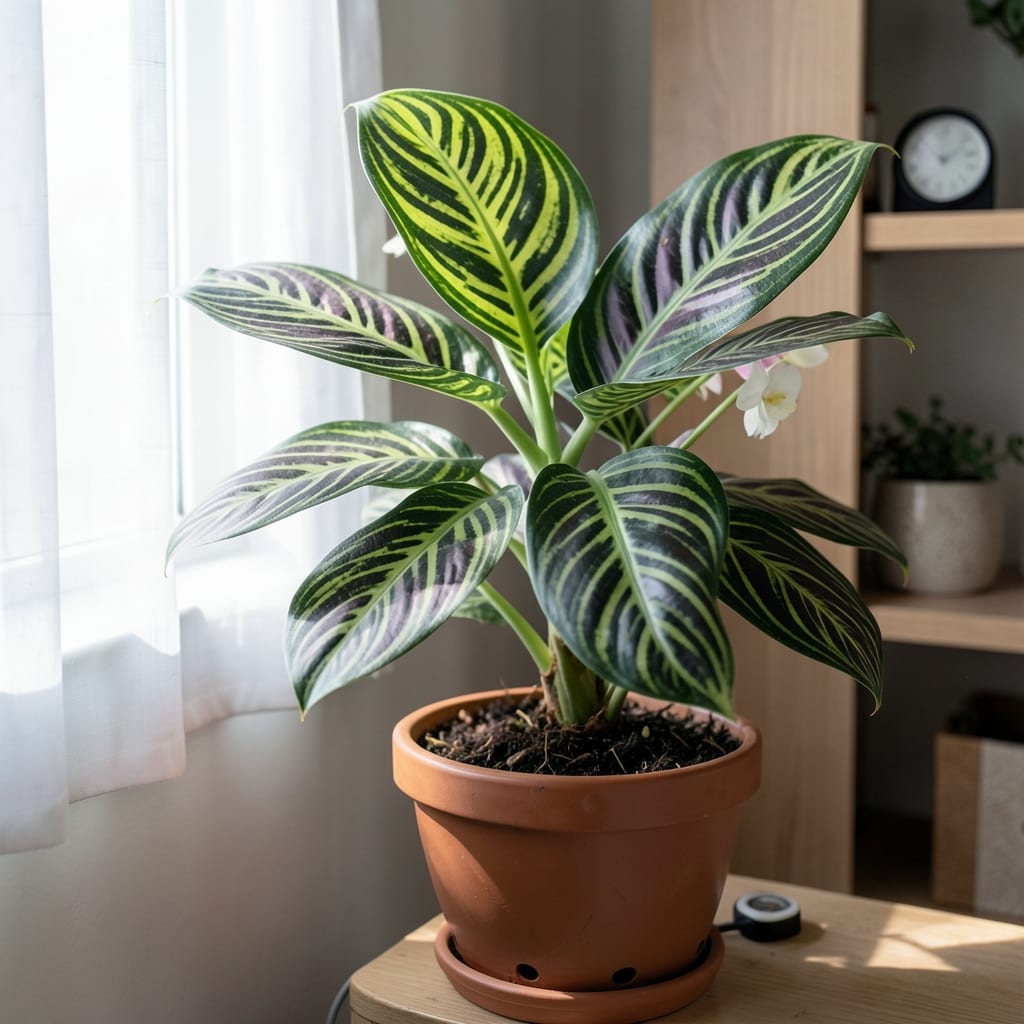
If you’re wondering how much light does a zebra plant need, the fading stripes or dull leaves are your first clues—it’s not just about hours, but the perfect balance of brightness and indirect rays to keep those bold patterns vibrant.
This tropical beauty thrives in bright indirect light, but too much direct sun can scorch its leaves, while too little dims the iconic stripes. I’ll break down exactly how to spot the signs of light stress and adjust your plant’s environment—whether you’re dealing with a north-facing room or a sunny south window.
You’ll discover the ideal light window (hint: it’s not what you might think), plus easy fixes like rotating your plant and using grow lights for low-light spots. Let’s get those leaves popping again—your zebra plant’s health depends on it!
From seasonal shifts to indoor placement hacks, I’ve got you covered with actionable tips that actually work. By the end, you’ll know exactly how to give your 🌿 zebra plant the light it craves without guessing.


Zebra plant light requirements: ideal hours and intensity for striped leaves
Your zebra plant (Aphelandra squarrosa) thrives on bright indirect light—think of it as needing the same conditions as a reading nook near a window. Without the right light, those iconic striped leaves will lose their vibrancy, and the plant may stretch toward any available light source. I’ve learned the hard way that direct afternoon sun can scorch its delicate foliage, while dim corners cause the stripes to fade into dull green.
The ideal light exposure for a zebra plant is 4 to 6 hours of bright, filtered sunlight daily. This mimics its natural habitat under the dappled canopy of tropical forests. In my experience, placing it 2 to 3 feet away from an east-facing window strikes the perfect balance—enough light to keep the stripes sharp without risking sunburn. South-facing windows can work too, but only if you provide sheer curtains to diffuse the harsh afternoon rays.
Seasonal changes also affect your zebra plant’s light needs. During winter months, when sunlight is weaker, you might need to supplement with a grow light for 6 to 8 hours daily. I’ve noticed my plant’s growth slows in winter, but keeping it near a south-facing window or under a LED grow bulb helps maintain its health. Conversely, in summer, when sunlight is intense, I move mine slightly farther from the window to prevent leaf scorch.
Here’s a quick breakdown of what happens when light conditions aren’t met:
One of the most common mistakes I see is assuming that more light is always better. While zebra plants love light, they’re not drought-tolerant, so you’ll also need to adjust watering based on light exposure. For example, a plant getting bright indirect light may need watering every 5 to 7 days, while one in lower light might only need it every 7 to 10 days. Always check the top inch of soil—if it’s dry, it’s time to water.
If you’re noticing your zebra plant’s stripes losing their contrast, it’s a clear sign of insufficient light. The plant’s natural response is to produce more chlorophyll in the lower leaves to compensate, which washes out the white and green stripes. To fix this, I recommend rotating the plant every few days so all sides get even light exposure. This also helps prevent the plant from growing lopsided, which I’ve seen happen when it’s always leaning toward the light source.
For those with north-facing windows, don’t worry—zebra plants can adapt to lower light conditions, though their growth may be slower. In my north-facing office, I supplement with a 12-inch LED grow light for 4 hours in the morning and 4 hours in the evening. This mimics the natural light cycle and keeps my plant thriving without the risk of overheating from direct sun.
Pro tip: If you’re introducing your zebra plant to a brighter spot, do it gradually. Sudden exposure to intense light can cause leaf burn, and the plant may drop its lower leaves as a stress response. I start by moving it 1 foot closer to the window every 3 to 4 days until it reaches its ideal spot. This slow transition helps the plant adjust without shock.
Finally, pay attention to the color of new growth. Healthy zebra plants produce leaves with sharp white stripes against a deep green background. If the stripes appear grayish or dull, it’s a red flag that the light isn’t strong enough. On the flip side, if you see yellowing or brown patches, it’s likely getting too much direct sun. Trust your plant—it will tell you exactly what it needs through its leaves! 🌿
Zebra plant light requirements: ideal hours and intensity for striped leaves
The zebra plant (Aphelandra squarrosa) thrives in bright indirect light, which is essential for maintaining its signature striped foliage. Without enough light, those bold stripes fade, and the plant becomes leggy. Too much direct sun, especially harsh afternoon rays, can scorch the leaves. Aim for 4-6 hours of filtered light daily—think dappled sunlight through sheer curtains or an east-facing window.
In nature, zebra plants grow under the canopy of tropical forests, where they receive bright but diffused light. Replicating this environment indoors is key. South-facing windows can work if you place your plant 3-4 feet away to avoid direct exposure. West-facing windows are riskier due to intense afternoon sun, while north-facing windows may not provide enough light unless supplemented.
Seasonal adjustments matter too. During spring and summer, your zebra plant can handle slightly more light, but always avoid harsh midday rays. In fall and winter, when natural light dims, you may need to supplement with a grow light for 6-8 hours daily to prevent light deficiency symptoms like pale, dull leaves.
| Light Condition | Ideal Hours | Foliage Impact | Best Placement |
|---|---|---|---|
| Bright Indirect Light | 4-6 hours | Vibrant stripes, compact growth | East/west window, 2-3 ft away |
| Low Light | <2 hours | Dull stripes, leggy stems | North window or interior room |
| Direct Sunlight | >4 hours | Brown scorched patches | Avoid south/west windows |
Watch for subtle clues that your zebra plant isn’t getting the right light. If the stripes lose contrast and the leaves turn green, it’s craving more brightness. Conversely, yellow or crispy edges signal too much direct sun. Rotate your plant quarter-turns every 2 weeks to ensure even light exposure, preventing lopsided growth toward the light source.
For indoor gardeners, grow lights are a game-changer in low-light spaces. A full-spectrum LED bulb placed 12-18 inches above the plant for 10-12 hours daily mimics natural light perfectly. Position it so the light isn’t too intense—your zebra plant shouldn’t feel a warm breeze from the bulb, which can stress it.
Outdoor zebra plants (in warm climates like USDA Zone 10+) can enjoy morning sun and afternoon shade. If you’re transitioning your plant from indoor to outdoor, do it gradually over 7-10 days to avoid sunburn. Start with 1 hour of morning sun, then increase by 30 minutes daily until it’s acclimated to its new environment.
Remember, the goal is to keep those iconic stripes sharp and the leaves lush. With the right light balance, your zebra plant will reward you with bold foliage and occasional blooms—a true tropical showstopper in any space. 🌿