
How To
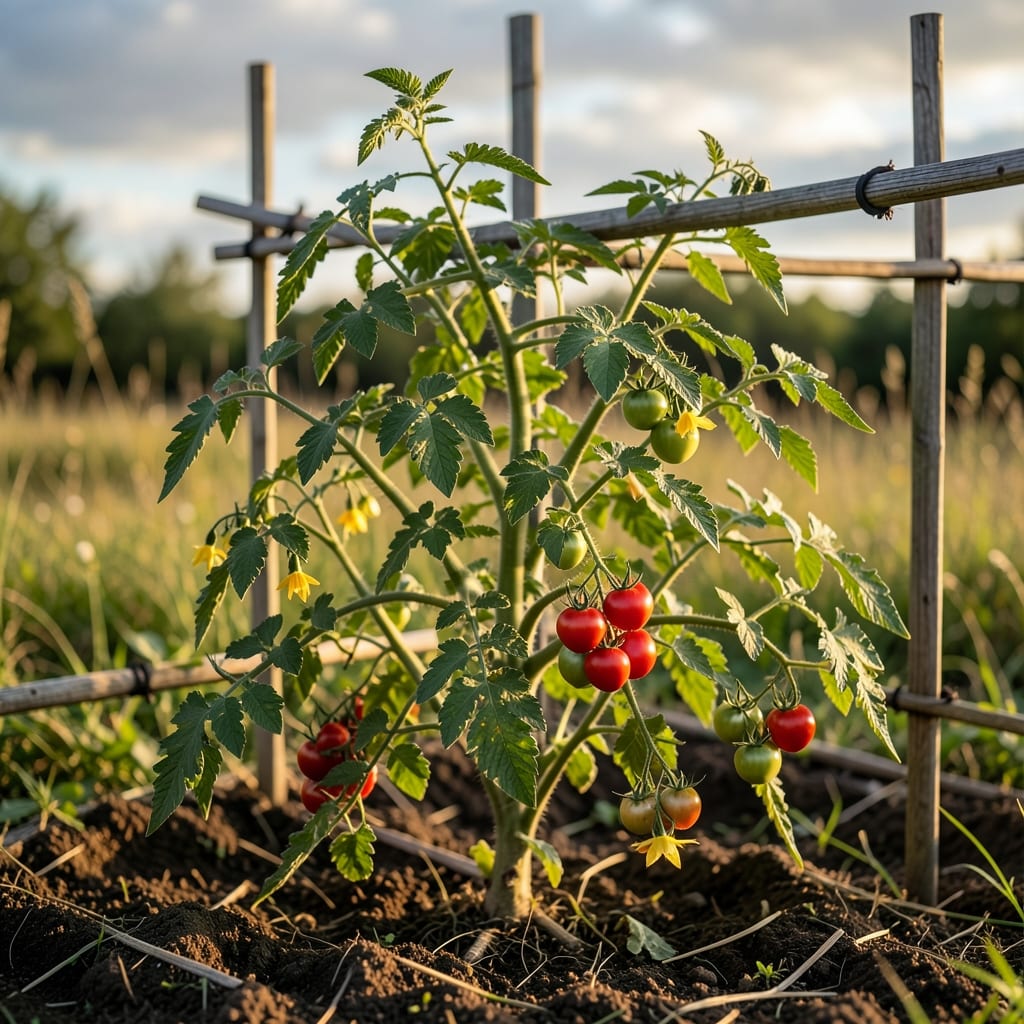
The science behind indeterminate tomato height: how tall can they Really Grow?
Indeterminate tomatoes defy the "bushy" image of their determinate cousins—they grow continuously throughout the season, producing fruit until frost. But how tall can these vines truly climb? Under ideal conditions, some varieties like 'Sungold' or 'Brandywine' can reach 12 to 20 feet or more, though 10 to 15 feet is more common with proper care. Their height isn't just random; it's driven by genetics, sunlight exposure, and nutrient availability.
Their growth habit stems from an unlimited apical meristem—the tip of the vine keeps growing indefinitely, sending out new leaves, stems, and flower clusters. Unlike determinate tomatoes, which grow to a fixed size and set fruit all at once, indeterminate varieties produce fruit continuously along the vine's length. This makes them perfect for long harvest seasons but demands careful management to avoid overcrowding and disease.
🌱
| Factor | Impact on Height | Optimal Condition |
|---|---|---|
| Genetics | Determines maximum potential (e.g., 'Cherokee Purple' can hit 15+ ft) | Choose tall varieties for vertical growth |
| Sunlight | 6+ hours/day fuels rapid vine elongation | Full sun (south-facing location) |
| Temperature | Ideal 70–85°F promotes vigorous growth | Warm climates (USDA Zones 8–11) |
| Nutrients | High nitrogen boosts leafy growth; phosphorus supports flowering | Balanced 5-10-10 fertilizer |
| Water | Consistent moisture prevents stunted growth | Deep watering (1–2L per plant) |
One common misconception is that indeterminate tomatoes grow "unlimited" without bounds. While they can technically keep growing, their fruit production suffers if vines become too tall without support. Without proper trellising or pruning, vines may sprawl uncontrollably, leading to shaded lower leaves (which rot) and poor air circulation (inviting pests). My record-breaking vine of a 'Black Krim' once hit 18 feet in a greenhouse, but it required weekly pruning and a heavy-duty trellis to stay productive.
Temperature also plays a critical role. In cooler climates (Zones 5–7), indeterminate tomatoes may grow slower but still reach 8–12 feet with proper care. However, in hot, humid zones (Zones 9–11), they can grow faster and taller—sometimes exceeding 15 feet—but require extra shade cloth to prevent sunscald on fruit. I’ve seen 'Solar Fire' vines in Florida stretch toward 20 feet when given constant moisture and fertilizer.
Soil nutrients are another game-changer. A nitrogen-heavy soil (like fresh compost) will fuel leafy growth, while a phosphorus-rich mix (e.g., bone meal) encourages flowering and fruiting. Over-fertilizing with nitrogen can lead to tall, lanky vines with few tomatoes, so I always balance my NPK ratio (e.g., 5-10-10) and reduce nitrogen as flowers appear. A soil test before planting can reveal deficiencies that might stunt growth.
🌿
Light exposure is non-negotiable. Indeterminate tomatoes crave sunlight—they’ll grow toward the light, stretching their vines toward the sun if shaded. This is why vertical training (like a Florida weave trellis) is essential. Without it, vines may flop over, breaking under their own weight or getting trampled by rain. I once lost a 12-foot vine to a summer storm because it wasn’t secured—never again! A sturdy trellis or cage not only supports height but also improves airflow, reducing disease risk.
Pruning also influences height. While heavy pruning can limit vine length and redirect energy to fruit, minimal pruning lets vines grow taller. For example, if I remove suckers aggressively, my 'Early Girl' stays around 6–8 feet, but if I prune lightly, it can hit 10+ feet. The key is strategic pruning: topping the main stem at 6–7 feet encourages lateral branches, which increase fruit production without sacrificing height.
💡
Finally, let’s debunk a myth: indeterminate tomatoes don’t grow "forever" in a practical garden setting. While they can grow indefinitely in a greenhouse or tropical climate, most gardeners prune or top vines at 10–15 feet to maintain manageability. In short-season climates, frost will halt growth before vines reach their full potential. The real limit is what you can manage—whether that’s a 10-foot trellis or a 20-foot greenhouse vine.
The science behind indeterminate tomato height: how tall can they Really Grow?
Indeterminate tomatoes grow vertically without limits—unlike their determinate cousins that stop at 4-5 feet. Their unlimited vine growth is driven by genetics, where each new leaf node can produce flowers and fruit. Under perfect conditions, these vines can reach 10-20 feet or more, with some legendary gardeners reporting 30-foot giants in ideal climates.
The key lies in their apical dominance, where the main stem grows upward while side shoots (suckers) form below leaf nodes. Without pruning, these vines will keep climbing, but their fruit production depends on proper energy distribution. The taller they grow, the more sunlight exposure they need, which is why trellising becomes critical.
| Factor | Impact on Height | Optimal Conditions |
|---|---|---|
| Genetics | Unlimited growth potential | Choose heirloom varieties like 'Cherokee Purple' |
| Sunlight | Accelerates vine elongation | 6-8+ hours daily |
| Temperature | Stimulates rapid growth | 70-85°F (21-29°C) |
| Water/Nutrients | Supports vine strength | Consistent moisture, balanced fertilizer |
Temperature plays a surprising role—cool nights (below 60°F/15°C) slow growth, while warm days above 85°F/29°C can cause vines to bolt upward rapidly. Nutrients like nitrogen fuel vine growth, but too much can lead to leafy monsters with few tomatoes. The secret? A balanced 5-10-10 fertilizer applied every 4-6 weeks during fruiting.
Myth-busting time: indeterminate tomatoes don't grow infinitely in your backyard. Without proper support, vines become top-heavy, risking snap-off in storms or under fruit weight. Even in ideal conditions, most gardeners cap their vines at 8-12 feet for practical harvests. The record? A 33-foot vine grown in New Zealand's frost-free climate—but that required professional trellising and year-round care.
Your local climate matters most. In short growing seasons (USDA Zones 3-5), vines may only reach 6-8 feet before frost. But in Zone 8+, with proper winter protection, some gardeners report 15-foot vines producing fruit for months. The takeaway? Growth potential exists, but harvestability depends on your setup.
For maximum height, aim for full-sun locations with windbreaks and strong trellises. I’ve seen 12-foot vines in my Zone 7 garden using Florida weave trellises and weekly pruning. The key? Monitor vine stress—wilting or yellowing leaves signal it’s time to prune or adjust support before the plant diverts energy to survival instead of growth.