
Trees
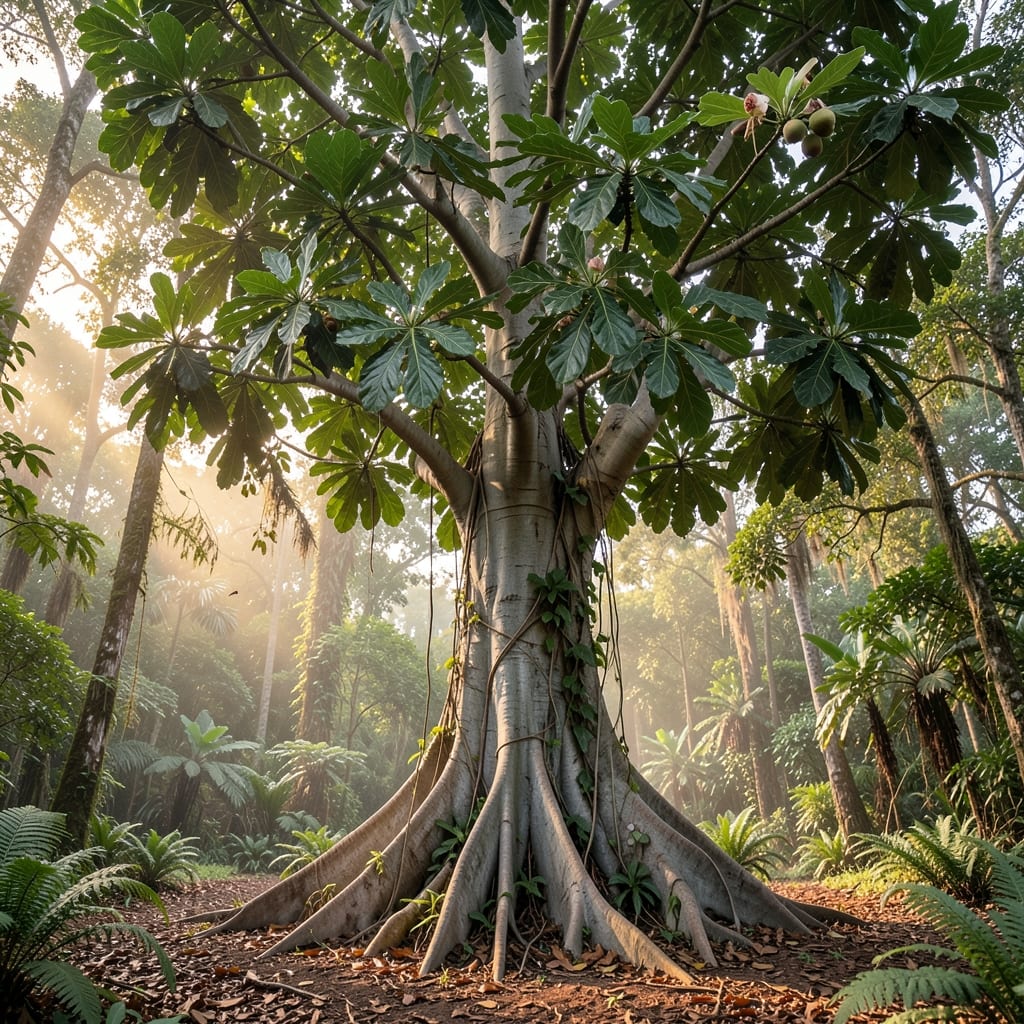
Ever wondered how tall rainforest trees can grow to heights that make skyscrapers look like shrubs? The answer lies in nature’s most impressive engineering—where 🌳 rainforest trees can soar up to 330 feet, towering over everything else in their ecosystem.
These giants aren’t just tall—they’re also the backbone of tropical forests, shaping entire ecosystems. From the towering kapok trees to the elusive emergents that punch through the canopy, their height isn’t just a feat of nature—it’s a survival strategy. But what makes them grow so massive, and could you ever grow one in your own backyard?
In this guide, we’ll explore the science behind their staggering growth, the conditions they thrive in, and whether you can cultivate these tropical wonders at home. Whether you’re a gardener dreaming of a rainforest-inspired landscape or just curious about nature’s skyscrapers, there’s plenty to discover.
Get ready to uncover the secrets of these towering giants and how their growth habits might just inspire your next gardening project—even if it’s on a smaller scale.


Record-breaking rainforest trees: the tallest species and their stunning heights
When you think of rainforest trees, images of 300-foot giants piercing the sky likely come to mind. These aren’t just tall—they’re architectural marvels, with some species reaching heights that dwarf even the tallest buildings. The kapok tree (Ceiba pentandra), for example, can grow up to 200 feet, while the emergent trees like the Shorea fagueti in Southeast Asia’s rainforests can soar beyond 330 feet—that’s taller than a 10-story building!
These towering trees aren’t just outliers; they’re the canopy dominators of their ecosystems. Their height gives them a competitive edge, allowing them to compete for sunlight in the dense, shaded understory. But what makes them grow so massive? It’s a combination of genetic adaptations, nutrient-rich soil, and year-round growing conditions in tropical climates.
Here’s a closer look at the tallest rainforest trees and why they’re nature’s skyscrapers:
| Tree Species | Max Height (ft) | Location | Key Feature |
|---|---|---|---|
| Kapok Tree (Ceiba pentandra) | 200 ft | Amazon Basin, Central/South America | Buttress roots for stability |
| Shorea fagueti (Meranti) | 330 ft | Borneo, Malaysia | World’s tallest tropical tree |
| Emergent Fig (Ficus spp.) | 250 ft | Amazon, Congo Basin | Strategic canopy positioning |
| Giant Ceiba (Ceiba schottiana) | 180 ft | Central America | Fast-growing emergent |
| Tallow Tree (Triplochiton scleroxylon) | 200 ft | West Africa | Lightweight wood for height |
These trees don’t just grow tall—they dominate their environment. Their height allows them to access direct sunlight, which is scarce in the dense rainforest understory. But growing to such extreme heights isn’t just about sunlight; it’s also about root systems that spread wide to anchor the tree and vascular efficiency to transport water and nutrients from the ground to the canopy.
For gardeners dreaming of a rainforest-inspired landscape, even smaller tropical trees like the monstera deliciosa or ficus elastica can offer a taste of this grandeur. While they won’t reach 300 feet, they can still grow into impressive, statement-making plants with the right care. The key is replicating their natural conditions: high humidity, indirect light, and nutrient-rich soil.
If you’ve ever wondered how these trees grow so tall, the answer lies in their adaptations. From buttress roots to efficient water transport, nature has equipped them to reach for the sky. And while you might not have a 330-foot tree in your backyard, understanding these giants can inspire how you grow even the tallest plants in your garden.
Next, we’ll dive into the science behind their growth, exploring how these trees achieve such staggering heights and what it means for cultivating tropical plants at home. 🌳
How rainforest trees grow so tall: the science behind their towering success
Rainforest trees achieve their breathtaking heights through a combination of biological adaptations and environmental advantages that most garden plants simply can’t match. Unlike temperate trees that grow slowly, these giants thrive in warm, humid conditions year-round, allowing them to grow continuously without seasonal dormancy. Their rapid growth isn’t just luck—it’s the result of evolved survival strategies honed over millennia.
Their root systems are a marvel of engineering. Many rainforest trees develop shallow, widespread roots that spread out to capture nutrients from the thin, nutrient-poor soil. Others, like the towering kapok, grow deep taproots to access water deep underground. This dual strategy ensures stability while maximizing resource uptake, even in crowded canopies where sunlight is scarce.
Key Takeaways: Why Rainforest Trees Grow So Tall
One of the most fascinating adaptations is their vascular system. Rainforest trees have wide, efficient xylem vessels that transport water and nutrients upward at incredible speeds. This allows them to support massive canopies without suffering from hydraulic failure—a common limitation for tall trees in other ecosystems. For comparison, a 330-foot kapok tree moves water from its roots to its crown at a rate that would make a skyscraper’s plumbing system look primitive.
The role of epiphytes—plants like orchids and bromeliads that grow on tree branches—also plays a surprising part in their success. These air plants add weight to branches, encouraging the tree to grow thicker and taller to support them. Additionally, they retain moisture and even contribute nutrients through decomposition, creating a symbiotic relationship that benefits the host tree.
Light is another critical factor. In dense rainforests, sunlight barely reaches the forest floor, forcing trees to compete vertically. The tallest species, called emergent trees, grow above the canopy to capture direct sunlight. This competition drives their towering growth, as only the fittest can reach the sunlit upper layers. Without this pressure, many rainforest trees would grow much shorter.
For gardeners dreaming of cultivating rainforest-inspired plants, understanding these adaptations is key. While you can’t grow a 330-foot kapok tree in your backyard, you can replicate some of these conditions—like high humidity, indirect sunlight, and nutrient-rich soilmonstera or rubber plants. The science behind these giants isn’t just awe-inspiring—it’s a masterclass in plant resilience and adaptability.