Size
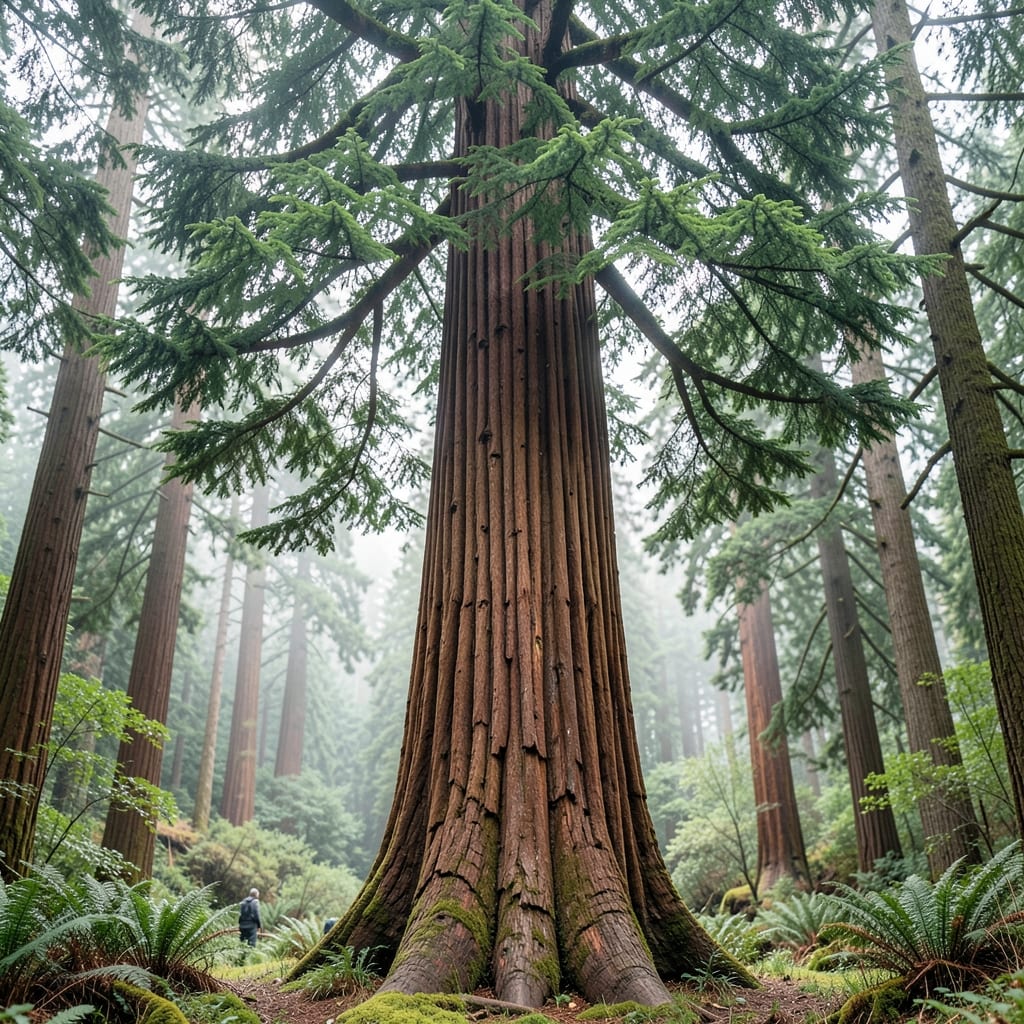
If you’ve ever stood beneath a towering redwood tree 🌲 and wondered how tall can redwood trees grow, you’re not alone. These giants of the forest don’t just stretch toward the sky—they dominate it, with some reaching heights that defy imagination.
Coastal California and Oregon are home to the world’s tallest trees, where coast redwoods (Sequoia sempervirens) and giant sequoias (Sequoiadendron giganteum) push the limits of nature’s architecture. The tallest known redwood, Hyperion, stands at a staggering 380 feet, making it the tallest tree on Earth. But how do they grow so fast—and why do some never stop?
In this guide, we’ll break down the science behind their record-breaking heights, the ideal conditions they need to thrive, and whether you can grow one in your backyard. Spoiler: It’s not as simple as planting a seed.
From foggy coastal climates to nutrient-rich soil, we’ll explore what makes these trees grow so tall—and how you can plan your landscape around their massive presence. Ready to uncover the secrets of the forest’s skyscrapers?


Redwood tree height records by species: coast redwood vs giant Sequoia
When comparing coast redwoods (Sequoia sempervirens) to giant sequoias (Sequoiadendron giganteum), you’re looking at two forest titans with very different superpowers. Coast redwoods win the height race, while giant sequoias dominate in volume. The tallest coast redwood, Hyperion, holds the world record at 380 feet, while the largest giant sequoia by volume, General Sherman, weighs in at 2.7 million pounds—roughly the weight of 30 African elephants.
The key difference lies in their growth strategies. Coast redwoods thrive in foggy coastal climates where moisture lingers in the air, fueling rapid vertical growth. Giant sequoias, on the other hand, prefer drier inland conditions and invest their energy in thickening their trunks and branches, creating massive, fire-resistant structures. Both species can live for thousands of years, but their growth trajectories couldn’t be more different.
Here’s how they stack up in the height and volume categories, along with their growth rates and ideal habitats:
| Species | Max Height | Max Diameter | Growth Rate (Early Years) | Ideal Climate |
|---|---|---|---|---|
| Coast Redwood (Sequoia sempervirens) | 380 ft (Hyperion) | 26 ft | 3-4 ft/year (first 20 years) | Coastal fog, high humidity |
| Giant Sequoia (Sequoiadendron giganteum) | 275 ft (General Grant) | 36 ft (General Sherman) | 1-2 ft/year (first 20 years) | Inland, dry, mountainous |
Coast redwoods grow 3-4 feet per year in their youth, thanks to the coastal fog that acts like a natural irrigation system. This allows them to reach 200 feet in just 500 years, a pace that’s unmatched in the tree world. Giant sequoias, however, grow more slowly—only 1-2 feet per year—but their massive trunks can reach 36 feet in diameter, making them the largest trees by volume.
If you’re dreaming of planting a redwood in your home garden, don’t expect a mini Hyperion. Even dwarf varieties (which don’t exist for redwoods) would still require massive space. Coast redwoods need at least 50 feet of clearance to grow unobstructed, while giant sequoias can spread 80 feet wide at maturity. That’s why these trees are best left to national parks and forests, where they can stretch toward the sky without interference.
Fun fact: The tallest redwoods are often found in steep, foggy slopes where competition for sunlight is minimal. These trees don’t just grow tall—they dominate their environment, blocking out nearly all other vegetation beneath their canopies. This is why they’re often called the “living skyscrapers” of the forest.
While you might not be able to grow a 380-foot redwood in your backyard, you can still appreciate their legendary stature by visiting Redwood National Park or Muir Woods. There, you’ll see firsthand how these trees reshape the landscape and why they’ve captivated humans for centuries.
For those who want a taste of redwoods without the space commitment, consider planting smaller conifers like Dawn Redwood (Metasequoia glyptostroboides), which can reach 60-80 feet but are far more manageable in a garden setting. These trees offer a similar aesthetic with a fraction of the space requirements.
So next time you gaze up at a redwood, remember: you’re looking at a tree that’s been perfecting its height for millions of years—and it’s not done growing yet. 🌲
How climate and soil determine redwood growth height
Redwood trees don’t grow to 380 feet by accident—they thrive in specific climate zones where conditions are nearly perfect for their massive growth. The coastal fog of Northern California and Oregon creates a natural greenhouse effect, providing constant moisture without heavy rainfall that could damage their delicate root systems. This foggy environment allows coast redwoods to grow 3-4 feet per year in their youth, while giant sequoias in drier inland regions grow more slowly but develop thicker trunks.
Elevation also plays a critical role. Coast redwoods prefer sea-level to 3,000-foot elevations, where temperatures stay mild and humidity remains high. Giant sequoias, however, thrive at 4,000 to 8,000 feet in the Sierra Nevada mountains, where cooler temperatures and well-drained soils support their massive growth. Without these ideal conditions, redwoods struggle to reach even half their potential height.
🌱 Key Takeaway: Redwoods need three essential conditions to reach their full height potential—foggy coastal climates, nutrient-rich soil, and minimal competition. Here’s how each factor impacts their growth:
🌫️ Climate
Coastal fog provides constant moisture without heavy rainfall, fueling rapid vertical growth in coast redwoods.
🌿 Soil
Deep, well-draining soil with high organic content prevents root rot and supports massive root systems.
🌳 Space
Minimal competition from other trees allows redwoods to grow unobstructed, reaching heights of 200+ feet.
Soil composition is just as critical as climate. Redwoods thrive in deep, well-draining soils rich in organic matter, which provides the nutrients they need to support their massive canopies. In compacted or poor-quality soil, their growth can be stunted by 50% or more. That’s why the steep, foggy slopes of Redwood National Park are their ideal habitat—they offer both the right soil and climate for uninhibited growth.
Human interference can also dramatically alter redwood growth. Logging, urban development, and even tourism can disrupt their natural growth patterns. For example, redwoods planted in urban areas with limited space or poor soil often grow only 20-30 feet tall—a fraction of their potential. This is why conservation efforts focus on protecting their natural habitats, where they can continue reaching for the sky.
If you’re planning a landscape with redwoods, prioritize south-facing slopes with high humidity and deep soil. Even small redwoods need at least 20 feet of clearance to grow properly, so they’re best suited for large properties or forest settings. For smaller spaces, consider Dawn Redwoods, which offer a similar aesthetic without the same space requirements.
Understanding these conditions helps explain why redwoods grow so tall—and why they’re not suited for every garden. Their height is a product of millions of years of evolution, perfectly adapted to their ideal environments. 🌲