
Size
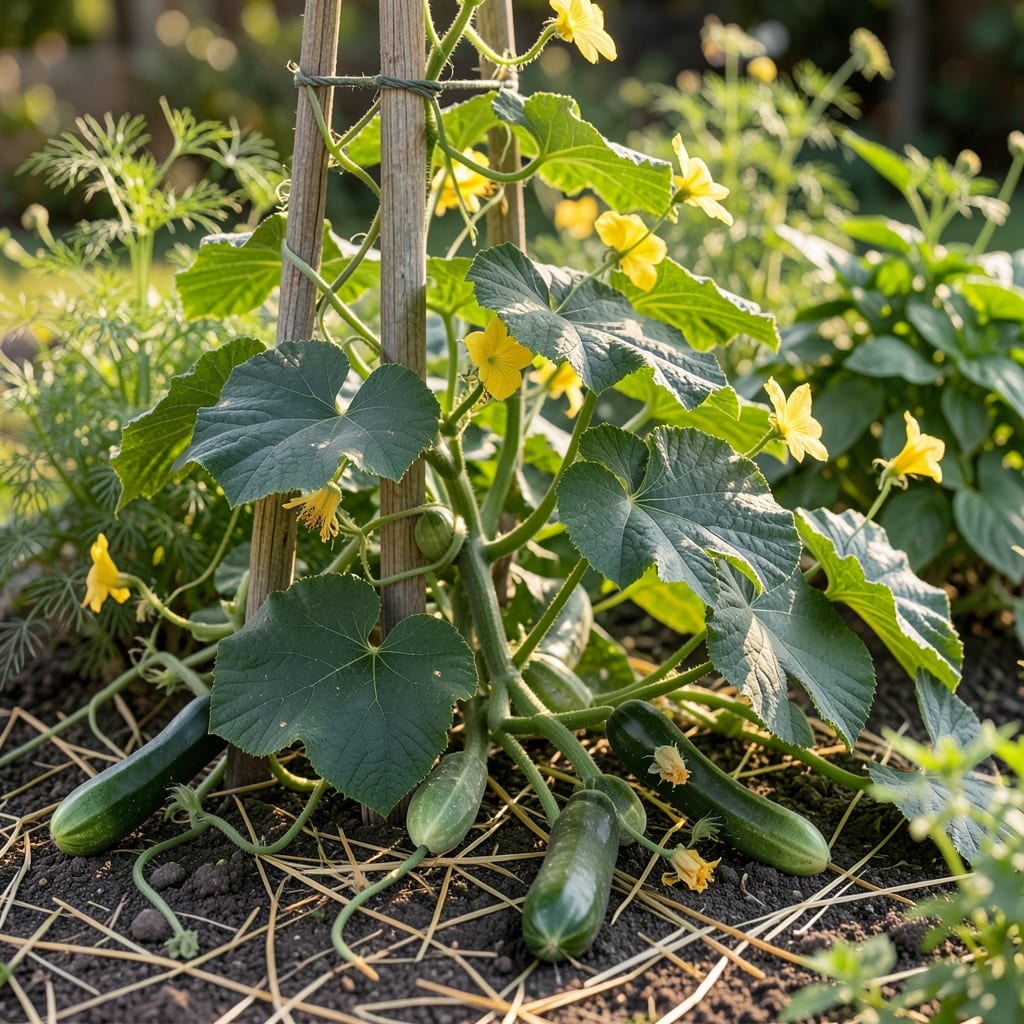
If you've ever stared at your sprawling 🥒 cucumber plants and wondered how tall they grow, you're not alone. The truth is, their height depends entirely on the variety you're planting—and getting this right could mean the difference between a manageable garden bed and a tangled mess.
Most gardeners assume all cucumbers behave the same way, but that couldn't be further from reality. While some varieties stretch 20 feet or more when left unchecked, others stay neatly contained at just 2-3 feet. Knowing which type you're working with is the first step to maximizing your space, whether you're dealing with a backyard plot or a tiny balcony container.
In this guide, I'll break down the dramatic differences between vining and bush cucumbers, explain how to control their growth, and share space-saving tricks that'll have you harvesting like a pro. You'll discover which varieties play nice in small spaces and how to turn even the most aggressive climbers into tidy, productive plants.
Ready to stop wrestling with your cucumbers and start working with them? Let's dive into the secrets of managing their height—and why getting this right might just save your garden from chaos.

Cucumber plant growth heights: vining vs bush varieties explained
When I first started growing cucumbers, I made the rookie mistake of assuming all varieties would behave the same way. What I discovered was a wildly different growth spectrum—from sprawling vines that could climb 20+ feet to compact bush types that stay neatly under 3 feet. This difference isn't just about aesthetics; it directly impacts your garden layout, yield potential, and even how much work you'll put into training them.
The most dramatic divide is between vining cucumbers and bush cucumbers. Vining types are the classic climbers, capable of reaching heights that would make even the most ambitious trellis look modest. Meanwhile, bush varieties grow in compact mounds, making them perfect for small spaces or container gardening. Understanding these differences is your first step to avoiding garden chaos and maximizing your harvest.
Let's start with the vining cucumbers, which are the most common types you'll find in seed catalogs. Varieties like Straight Eight and Marketmore can easily stretch 10-25 feet if given the chance. Their growth habit is indeterminate, meaning they continue producing new vines and leaves throughout the growing season. This relentless upward (and outward) growth is what makes them such aggressive spreaders.
What's fascinating about these vining types is how they use their tendrils to latch onto any available support. Without proper guidance, they'll sprawl across your garden bed, smothering nearby plants and creating a tangled mess. But with the right trellising system, you can channel that energy vertically, saving space and even improving air circulation—which reduces disease risk.
Now, let's talk about bush cucumbers, which are the game-changers for small-space gardeners. Varieties like Bush Champion and Spacemaster grow in neat, compact mounds that rarely exceed 3 feet in height or width. These are determinate varieties, meaning they produce all their fruit at once before slowing down. This makes them ideal for container growing or tight garden beds where you don't have room for sprawlers.
The beauty of bush cucumbers is their low-maintenance nature. They don't require trellising, which saves you time and materials. Plus, their contained growth means better air flow around the plants, reducing the risk of fungal diseases that plague crowded vining types. If you're working with limited space or want a "set it and forget it" approach, bush varieties are your best bet.
But here's where it gets interesting: even among vining types, there's huge variation in growth patterns. Some varieties, like Armenian cucumbers, grow more like trailing vines that stay closer to the ground, while others shoot up like jungle gyms. The key is to read the seed packet carefully—it will tell you whether you're dealing with a sprawler, a climber, or something in between.
One common misconception is that taller cucumbers always produce more fruit. In reality, proper support is what boosts yield—not just height. When vines climb, they develop more photosynthetic surface area, which can lead to larger, healthier fruits. But if you let them sprawl, they'll waste energy reaching for support instead of producing cucumbers. This is why I always recommend investing in a good trellis system for vining types.
For those with limited vertical space, semi-dwarf varieties are the perfect compromise. These plants typically reach 3-6 feet and can be trained on short trellises or even tall stakes. They offer the productivity of vining types without requiring the same level of commitment to vertical gardening. My personal favorite is Diva, which stays around 4 feet tall and produces beautiful, bountiful fruits.
Remember, the height of your cucumber plants isn't just about aesthetics—it's about strategic planning. Choosing the right variety for your space can mean the difference between a garden that feels like a jungle and one that's organized, productive, and easy to maintain. And once you understand these growth patterns, you'll be able to design your garden layout with confidence, knowing exactly how much space each plant will need to thrive.
5 Space-saving hacks to grow tall cucumbers in small gardens
If you love the idea of growing tall cucumbers but don’t have a sprawling backyard, don’t worry—you can still enjoy a bountiful harvest in small spaces. The key lies in strategic training and vertical gardening. Even the most aggressive vining cucumbers can be transformed into neat, space-efficient plants with the right techniques. I’ve tested these methods in my own balcony garden, and they work like magic for maximizing vertical space without sacrificing yield.
First, let’s tackle the #1 game-changer: trellising. A sturdy trellis isn’t just for looks—it’s a lifesaver for controlling vine growth. For tall cucumbers like Straight Eight, a 6-foot trellis can support their full height while keeping them off the ground. Use galvanized wire mesh or bamboo stakes for a budget-friendly DIY option. The goal is to train vines upward, which also improves air circulation and reduces disease risk.
- 🪴 Use a strong trellis (6+ ft tall) to guide vines upward, saving floor space.
- 🌿 Prune aggressively to remove side shoots, focusing energy on main vines.
- 💧 Water at the base to avoid wetting leaves, reducing fungal diseases.
- 🌱 Choose compact varieties like 'Diva' or 'Bush Champion' for small spaces.
- 🌿 Train vines with soft ties to prevent damage as they grow taller.
Next, let’s talk pruning. Many gardeners avoid pruning cucumbers, fearing it’ll reduce fruit production, but the opposite is true. By removing side shoots (those small stems growing off the main vine), you force the plant to focus its energy on fruiting and upward growth. I prune mine every 2-3 weeks, cutting back any shoots that aren’t bearing fruit. This keeps the plant taller and more productive while preventing it from becoming a tangled mess.
For those with ultra-small spaces, like balconies or patios, container gardening is your best friend. Use large pots (15+ gallons) with deep roots to support tall varieties. Add a small trellis or cage inside the pot to guide the vines. I’ve grown Marketmore cucumbers in 5-gallon containers with a 4-foot trellis, and they thrived—producing just as many cucumbers as their ground-grown counterparts.
Don’t overlook the power of companion planting to save space. Pair your cucumbers with fast-growing, low-spreading plants like radishes or lettuce to fill gaps in your garden bed. This not only maximizes space but also improves soil health and deters pests. Plus, taller plants like sunflowers can act as natural trellises for cucumbers, creating a beautiful vertical display.
Finally, harvest frequently to encourage more growth. When you pick cucumbers regularly, the plant is prompted to produce more flowers and fruits, keeping it vigorous and tall. I harvest mine every 2-3 days during peak season, and it makes a world of difference in how well the vines climb and produce. Skipping this step can lead to stunted growth as the plant focuses on ripening existing fruits.
With these space-saving hacks, you can grow tall cucumbers even in the smallest gardens. Whether you’re using a balcony trellis, container gardening, or pruning techniques, the key is to work with the plant’s natural growth habits—not against them. Try one of these methods this season, and you’ll be harvesting cucumbers from a vertical garden in no time! 🌱