
Size
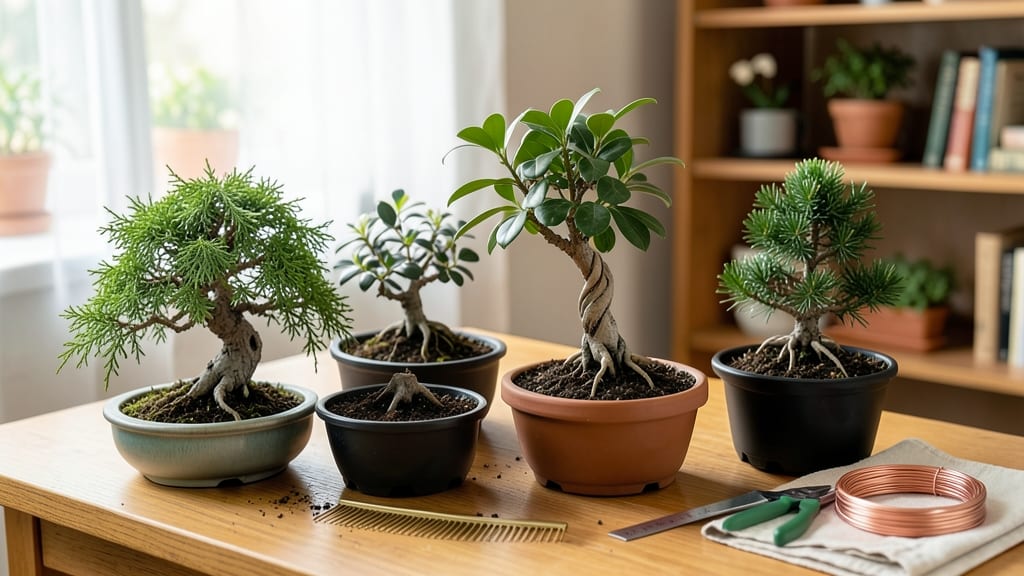
Curious about how tall does a bonsai tree grow? These miniature masterpieces might look delicate, but their mature heights can surprise you—some stay as small as 6 inches, while others reach nearly 3 feet with proper care.
The secret lies in choosing the right species and mastering techniques like pruning and root restriction.
If you've ever dreamed of growing a bonsai but worried about it outgrowing your space, don't. With the right approach, you can shape your tree's height to fit your vision—whether that's a tiny tabletop display or a slightly taller statement piece.
The key is understanding which species naturally stay small and how to control their growth over time.
From the slow-growing Juniper to the slightly taller Chinese Elm, each bonsai has its own growth patterns. I'll show you how to select the perfect variety for your space and the simple steps to keep it at your desired height. Ready to discover the art of bonsai size control?
Whether you're a beginner or a seasoned hobbyist, these insights will help you cultivate a bonsai that stays just the right size—year after year. Let's dive into the fascinating world of bonsai growth and learn how to shape your tree's future.

Bonsai tree height guide by species: mature size expectations
When I first started growing bonsai, I assumed all miniature trees stayed under a foot tall—but I quickly learned the truth! Bonsai trees can range from 6 inches to over 3 feet in height, depending entirely on the species and care techniques.
The Japanese Black Pine, for example, often tops out at 2-3 feet, while a Dwarf Juniper might stay as small as 6-12 inches even with minimal pruning. Understanding these natural ranges helps set realistic expectations for your miniature masterpiece.
Climate plays a surprising role too. Bonsai grown in cooler climates (like USDA Zone 5) often mature slower, while those in warmer zones (Zone 8+) may grow faster if not properly restricted.
For instance, a Ficus bonsai in Arizona might reach 2 feet in 5 years, while the same species in Maine could take 7-10 years to reach that height. The key is matching your species to your local growing conditions.
Here’s the hard truth: Even with aggressive pruning, some species simply have genetic growth limits. A Serissa (Snow Rose) will never exceed 18 inches naturally, while a Chinese Elm can push 3 feet if left unchecked.
Your goal as a bonsai gardener isn’t just to shrink a tree—it’s to work with its natural growth patterns while guiding its shape.
| Species | Mature Height | Growth Rate | Best For |
|---|---|---|---|
| Japanese Black Pine | 2-3 ft | Slow to Moderate | Outdoor, Cold Hardy |
| Dwarf Juniper | 6-12 in | Very Slow | Indoor/Outdoor, Beginner |
| Ficus (Ginseng) | 1.5-2.5 ft | Moderate | Indoor, Fast Recovery |
| Chinese Elm | 1.5-3 ft | Moderate | Outdoor, Versatile |
| Serissa (Snow Rose) | 6-18 in | Slow | Indoor, Flowering |
| Azalea | 1.5-2.5 ft | Moderate | Outdoor, Seasonal Color |
| Jade (Crassula) | 1-2 ft | Slow | Indoor, Succulent |
| Trident Maple | 1-2 ft | Slow | Outdoor, Cold Hardy |
If you’re aiming for a true miniature look, focus on species like Dwarf Juniper or Serissa. These stay naturally small with minimal effort, making them perfect for beginner bonsai gardeners.
My first bonsai was a Juniper, and I loved how it stayed under 12 inches even after years of growth. For taller, more dramatic displays, Chinese Elm or Japanese Black Pine deliver stunning height while still allowing artistic shaping.
Pro tip: Always check the species’ natural growth habit before purchasing. A tree that grows 10 feet in the wild (like a Pine) will still have that tendency—your pruning can only guide, not completely override, its genetics. For example, a Wisteria bonsai can reach 3 feet but
How to control bonsai tree height: pruning, wiring, and growth techniques
Mastering your bonsai tree's height isn't just about patience—it's about the right techniques applied at the right time. I've found that seasonal pruning, wiring methods, and root restriction are my top tools for keeping bonsai trees at their ideal miniature size.
Let me walk you through how each technique works and when to use them for best results.
First, let's talk about pruning schedules. Most bonsai enthusiasts I know follow a spring and summer pruning routine. In early spring, after your tree has pushed new growth, trim back any overly long branches by about one-third.
This encourages bushier growth and prevents vertical stretching. Summer pruning focuses on shaping—remove any branches that disrupt your tree's design while it's actively growing.
🌱
Step-by-Step Height Control Techniques
- 1. Spring Pruning: Trim back 1/3 of new growth in early spring (March-April) to encourage branching
- 2. Summer Shaping: Remove overlong branches during active growth (June-August) to maintain proportions
- 3. Root Pruning: Trim 1/3 of roots during repotting (every 2-3 years) to restrict upward growth
- 4. Wiring Technique: Bend branches downward using aluminum or copper wire (March-May) for gradual shaping
- 5. Defoliation: Remove 1/3 of leaves in summer to reduce growth vigor (works best on deciduous species)
- 6. Winter Dormancy: Reduce watering and avoid pruning to let tree rest and reset growth patterns
One technique that often surprises beginners is wiring. This involves gently wrapping branches with wire to guide their growth direction. I recommend using aluminum or copper wire (never plastic) and applying it in late winter or early spring when branches are pliable.
The key is to remove the wire within 3-6 months—leaving it too long can damage the bark. For downward growth, wire branches at a 45-degree angle and secure them to the pot with a small stake.
For bonsai trees that seem determined to grow taller than you'd like, root restriction is your secret weapon. When repotting (typically every 2-3 years in early spring), trim about one-third of the roots and choose a pot that's only 1-2 inches larger than the previous one.
This subtle root confinement sends signals to the tree to grow wider rather than taller. Pro tip: Use a well-draining akadama or lava rock mix—this combination helps maintain root health while encouraging compact growth.
Let me share a common mistake I see: people prune too aggressively in summer. While shaping is important, over-pruning can stress your tree and lead to weak, leggy growth.
Instead, focus on gradual shaping—remove only what's necessary to maintain your design vision. And always use clean, sharp pruning shears to make clean cuts that heal quickly.
Remember that bonsai growth control is an ongoing process. Even with perfect techniques, your tree will have natural growth spurts. The key is consistency—monthly inspections, seasonal adjustments, and patience.
With time, you'll develop an intuitive sense of when to prune, wire, or leave your tree alone to grow naturally.
☀️