
How To
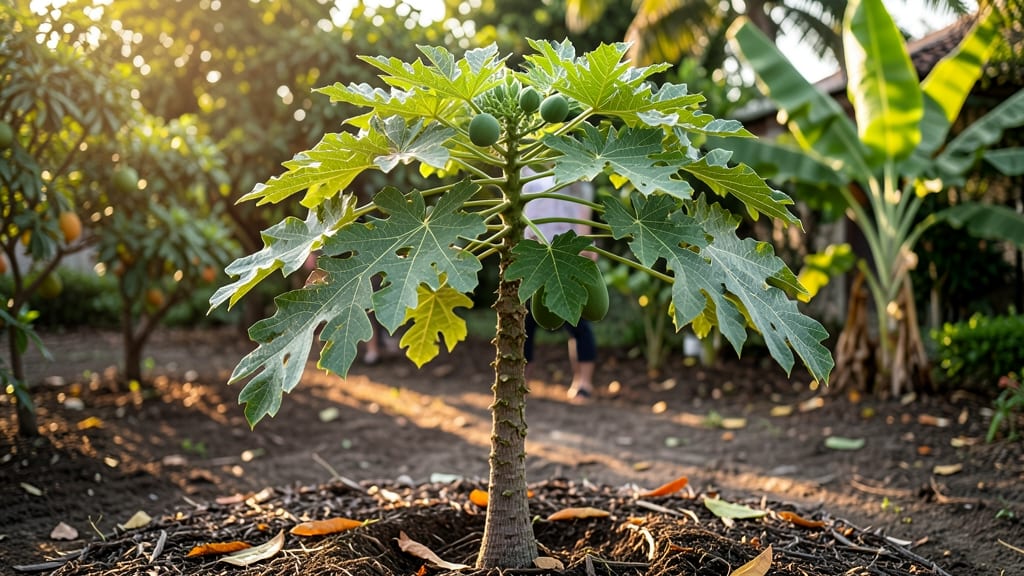
If you’re wondering how tall does a papaya tree grow, the answer might surprise you—these tropical giants can stretch from a manageable 8 feet to towering 30 feet, depending on the variety and your growing approach. 🍈 Whether you’re dreaming of a backyard harvest or container gardening, understanding height ranges is the key to planning your space and care routine.
Not all papayas are created equal: dwarf varieties like ‘Solo’ stay compact at 8-12 feet, while standard types like ‘Red Maradol’ can reach 20-30 feet—that’s taller than a two-story house!
Your climate, pruning habits, and even container size play a huge role in how much vertical space you’ll need to accommodate.
For home gardeners, this means careful planning: will you need to prune aggressively to keep it manageable, or can you let it grow wild in a spacious garden? The right variety and a few smart tricks can make all the difference between a manageable harvest and a jungle-like mess.
Let’s break down the height ranges, growth stages, and practical tips to help you choose the perfect papaya for your space—whether it’s a balcony pot or a backyard oasis.

Papaya tree height by variety: dwarf vs. standard vs. giant sizes
Papaya trees (Carica papaya) are among the fastest-growing fruit trees, but their mature height varies dramatically depending on the variety. Some stay compact enough for containers, while others shoot up like tropical skyscrapers.
Choosing the right type for your space is critical—especially if you're limited by yard size or local regulations. Let’s break down the height ranges you can expect from popular papaya varieties, so you can pick the perfect fit for your garden.
First, it’s important to note that papayas are monoecious (single-sex) plants, and some varieties grow taller simply because they’re bred for larger fruit production. However, even within the same variety, growing conditions like sunlight, pruning, and soil nutrients can influence height.
For accurate planning, focus on these three main categories: dwarf, semi-dwarf, and standard/giant varieties.
🌱
| Variety | Mature Height | Best For | Notes |
|---|---|---|---|
| 'Solo' (Dwarf Hybrid) | 8–12 ft | Containers, small yards | Compact, fast-fruiting, ideal for USDA Zones 10-11 |
| 'SunUp' (Semi-Dwarf) | 12–18 ft | Backyards, urban gardens | Cold-hardy to 28°F, great for Zones 9-11 |
| 'Red Maradol' | 20–30 ft | Tropical climates, large gardens | Giant fruit, needs space; thrives in Zones 10-12 |
| 'Tainong No. 1' | 15–25 ft | Commercial farms, large estates | High yield, needs staking; best in Zones 10-12 |
| 'Kapoho Solo' | 6–10 ft | Containers, patios, balconies | Ultra-dwarf, great for small spaces |
If you’re growing papayas in USDA Zones 10–11, you’ll find dwarf varieties like 'Solo' or 'Kapoho Solo' perfect for containers or small yards. These stay between 6–12 feet tall, making them manageable even in urban settings.
For larger properties or tropical climates, standard varieties like 'Red Maradol' or 'Tainong No. 1' can reach 20–30 feet, requiring more space and structural support.
For gardeners in Zones 9 or cooler, the 'SunUp' variety is a game-changer. It’s semi-dwarf, cold-hardy to 28°F, and tops out around 12–18 feet. This makes it ideal for backyard orchards where you want fruit without sacrificing space for other plants.
Just remember: even dwarf varieties can grow taller if given ideal conditions like full sun and rich soil.
One common mistake is assuming that container-grown papayas will stay small forever. While dwarf varieties are bred for compact growth, they can still outgrow their pots if not pruned regularly.
Always choose a container that’s at least 2–3 feet wide and deep for a mature dwarf papaya, and plan for annual repotting if you want to keep it thriving.
🌿
Height isn’t the only factor to consider—fruit size and yield also vary by variety. For example, 'Red Maradol' produces giant, sweet fruits but needs space, while 'Solo' offers smaller, consistent harvests in a compact package.
If you’re growing papayas for ornamental value as well as fruit, the 'SunUp' variety is a great middle-ground option, balancing height and productivity.
To maximize your papaya’s potential—whether you’re aiming for a tall tropical centerpiece or a container-friendly dwarf—start with healthy seedlings from a reputable nursery. Avoid grafting or cutting propagation unless you’re experienced, as these methods can lead to stunted growth or disease.
And always research your local planting regulations, as some areas restrict tall fruit trees in residential zones.
✂️
Papaya tree height by variety: dwarf vs. standard vs. giant sizes
Papaya trees (Carica papaya) are fast growers, but their mature height varies dramatically based on variety. Standard types like 'Red Maradol' can reach 20-30 feet, towering like small trees, while dwarf varieties like 'Solo' max out at 8-12 feet.
Choosing the right type depends on your space and climate—tropical zones can support giants, but containers need compact types.
Even within categories, growth differences exist. 'SunUp' papayas (a semi-dwarf) hit 12-18 feet, while 'Tainong No. 1' (a hybrid) stays around 10-12 feet. These distinctions matter for pruning, support structures, and even fruit production—taller trees yield more but need more care.
🌱
| Variety | Mature Height | Best For | Growth Rate |
|---|---|---|---|
| 'Solo' (Dwarf) | 8–12 ft | Containers, small yards | Moderate |
| 'SunUp' (Semi-Dwarf) | 12–18 ft | Backyards, large pots | Fast |
| 'Red Maradol' (Standard) | 20–30 ft | Tropical climates, large gardens | Very Fast |
| 'Tainong No. 1' (Hybrid) | 10–12 ft | Containers, urban gardens | Moderate-Fast |
For container growing, stick to dwarf or semi-dwarf types—'Solo' or 'Tainong'—since they won’t outgrow their pots. In ground plantings, standard types like 'Red Maradol' thrive but need 15+ feet of vertical space and sturdy support as they mature.
Height also affects fruit production. Taller trees produce more papayas but require pruning to manage weight and shape. Dwarf varieties fruit earlier (often within 6-8 months) but yield fewer fruits per tree.
If you’re in USDA Zone 10 or warmer, standard types flourish with minimal care. In cooler zones (Zone 9 or below), even dwarf varieties need winter protection or container mobility to survive frost.
🌿