
Size
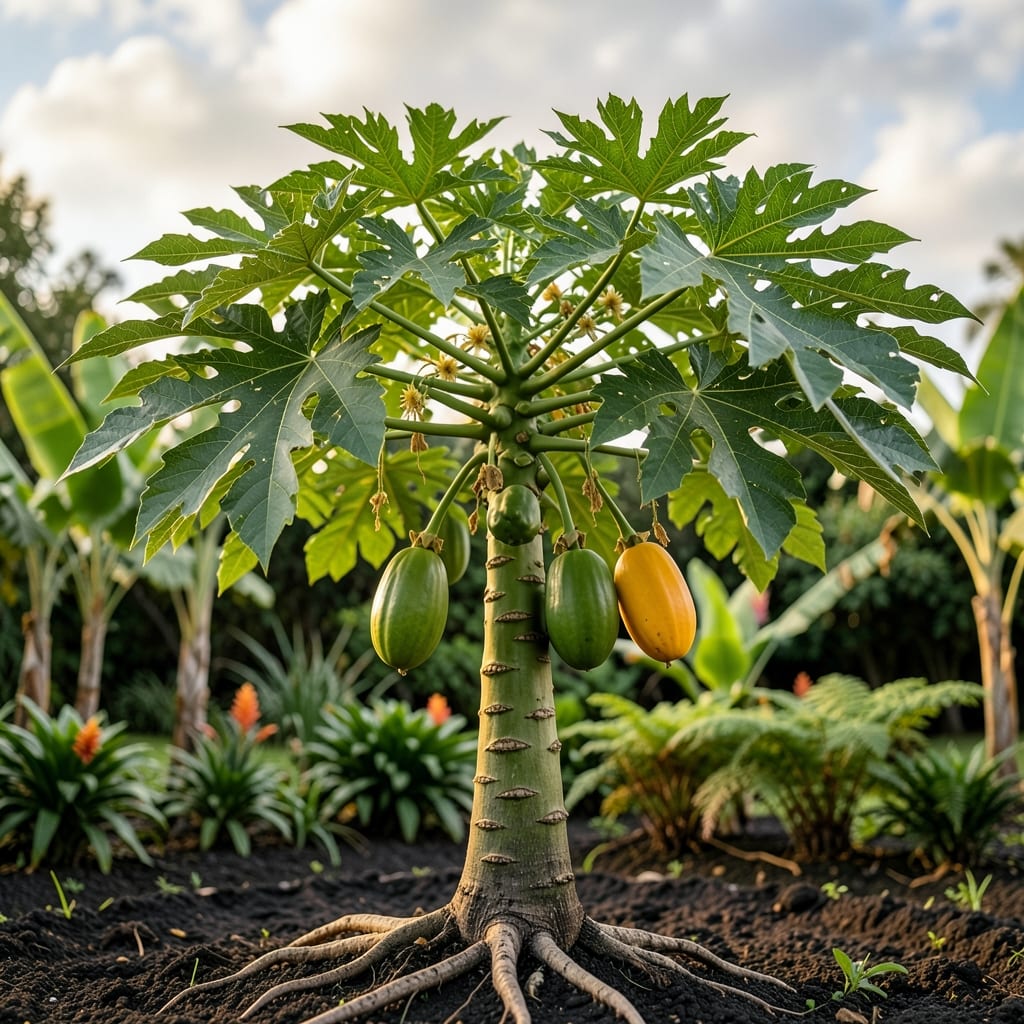
If you’ve ever wondered how tall can a papaya tree grow before deciding whether to plant one, you’re not alone. These tropical beauties—like the 🍈 papaya tree—can reach heights that surprise even experienced gardeners, with some varieties stretching up to 30 feet in ideal conditions.
The truth is, your papaya tree’s height depends on more than just genetics—it’s also shaped by where you live (think USDA Zones 10-11), how you prune it, and even the variety you choose. While some types stay compact enough for containers, others grow tall enough to shade an entire backyard, making space planning a key first step.
What’s fascinating is how quickly these trees grow. In just 6-12 months, a seedling can shoot up to 10 feet, and with proper care, it could keep climbing for years. But don’t let their size scare you off—with the right approach, even small spaces can accommodate a thriving papaya tree.
In this guide, I’ll break down exactly how tall your papaya tree could grow, which varieties stay small (or tower skyward), and the simple tricks to control its height—so you can enjoy fresh fruit without sacrificing your yard (or sanity). Let’s get started.

Papaya tree height by variety: dwarf vs. standard vs. giant types
The height of a papaya tree depends almost entirely on the variety you choose. While most gardeners picture towering 30-foot giants when they think of papaya trees, the reality is far more flexible—especially if you’re working with limited space. Some varieties stay under 10 feet, making them perfect for containers or small backyards, while others can reach stature comparable to palm trees.
If you’re in USDA Zones 10-11, where papayas thrive year-round, you’ll have the most options for variety selection. Even in warmer microclimates (like parts of California or Florida), you can find types that adapt well to container growing. The key is understanding which varieties lean toward dwarf growth versus those that naturally grow tall.
Here’s the breakdown of what to expect from three main papaya tree categories—dwarf, standard, and giant—along with real-world height ranges and growth habits:
| Variety Type | Height Range | Growth Rate | Best For |
|---|---|---|---|
| Dwarf Varieties (e.g., 'Solo') | 5–10 ft | Moderate (6–12 months to maturity) | Containers, small yards, urban gardens |
| Standard Varieties (e.g., 'SunUp', 'Red Maradol') | 10–20 ft | Fast (12–18 months to maturity) | Backyards, tropical climates, large pots |
| Giant Varieties (e.g., 'Hawaiian Solo Giant') | 20–30 ft | Very fast (6–12 months to full height) | Large estates, commercial farms, open fields |
One of the most exciting aspects of growing papaya trees is how quickly they reach their mature height. A standard variety like 'SunUp' can hit 10 feet in just 12 months, while giant types may grow 3–4 feet per year under ideal conditions. This rapid growth is why many gardeners opt for dwarf varieties—they still produce fruit quickly but stay manageable.
For example, the 'Solo' papaya, a popular dwarf variety, is often marketed as a container-friendly option. It typically maxes out around 8 feet, making it ideal for patios or balconies in warm climates. Meanwhile, the 'Red Maradol'—a standard variety—can easily double that height, requiring more space but offering larger, sweeter fruit.
If you’re growing papayas in containers, even standard varieties can be pruned to stay under 10 feet. The trick is to pinch back new growth regularly and provide a sturdy trellis or support system. Without pruning, a container-grown papaya will still reach its full height, but it may become top-heavy and unstable.
Here’s a pro tip: If you’re unsure about your space, start with a dwarf variety like 'Solo' or 'Tainong 1'. These types are bred to stay compact while still producing high yields of fruit. They’re also more forgiving if you’re new to tropical fruit growing, as they’re less prone to wind damage or structural stress.
On the other hand, if you’re in a tropical or subtropical climate with plenty of space, a giant variety can be a stunning focal point in your garden. Just be prepared for the maintenance—these trees require regular pruning to manage height and encourage fruit production. Without care, they can grow uncontrollably tall, shading out other plants and becoming difficult to harvest.
For those in cooler microclimates (like parts of Zone 9), even dwarf varieties may struggle to thrive outdoors year-round. In these cases, growing papayas in large containers and moving them indoors during winter is a common workaround. The height won’t be the limiting factor—it’s more about temperature tolerance.
No matter which variety you choose, remember that height isn’t everything. Even a 10-foot papaya tree can produce dozens of fruits per season, while a 30-foot giant might yield fewer if not properly cared for. The right variety for you depends on your space, climate, and patience for maintenance.
🌱
How growth stages affect papaya tree height: from seedling to maturity
Understanding how your papaya tree grows in height isn’t just about the final number—it’s about the journey. From a tiny seedling to a towering 30-foot giant, each stage brings dramatic changes. The first 6 months are especially critical, where your tree can shoot up 5-10 feet if given ideal conditions like full sun exposure and well-draining soil.
During the seedling stage (0-3 months), growth is slow but steady, with most energy focused on root development. This is your chance to shape future height by ensuring strong roots—think of it as building the foundation for a skyscraper. Weak roots here mean slower growth later, even if you provide perfect care afterward.
Here’s where things get exciting: between 3-12 months, your papaya tree enters its rapid vertical growth phase. With proper fertilization and watering, you’ll see 1-2 feet of growth per month. This is when pruning becomes crucial—removing lower branches encourages the tree to grow taller rather than bush out.
Height: 1-3 feet | Focus: Root development | Tip: Use well-draining soil to prevent rot.
Height: 5-15 feet | Focus: Vertical growth | Tip: Prune lower branches to encourage height.
Height: 10-30 feet | Focus: Fruit production | Tip: Reduce pruning to maintain structure.
Sunlight: 6+ hours daily | Water: Deep soaks every 2-3 days | Soil: Slightly acidic (pH 5.5-6.5)
After the first year, your papaya tree’s height growth slows as it shifts focus to fruit production. However, with optimal care, some varieties can continue growing for 3-5 years, reaching their maximum height of 20-30 feet. This is why choosing the right variety matters—dwarf types may max out at 6-10 feet, while standard varieties will stretch toward the sky.
One common misconception is that papaya trees grow at a steady rate. In reality, growth spurts are highly seasonal, with the most dramatic increases during spring and summer. During cooler months, growth may stall entirely, especially in USDA Zones 9 and below, where frost sensitivity becomes a concern.
To control height naturally, focus on pruning techniques like tip pruning—removing the topmost growth encourages lateral branching rather than vertical stretching. For container-grown trees, this is especially useful to keep them manageable. Remember, the goal isn’t just to grow tall but to grow healthy and productive.