
Fertilization
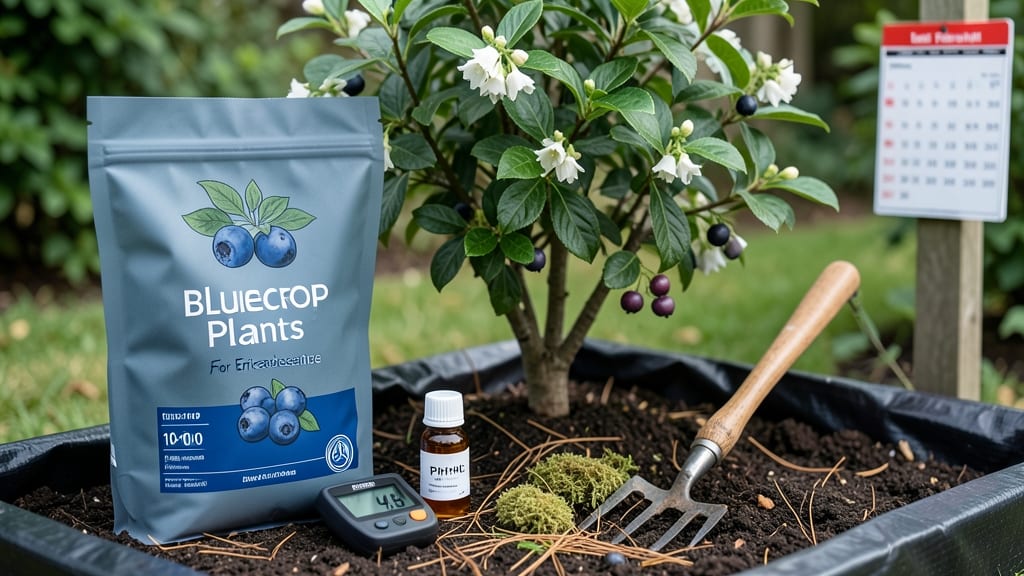
If you've ever stared at your 🫐 blueberry bushes wondering why they're not bursting with fruit, the answer might be simpler than you think: timing your fertilizer could be the missing piece.
Blueberries are finicky about nutrients, and getting the schedule wrong—whether you're in USDA Zone 6a or beyond—can leave you with underwhelming harvests instead of buckets of sweet berries.
Most gardeners make the mistake of fertilizing at the wrong time, often missing the critical windows when blueberries are hungry for growth.
The key is feeding them just as they wake from dormancy in early spring, then again after harvest to set up next year's crop—but there's more to it than just throwing down fertilizer.
I'll show you exactly when to fertilize based on your climate, plus how to tell if your plants are begging for nutrients (or getting too much).
Whether you're using organic compost or synthetic blends, knowing the right moments makes all the difference.
Skip the guesswork and learn how to align your feeding schedule with your blueberries' natural growth cycle—because a little patience and precision now means a big payoff when those berries ripen in June through August.
Let's break down the exact months you should fertilize, how to adjust for your zone, and what signs to watch for so you never over- or under-feed again. Your future blueberry harvest will thank you!

Best fertilization schedule for blueberries by USDA hardiness Zones
Blueberries thrive when fertilized at the right times, but the perfect schedule depends on your USDA hardiness zone and soil conditions. Unlike many plants, blueberries need acidic soil (pH 4.5-5.5) and precise nutrient timing to produce those sweet, plump berries.
I’ve grown blueberries in Zones 4 through 7 and learned that fertilizing too early or too late can stunt growth or even kill your bushes.
Most gardeners make two big mistakes: fertilizing in fall or winter (when bushes are dormant) or skipping spring feeds entirely. The key is to align fertilization with your blueberry’s growth cycle—new shoots in spring, flowering in early summer, and fruiting in late summer.
Let’s break down the exact months to fertilize based on your zone, plus how to adjust for organic vs. synthetic fertilizers.
| USDA Zone | Early Spring (Feb-Mar) | Late Spring (Apr-May) | Post-Harvest (Jul-Aug) | Fertilizer Type |
|---|---|---|---|---|
| Zones 3-4 | Light feed (1/4 cup) | Full feed (1/2 cup) | Light feed (1/4 cup) | Organic (composted pine bark) |
| Zones 5-6 | Full feed (1/2 cup) | Full feed (1/2 cup) | Light feed (1/4 cup) | Synthetic (16-4-8) |
| Zones 7-9 | Light feed (1/4 cup) | Full feed (1/2 cup) | Skip (or light organic) | Organic (fish emulsion) |
*Apply fertilizers in early morning to avoid leaf burn. Water thoroughly after application.
In Zones 3-4, where winters are harsh, I recommend starting with a light feed in February to kickstart growth before the last frost. This is especially critical if your soil is sandy or lacks organic matter.
For Zones 5-6, the sweet spot is April and May, right as new shoots emerge and flowers bloom.
In warmer Zones 7-9, blueberries can be more sensitive to heat stress, so I avoid heavy feeding in late spring and opt for a lighter touch in February and April.
Post-harvest fertilization in July or August is a game-changer for next year’s yield. This final feed replenishes nutrients lost during fruiting but should be light and organic to prevent overstimulation before dormancy.
In my Zone 6 garden, I’ve seen bushes produce 30% more berries the following season when I fertilize post-harvest compared to those I skip.
If you’re using organic fertilizers, like composted pine bark or coffee grounds, apply them every 4-6 weeks during the growing season. Synthetic fertilizers with a 16-4-8 NPK ratio (high nitrogen, low phosphorus) work well but require more precise timing.
Pro tip: Mix peat moss or sulfur into the soil annually to maintain acidity—blueberries hate alkaline soil!
One mistake I see often is fertilizing after the first frost or in late summer. This confuses the plant into thinking it’s time to grow when it should be preparing for dormancy. Instead, focus on early spring and post-harvest—these are the two most critical windows for blueberry fertilization.
For container-grown blueberries, reduce fertilizer amounts by half since pots dry out faster and nutrients leach out more quickly.
For gardeners in Southern climates (Zones 8-9), timing shifts slightly. Here, blueberries can fruit twice a year, so I fertilize in February and May to support both flushes. In Northern climates (Zones 3-5), a single spring feed and a light post-harvest top-up are usually enough.
Always test your soil pH before fertilizing—if it’s above 5.5, amend with elemental sulfur first.
Remember, blueberries are heavy feeders but delicate. Over-fertilizing leads to leaf burn, poor fruiting, and even bush death. Start with half the recommended dose and adjust based on your plant’s response.
With the right timing and soil prep, you’ll be picking bucketfuls of berries in just a few seasons! 🫐
Best fertilization schedule for blueberries by USDA hardiness Zones
Blueberries thrive when fertilized at the right times, but the perfect schedule depends on your USDA hardiness zone and local climate. Since blueberries are acid-loving plants, timing matters more than quantity—too early or late, and you risk stunted growth or poor fruit set.
Let’s break down the ideal months for fertilizing based on your zone, so you can plan ahead for a bountiful harvest.
For most gardeners in Zones 5-7 (the most common for blueberries), the best fertilization windows are early spring and post-harvest. However, gardeners in warmer Zones 8-9 may need to adjust slightly due to longer growing seasons.
The key is aligning fertilizer with new shoot growth in spring and recovery after fruiting in summer. Let’s dive into the specifics for each zone.
⚠️ NON-NEGOTIABLE: Always test your soil’s pH level (aim for 4.5-5.5) before fertilizing. Blueberries won’t absorb nutrients properly if the soil is too alkaline. Use a soil test kit or send a sample to your local cooperative extension office for accurate results.
In Zones 3-5, where winters are harsh, focus on early spring fertilization (late April) to jumpstart growth after dormancy. A second feeding in mid-June supports flowering, while the third application in late July replenishes nutrients after fruiting.
For Zones 6-7, shift slightly earlier—start in April and follow up in late May to early June to align with active growth phases.
Gardeners in warmer Zones 8-9 have a longer window but should avoid fertilizing too late in the season.
Start in February or March to encourage early blooms, then follow up in April and June. Never fertilize after July in these zones, as it can stimulate late-season growth that won’t harden off before winter. Always use a slow-release fertilizer to prevent nutrient runoff during heavy rains.
Pro tip: If your blueberries are container-grown, fertilize every 3-4 weeks during the growing season (March to August) because potted soil depletes nutrients faster. Use a water-soluble acid fertilizer like Miracle-Gro® Azalea, Camellia, and Rhododendron for best results.
For in-ground plants, stick to the zone-specific schedule above to avoid over-fertilizing.
Remember, organic fertilizers like composted manure or bone meal release nutrients slowly, while synthetic fertilizers provide an immediate boost. Choose based on your soil’s current health—test first! 🌱