
Plants
Best months to plant azaleas in Florida by region (North vs Central vs South)
Timing your azalea planting is critical in Florida, where humidity and heat can stress young roots. Unlike northern climates, Florida’s microclimates demand region-specific planting windows. North Florida’s cooler winters allow fall planting, while South Florida’s year-round warmth shifts the ideal window to late summer.
Let’s break down the best months for each zone to maximize your azalea’s root establishment and blooming potential.
For North Florida (USDA Zones 8a-9a), the ideal planting window spans October through November. This aligns with cooler temperatures and higher humidity, giving roots time to settle before winter.
Central Florida (Zones 9b-10a) gardeners should aim for September to early October, avoiding the peak summer heat that can scorch young plants. Meanwhile, South Florida (Zones 10b-11) offers a longer window—August through September—thanks to its warmer winters and minimal frost risk.
Here’s a visual comparison of planting windows, soil prep tips, and key considerations for each Florida region to help you choose the perfect time for your azaleas.
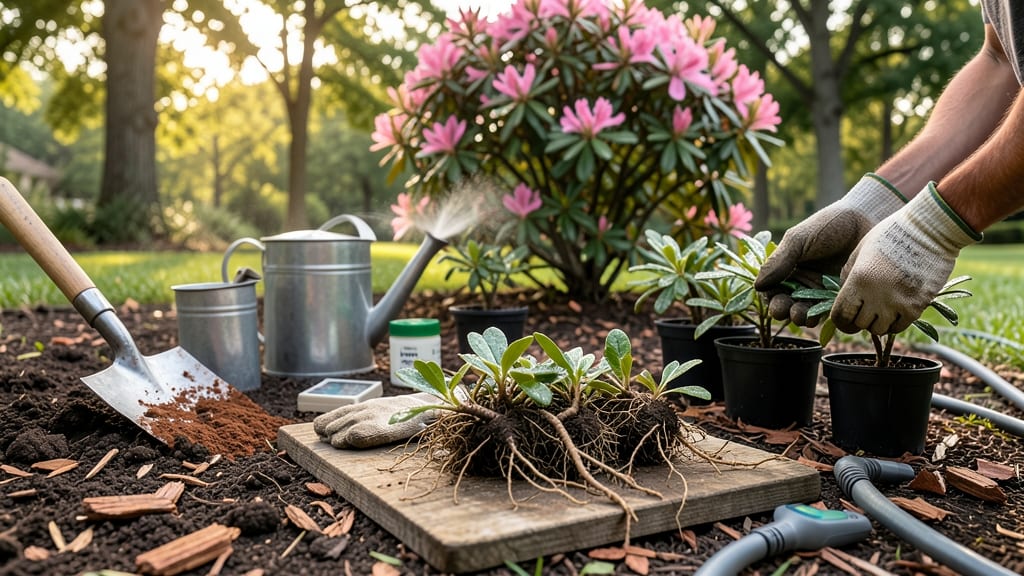
Pro transplanting tip: Dig a hole twice as wide as the root ball but only as deep as the container’s base. This prevents root suffocation while allowing room for root expansion. After planting, water deeply to eliminate air pockets and encourage root contact with soil.
If you’re in North Florida and miss the fall window, early spring (February–March) is your second chance. Central and South Florida gardeners can also plant in late winter (January–February), but avoid peak summer—azaleas hate heat stress and drought.
For container-grown azaleas, timing is less critical, but still aim for cooler months to reduce shock.
One common mistake is planting azaleas in summer, especially in Central or North Florida. The intense sun and high evaporation rates can dry out roots before they establish.
I once planted a batch in July in Orlando—zero survived the first month. Always check your local frost dates and adjust accordingly.
For potted azaleas, timing matters less, but spring or fall still wins. These plants need consistent moisture, so group them in shaded spots and water daily during hot spells. In South Florida, potted azaleas can even thrive year-round with proper shade and mulching.
Remember: Azaleas are acid-loving plants. Test your soil’s pH before planting—aim for 4.5–6.0. If your soil is alkaline, amend it with sulfur or peat moss 2–3 months before planting to give the soil time to adjust. This step is non-negotiable for vibrant blooms.
Finally, mulch generously after planting with 3–4 inches of pine bark or wood chips. This retains moisture, regulates soil temperature, and suppresses weeds—all critical for young azaleas. Replenish mulch annually to maintain its protective benefits.
By following these region-specific guidelines, your azaleas will establish strong roots and reward you with show-stopping blooms for years to come. Happy planting! 🌸
Best months to plant azaleas in Florida by region (North vs Central vs South)
Florida’s three distinct regions—North, Central, and South—each have unique microclimates that dictate the best planting windows for azaleas.
In North Florida, where cooler winters and occasional frost occur, aim for October through November to let roots establish before winter chill. Central Florida’s milder climate extends the window to September through October, while South Florida’s frost-free zone allows planting as early as August through September.
Timing matters because azaleas thrive in cool soil temperatures (below 75°F) to reduce transplant shock. Planting in summer’s scorching heat stresses roots, while late winter (February-March) is a secondary option for North Florida.
Always check your USDA hardiness zone (8a-11 in Florida) to refine timing—Zone 8a (North) needs extra caution against frost.
| Region | Ideal Planting Months | Soil Prep Tip | Key Consideration |
|---|---|---|---|
| North Florida (Zones 8a-8b) | October–November | Amend with peat moss for acidity (pH 4.5-6.0) | Avoid frost risk; mulch heavily |
| Central Florida (Zones 9a-9b) | September–October | Use pine bark fines for drainage | Monitor humidity; space plants for airflow |
| South Florida (Zones 10a-11) | August–September | Add sulfur to neutralize alkaline soil | Provide afternoon shade to prevent leaf scorch |
For container-grown azaleas, timing is slightly flexible—you can plant year-round in South Florida, but fall remains ideal for root growth. If planting in spring, do so by mid-March to avoid summer heat stress.
Always water deeply after planting to encourage root spread, and avoid fertilizing for the first 4-6 weeks to prevent burn.
Pro tip: Test your soil’s pH before planting—azaleas demand acidic conditions (4.5-6.0). If your soil tests higher, mix in sphagnum peat moss or sulfur to adjust. In North Florida, add a 2-3 inch mulch layer of pine straw to insulate roots during winter. In South Florida, prioritize shade cloth to protect young plants from intense afternoon sun.
After planting, monitor for transplant shock (wilting or yellowing leaves) and adjust care accordingly. North Florida azaleas may need winter protection, while South Florida varieties benefit from regular pruning to manage size and encourage blooms.
With the right timing and prep, your azaleas will reward you with vibrant spring blooms for years to come.
🌸