
Plants
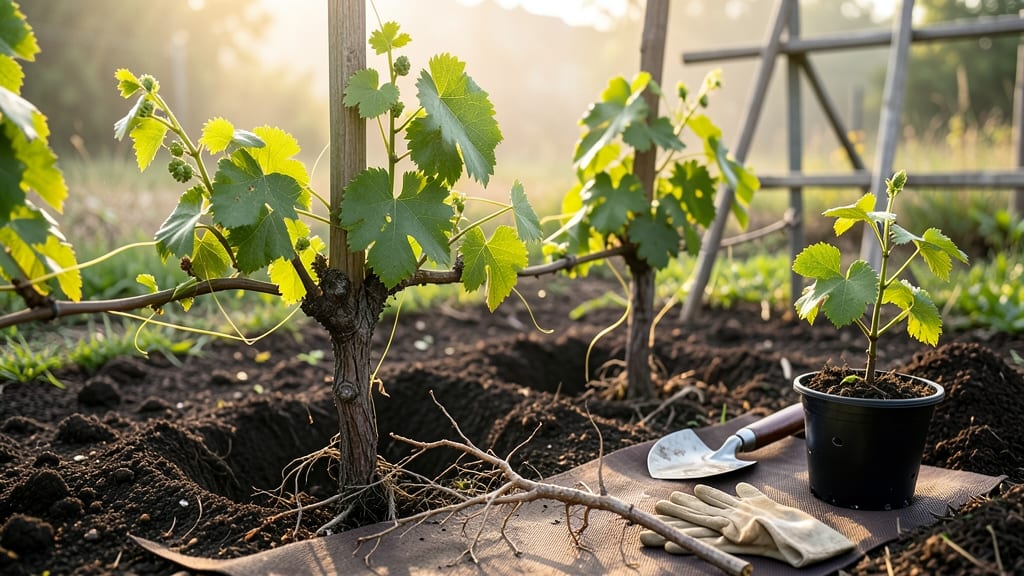
Planting grapes in Texas isn’t just about digging a hole—it’s about outsmarting the state’s unpredictable climate, from scorching summers to sudden freezes that can wipe out young vines in days. Whether you’re in North Texas’s 8a zone or South Texas’s balmy 10b, timing your 🍇 vines for the 7-day frost-free window makes the difference between a thriving orchard and a failed experiment.
Most Texas gardeners swear by late winter to early spring (February–March) for bare-root vines, but fall (September–October) works too—if you pick the right chill-hour varieties for your region. Muscadines thrive in the heat, while vinifera grapes need cooler nights to set fruit.
Miss the window, and you risk weak roots or heat stress before winter dormancy kicks in.
I’ve seen firsthand how a single week of wrong timing can turn a promising vineyard into a sad pile of brown stems. That’s why I’ll break down the exact months to plant based on your Texas zone, plus soil prep tricks to give your grapes the best shot at survival.
Let’s get those vines in the ground the right way.
From North Texas’s early spring rush to South Texas’s extended fall window, we’ll cover frost dates, soil temps, and variety picks so you can harvest plump, juicy grapes by July or October. No guesswork—just proven strategies for Texas growers. Ready to plant like a pro?
Texas grapes planting timeline by chill-hour zone
Texas spans three distinct chill-hour zones, each dictating the perfect window for planting grapes. North Texas (Zone 8a) needs 800-1,000+ chill hours, while Central Texas (Zone 8b-9a) thrives with 500-700 hours, and South Texas (Zone 9b-10b) requires just 300-500 hours.
Choosing the wrong zone for your grape variety can mean poor fruit set or no harvest at all.
For example, Vitis vinifera (like Cabernet Sauvignon) demands 600+ chill hours and performs best in North and Central Texas. Meanwhile, Muscadine grapes (native to Texas) only need 300-400 chill hours, making them ideal for South Texas.
Matching your variety to your zone is the first step to success.
Here’s the critical rule: Plant when soil temps hit 60°F (15°C) and frost risk drops below 10%. In North Texas, that’s late February to early March; in Central Texas, mid-February to late March; and in South Texas, January to early February.
Timing this window ensures roots establish before summer heat arrives.
🌱
| Zone | Chill Hours | Best Varieties | Planting Window | Frost Risk |
|---|---|---|---|---|
| North Texas (8a) | 800-1,000+ | Cabernet Sauvignon, Merlot, Chardonnay | Late Feb - Early Mar | High (Feb 15) |
| Central Texas (8b-9a) | 500-700 | Albariño, Tempranillo, Muscadine | Mid-Feb - Late Mar | Moderate (Mar 15) |
| South Texas (9b-10b) | 300-500 | Scuppernong, Cynthiana, Black Spanish | Jan - Early Feb | Low (Jan 15) |
Pro tip: Use the Texas A&M AgriLife Extension chill-hour calculator to pinpoint your exact zone. Enter your ZIP code, and it’ll show your average last frost date—plant 2-3 weeks after that date for safety.
For example, if your last frost is March 1, aim for March 15-20 to avoid surprise freezes.
Fall planting is another option for potted vines, especially in Central and South Texas. Plant in September-October so roots establish before summer heat. Just ensure soil stays above 55°F (13°C) to prevent root rot.
Microclimates matter too. A sheltered south-facing slope can add 10-14°F of warmth, extending your planting window. Conversely, low-lying areas may experience frost 2-3 weeks later than higher elevations. Always scout your yard for these nuances before planting.
🌿
For container growing (ideal for urban Texas), plant 6-8 weeks earlier than in-ground vines. Containers warm up faster in spring, so late January works for Central Texas. Use black plastic pots to absorb heat and add 3 inches of mulch to retain moisture during Texas’s 100°F+ summers.
Finally, soil prep is non-negotiable. Texas clay holds too much moisture—amend with compost and coarse sand to improve drainage. Test your soil’s pH (6.0-7.0) and add lime or sulfur as needed. Skipping this step leads to root rot or nutrient deficiencies, killing your vines before they bear fruit.
✂️
Step-by-step guide: when to plant grapes in Texas by month
Texas’s diverse climate means your grape planting window depends on where you live—North, Central, or South Texas. For North Texas (USDA Zones 7b-8a), aim for late February to early March after the last frost (typically February 15).
In Central Texas (Zones 8a-9a), plant between mid-March and early April, while South Texas (Zones 9a-10b) gardeners can start as early as January or push to late fall (November) for cooler conditions.
Fall planting (September–October) is ideal for potted vines or regions with mild winters, like South Texas. This gives roots time to establish before winter dormancy. For bare-root vines, late winter planting (February–March) ensures soil is workable and frost risks are low.
Always check soil temperatures—they should be above 50°F (10°C) for 2+ weeks before planting.
📅 Critical 7-Day Window: Each Texas region has a 7-day frost-free window where planting is safest. Use the Texas A&M AgriLife Extension frost maps to pinpoint your local risk. For example, Dallas (North Texas) has its last frost around February 15, so plant bare-root vines by March 1 to avoid cold snaps.
📅 Month-by-Month Texas Grape Planting Guide
- September (South Texas only): Plant potted vines for fall establishment. Soil temps should be 60-70°F (15-21°C). Ideal for Muscadine varieties like 'Scuppernong'.
- October (Central/South Texas): Last chance for fall planting. Amend soil with compost and sulfur if pH is high. Mulch heavily to protect roots.
- November (South Texas only): Plant dwarf varieties in containers for urban gardens. Avoid planting in North/Central Texas—frost risk is high.
- February (North/Central Texas): Prime time for bare-root vines. Soil should thaw to 50°F (10°C). Prune roots if dried out.
- March (All regions): Critical window. Plant Vitis vinifera (e.g., 'Thompson Seedless') after last frost. Stake vines immediately.
- April (South/Central Texas): Late planting for heat-tolerant varieties like 'Crimson Seedless'. Water deeply every 5-7 days.
Pre-planting prep is non-negotiable. Test your soil pH (6.0–6.5) and amend with gypsum for clay soils or peat moss for sandy soils. Choose a south-facing slope for drainage—grapes hate soggy roots.
For container growing, use 5-gallon pots with drainage holes and a well-draining mix (60% soil, 30% compost, 10% perlite).
After planting, mulch with wood chips to retain moisture and regulate soil temps. Water deeply 2–3 times per week for the first month, then taper to weekly deep soaks. Avoid overhead watering to prevent fungal diseases like powdery mildew—use drip irrigation instead.
In North Texas, protect young vines with frost cloth if late frosts linger past March 15.
Timing your grape planting in Texas isn’t just about the calendar—it’s about reading your microclimate. Urban areas like Austin or Houston may have 5–10°F warmer microclimates than rural zones, extending your planting window.
Monitor local chill-hour accumulations (use Texas A&M’s Chill Calculator) to pick varieties that match your region’s winter chill. For example, 'Bluebunch' grapes need 500+ chill hours, while 'Alachua' Muscadines thrive with 300–400 hours.