
Plants
Michigan’s ideal poppy planting timeline by region (last frost dates & soil temps)
Michigan’s three distinct regions create wildly different planting windows for poppies. The Upper Peninsula faces colder springs, while Southern Lower Michigan can plant weeks earlier. Understanding your last frost date and soil temperature (poppies need 50-70°F to germinate) is key to avoiding frost damage or waiting too long.
Poppies thrive in Michigan’s USDA Zones 5b-6b, but microclimates matter. For example, Detroit’s urban heat islands can push planting dates 1-2 weeks earlier than rural areas. Always check your local Michigan State University Extension frost maps for precision.
Here’s how to align your poppy planting with Michigan’s three key regions—plus soil temperature tips to ensure germination success.
For Southern Michigan gardeners, late March is your sweet spot—poppies sown then will bloom by late May or June, just in time for Memorial Day celebrations. In contrast, Upper Peninsula growers should wait until late May to avoid frost nibbling tender seedlings.
Pro tip: Use a soil thermometer to confirm temps. Poppy seeds won’t germinate below 50°F, even if frost isn’t forecasted. I’ve seen seeds sit for weeks in 45°F soil—don’t make that mistake!
Michigan’s fall planting window (August-September) is another secret for extending your poppy season. Seeds sown in early fall will overwinter and bloom in late spring, skipping the unpredictable spring weather entirely. This is especially useful in Zone 5b areas where springs are icy.
Remember: Poppies are annuals in Michigan, so timing matters for one spectacular summer show. Plan to scatter seeds lightly on top of soil—they need light to sprout—and avoid burying them. I’ve seen gardeners accidentally cover seeds with ½ inch of soil, which kills germination.
If you’re eager for earlier blooms, start seeds indoors in late February (more on this in the next section). Just be prepared to harden off seedlings carefully before transplanting after the last frost. Poppies hate root disturbance, so direct sowing is often easier.
Finally, watch for Michigan’s “false springs”—those warm spells in March that trick you into planting early. Wait until nighttime temps stay above 40°F consistently before sowing. I’ve lost entire poppy batches to late-April frosts after false springs lured me into planting too soon.
How to extend Michigan’s poppy season: direct sowing vs. indoor starts
Michigan’s short growing season can feel like a race against time for poppy lovers, but with the right strategy, you can push those vibrant blooms to appear weeks earlier—or even later in the season.
The key lies in balancing direct sowing outdoors with indoor starts, plus smart use of frost blankets and microclimates to protect tender seedlings.
Most poppy varieties thrive when direct-sown outdoors, but cooler Michigan springs can slow germination. Starting seeds indoors gives you a 4-6 week head start, letting you plant outdoors as soon as soil warms to 50°F+.
For fall plantings, indoor starts can extend the season into early October before frost hits.
Here’s how to decide which method works best for your Michigan garden—and when to use frost blankets to buy extra time:
Direct Sowing Outdoors
✅ Pros
- Hardier seedlings—no transplant shock
- Cheaper—no indoor setup needed
- Better for fall plantings—avoids overcrowding
❌ Cons
- Slower germination in cool soil (<50°F)
- Risk of frost damage to young sprouts
- Limited to frost-free windows
Indoor Starts
✅ Pros
- Earlier blooms (4-6 weeks ahead)
- Controlled conditions—faster germination
- Fall extension possible (plant indoors in July)
❌ Cons
- Transplant shock risk if hardened off poorly
- Requires grow lights for strong seedlings
- More expensive—supplies and space needed
For direct sowing outdoors, aim to plant poppy seeds as soon as the soil reaches 50°F—typically mid-April in Southern Michigan and late April to early May in the UP.
Use a frost blanket to protect seedlings if nighttime temps dip below 40°F, especially for California poppies or Iceland poppies, which are more frost-sensitive.
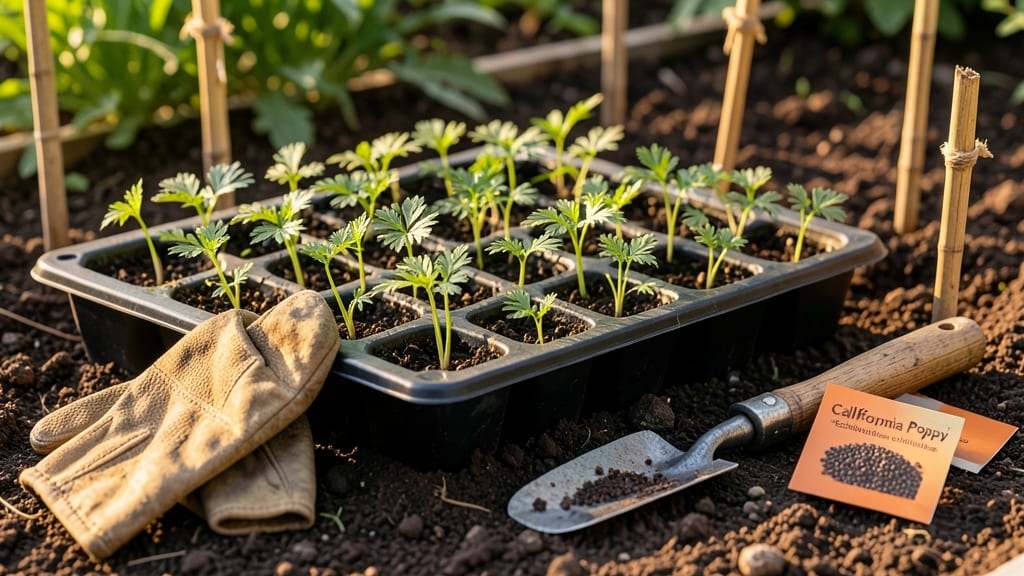
If you choose indoor starts, begin seeds 6-8 weeks before your last frost date (e.g., mid-February for Southern Michigan, early March for the UP). Use seed-starting trays with well-draining mix and place under grow lights (poppies need 12-14 hours of light daily).
Harden off seedlings for 7-10 days before transplanting outdoors after the last frost.
Pro tip: Use microclimates—like sunny south-facing walls or raised beds—to create warmer pockets where poppies can germinate 1-2 weeks earlier than the rest of your garden. Pair this with row covers for extra insulation, and you’ll see blooms 3-4 weeks ahead of schedule!