
Plants
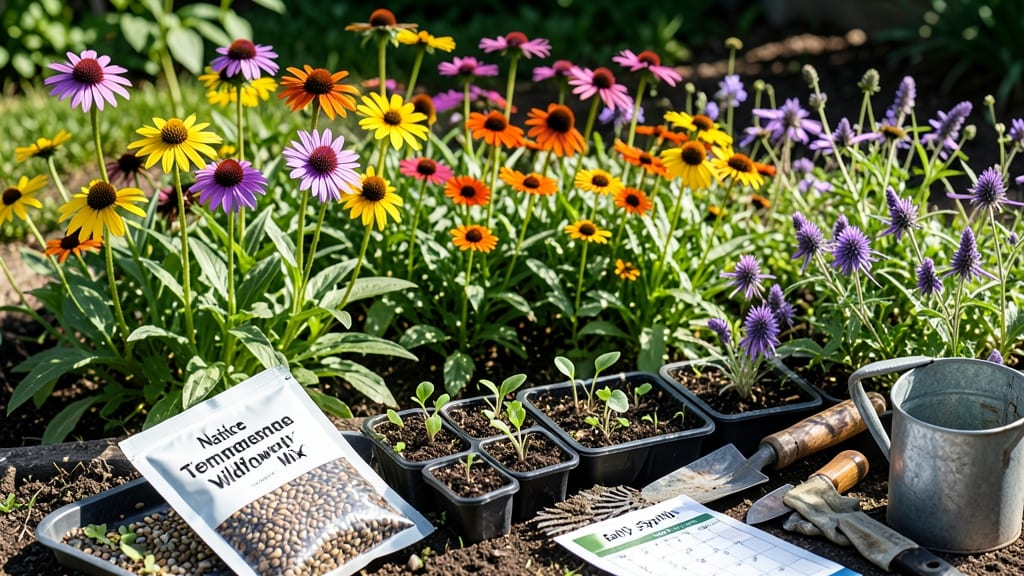
Timing your wildflower seed planting in Tennessee isn't just about following a calendar—it's about outsmarting the region's unpredictable weather.
Whether you're in the cooler Appalachian hills or the warmer Mississippi Delta, getting those seeds in the ground at the right moment means the difference between a vibrant meadow and a sad, frost-bitten disappointment.
Most gardeners know spring is prime time, but did you realize fall planting often yields better results? The key is understanding your local microclimate—where frost lingers longer or where summer heat arrives early.
I'll show you exactly when to plant in each Tennessee zone to maximize those 🌼 blooms all season long.
We're talking science-backed windows that account for soil temperatures, last frost dates, and even rainfall patterns. No more guessing games—just proven strategies that work for Tennessee's diverse landscapes. Let's get those seeds in the ground at the perfect moment for your region.
Ready to transform your yard into a pollinator paradise? I'll walk you through everything from soil prep to post-planting care, so you can enjoy wildflowers from spring through fall. The best time to plant is now—let's make it count!
Optimal planting windows by Tennessee region: frost dates and microclimate zones
Tennessee’s three distinct regions—East, Middle, and West—each have unique frost patterns that dictate the best time to plant wildflower seeds. The Appalachian foothills in East TN (USDA zones 6a-7a) experience later springs, while West TN’s Mississippi Delta (zones 7b-8a) warms up faster.
Understanding these differences ensures your wildflowers thrive from the first bloom.
For East Tennessee, aim to plant between mid-March and early April after the last average frost date (typically March 15). The cooler climate favors perennial wildflowers like black-eyed Susans and coneflowers, which establish roots slowly.
In Middle Tennessee, with its rolling hills and zone 7a classification, you can start as early as late February but should wait until soil temperatures reach 60°F+.
West Tennessee’s warmer microclimate (zones 7b-8a) allows for earlier planting, often by mid-February. This region’s longer growing season supports annuals like cosmos and zinnias, which bloom quickly.
However, late frosts can still occur, so monitor local forecasts closely. Fall planting (August-September) works across all regions, giving seeds time to germinate before winter dormancy.
Key frost-free dates to remember:
- East TN: Last frost March 15, first frost November 15
- Middle TN: Last frost March 1, first frost November 1
- West TN: Last frost February 15, first frost October 15
| Region | USDA Zone | Spring Planting Window | Fall Planting Window | Soil Temp Goal (°F) |
|---|---|---|---|---|
| East Tennessee | 6a-7a | Mid-March to Early April | August to Mid-September | 60-65°F |
| Middle Tennessee | 7a | Late February to Early March | Late August to Early October | 60-70°F |
| West Tennessee | 7b-8a | Mid-February to Early March | July to Early September | 65-75°F |
In East Tennessee’s higher elevations, focus on shade-tolerant species like trillium and bloodroot, which thrive in partial shade and cooler temperatures. These wildflowers often bloom earlier in the season, taking advantage of the region’s longer daylight hours in spring.
Middle Tennessee’s rolling hills are ideal for a mix of sun-loving annuals and perennials, while West Tennessee’s warmer, drier climate supports drought-resistant varieties like blanket flower and coreopsis.
For annual wildflowers, which complete their life cycle in one season, timing is critical. Plant in late winter to early spring (February-April) for summer blooms, or in late summer (August) for fall color.
Perennials, like purple coneflower or butterfly weed, benefit from fall planting, as it allows roots to establish before summer heat arrives.
Use a soil thermometer to verify conditions—ideal germination temperatures for most wildflower seeds range from 60°F to 70°F. In West Tennessee, where soils warm quickly, you can plant earlier, but avoid sowing too soon in East Tennessee, where late frosts are common.
Always check your local Cooperative Extension Service for region-specific updates.
My top pro tip: Mark your calendar for the average last frost date in your area and wait 2-3 weeks before planting. This buffer period accounts for Tennessee’s unpredictable spring weather patterns and gives seeds the best chance to establish before summer’s intense heat.
🌼
How to adjust planting for Tennessee’s unpredictable weather patterns
Tennessee’s weather can throw a curveball—one week you’re planting in 60°F soil, the next you’re scrambling to cover seeds after a late frost. The key is flexibility.
Most wildflower seeds germinate best in soil temperatures between 60-70°F, but Tennessee’s spring can be a rollercoaster, especially in East Tennessee’s higher elevations where frost lingers until mid-April.
Start by testing your soil temperature with a simple soil thermometer (or press your hand into the soil—if it’s warm like a fresh cup of tea, it’s ready). For annual wildflowers, aim for planting when daytime highs consistently stay above 55°F for at least a week.
This usually lands in late March to early April for most of the state, but West Tennessee’s warmer zones can start as early as February.
🌱 Pro Tip: If your area has a history of late frosts (like the Cumberland Plateau), opt for fall planting in September. Many native wildflowers, like black-eyed Susans and cone flowers, establish roots in fall and bloom earlier the next spring.
This strategy also gives you a head start on pollinator-friendly blooms when bees wake up from winter.
Don’t let Tennessee’s unpredictable weather derail your wildflower dreams. If you miss the spring window, fall planting is your backup plan. Many perennial wildflowers, like purple coneflower and butterfly weed, thrive when sown in late summer.
They’ll establish roots before winter and reward you with bold blooms next spring.
🌿 Remember: Wildflowers are low-maintenance champions. They’ll forgive a little late planting, but they’ll thrive when you give them the right soil conditions and a little patience.
Start with a small test patch—say, a 3x3 foot area—to see how your local microclimate behaves before committing to a full meadow.
☀️ For West Tennessee’s warmer zones (like Memphis or Nashville’s lowlands), you can even push planting into early November for winter-blooming varieties like winter aconite. Just monitor soil moisture—drought in winter can stress young plants. With these strategies, you’ll turn Tennessee’s weather quirks into wildflower wins!