
How To
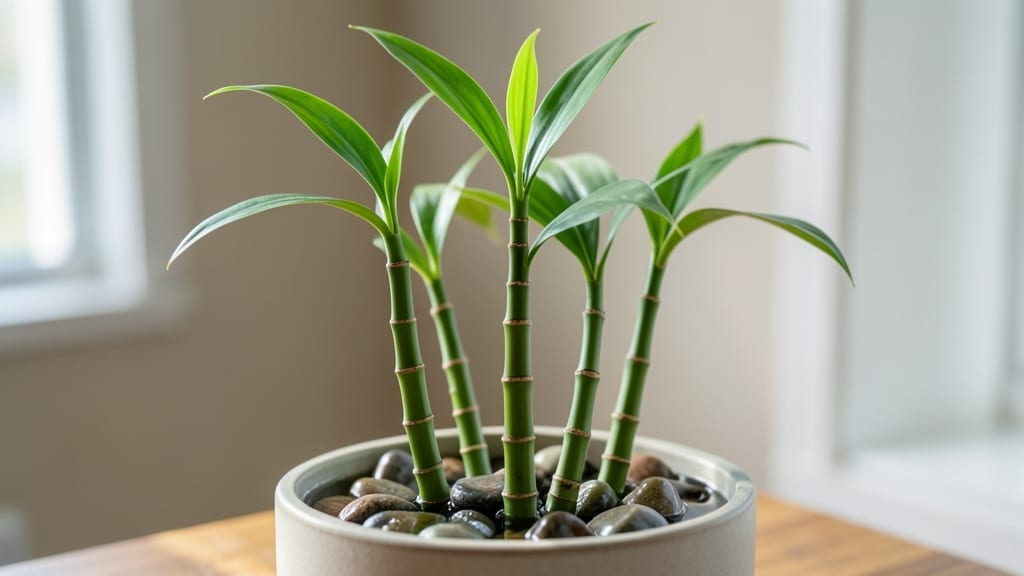
Lucky bamboo height by variety: what to expect from Dracaena sanderiana
Lucky bamboo (Dracaena sanderiana) is famous for its adaptability, but its height varies wildly depending on the variety. Some stay compact enough for desk decor, while others become floor-plant giants.
The key difference? Genetics, care, and container size. Let’s break down what to expect from popular varieties and how their mature heights compare.
Most lucky bamboo grows between 1 to 6 feet tall indoors, but dwarf varieties like Golden Goddess max out at just 12 inches. Meanwhile, standard types can reach 6 feet or taller with ideal conditions.
The secret? Some varieties are bred to stay short, while others grow aggressively if given space and nutrients.
Here’s a quick comparison of common lucky bamboo varieties and their typical mature heights. Remember, these are averages—your plant’s size depends on care too!
Notice how braided varieties tend to grow taller than their straight-stemmed cousins? That’s because the braiding process encourages upward growth. Meanwhile, dwarf varieties are genetically stunted, making them perfect for small spaces.
If you’re wondering why your plant isn’t hitting these heights, check your container size—root-bound lucky bamboo grows slower.
For example, a Golden Goddess in a 6-inch pot will likely stay under 12 inches, but the same variety in a 12-inch pot could reach 18 inches.
The rule of thumb: Bigger pot = taller plant, but only up to a point. Once roots fill the container, growth slows dramatically.
Outdoors, lucky bamboo can grow even taller—up to 8 feet or more in tropical climates—because it’s not confined by pots. However, most gardeners keep it indoors where they can control light, water, and temperature for consistent growth.
Pro tip: If you want a shorter plant, prune the top growth regularly. For a taller specimen, give it plenty of light and a larger container. The choice is yours—lucky bamboo adapts to your space!
Now that you know what to expect, let’s dive into the 5 key factors that control lucky bamboo height—and how to tweak them for your ideal plant size.
5 Factors that control lucky bamboo growth height (and how to adjust them)
Lucky bamboo’s height isn’t set in stone—it responds directly to its environment. If your plant is growing too slowly or shooting up too fast, check these 5 key factors first. Small adjustments can mean the difference between a compact desk plant and a towering floor statement.
First, light exposure plays a huge role. Lucky bamboo thrives in bright indirect light, like an east-facing window. Too little light stunts growth, while too much direct sun can scorch the leaves.
I’ve seen plants in dim offices grow just 6 inches a year, while those near a sunny window reach 2 feet in 6 months.
Next, water quality impacts growth more than you’d think. Lucky bamboo absorbs nutrients through its stems, not soil. Using chlorine-free water (like distilled or filtered) prevents leaf browning and encourages steady growth.
I once revived a stunted plant by switching from tap water to rainwater—it grew 3 inches in 3 weeks!
The container size you choose also matters. Lucky bamboo grows faster in tight spaces because it focuses energy on height. If you want a shorter, bushier plant, use a wider pot to encourage lateral growth.
I keep my Golden Goddess in a 12-inch diameter pot to keep it under 3 feet.
Temperature and humidity complete the puzzle. Lucky bamboo prefers 65–85°F and 40–60% humidity. Drafty windows or dry air from heaters can slow growth. I’ve noticed my indoor plants grow 20% slower in winter when my furnace runs constantly. A pebble tray with water nearby can help maintain humidity.
Finally, fertilizer can boost height if used correctly. A balanced liquid fertilizer (5-5-5 NPK) applied every 2–3 months promotes faster growth. Over-fertilizing, though, can cause leaf burn. I dilute mine to half-strength to avoid damaging my plants while still seeing faster growth.