
Companion Plants
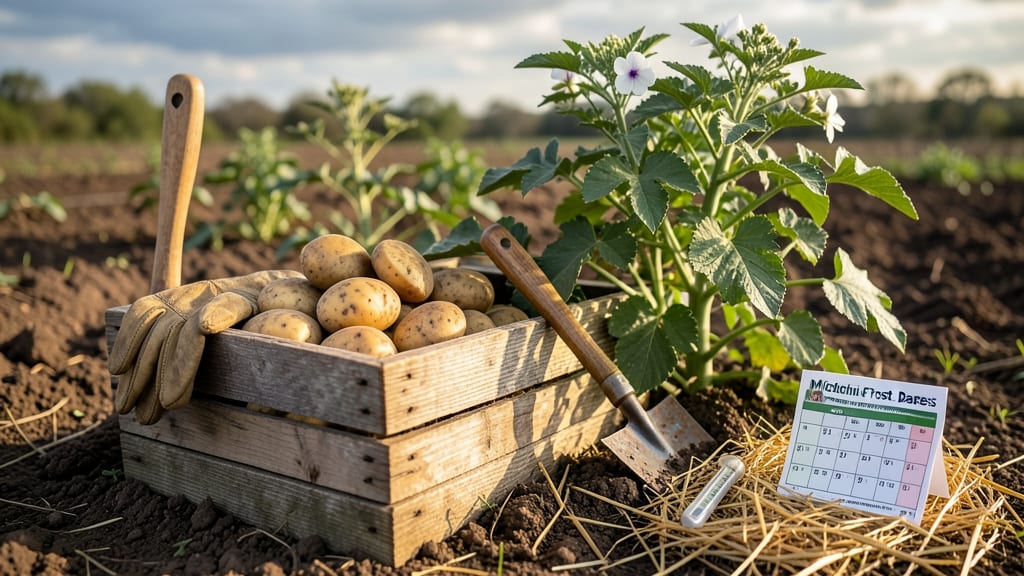
Michigan potato planting dates by last frost timeline (Zone 5 guide)
Michigan’s Zone 5 climate means potato planting hinges on last frost dates, which vary wildly from southern Michigan (April 15) to the Upper Peninsula (May 15). The key number to track is 45°F soil temperature—potatoes need this warmth to sprout reliably.
Check your local USDA Plant Hardiness Map for precision, but most gardeners aim to plant 2-4 weeks before the average last frost.
For southern Michigan (Detroit, Lansing), that’s typically early to mid-April. In central Michigan (Grand Rapids), wait until late April. The Upper Peninsula (Marquette, Houghton) often waits until early May due to later frost risks.
Pro tip: Use row covers if planting earlier than recommended to protect tender sprouts.
Don’t fall for the St. Patrick’s Day (March 17) superstition—this Irish tradition doesn’t align with Michigan’s climate. Planting this early often leads to frost damage or slow germination.
Instead, focus on soil workability: Stick your finger in the ground—if it’s crumbly and dry enough to form a ball, it’s time to plant.
Here’s the critical timeline for Michigan gardeners: Plant seed potatoes 2-4 inches deep when soil hits 45°F, then cover with 3-4 inches of straw or mulch as vines grow. This protects tubers from light exposure (greening) and keeps soil moist.
| Region | Avg. Last Frost | Planting Window | Soil Temp. Goal | Key Risk |
|---|---|---|---|---|
| Southern MI (Detroit, Ann Arbor) | April 15 | Early April | 45°F+ | Late frost |
| Central MI (Lansing, Grand Rapids) | April 25 | Late April | 45°F+ | Slow soil warming |
| Northern MI (Traverse City, UP) | May 10 | Early May | 45°F+ | Short growing season |
| All Regions (Container Gardening) | April 1 - May 15 | Flexible (use heat mats) | 50°F+ | Overwatering |
If you’re new to Michigan gardening, start with early-maturing varieties like ‘Yukon Gold’ (90 days) or ‘Red LaSoda’ (70 days). These handle shorter seasons better than Russet Burbanks (110+ days). For succession planting, stagger plantings every 2 weeks to extend harvests through July and August.
Watch for false springs—those warm spells in March that trick you into planting early. A late frost can wipe out young sprouts. Use frost cloth or plant in low-lying areas where cold air settles last.
In humid Michigan summers, prioritize well-draining soil to prevent blight, which thrives in wet conditions.
For container growers, plant in 5-gallon buckets with high-quality potting mix and use heat mats to warm soil faster. Containers let you plant 2-3 weeks earlier than in-ground beds, giving you a head start in cooler regions. Just ensure pots have drainage holes to avoid waterlogged tubers.
Remember: Michigan’s growing season is short—aim to harvest by mid-September in most areas. Late plantings risk stunted tubers or pest pressure from Colorado potato beetles. Plan ahead by chitting (sprouting) seed potatoes indoors in late February for a jumpstart.
🌱 For extra insurance, plant a test row 2 weeks early—if it survives, the rest of your crop likely will too.
How to adjust planting dates for early vs. late potato varieties in Michigan
Michigan’s short growing season demands careful planning when choosing potato varieties. Early varieties like red potatoes (e.g., Red LaSoda) mature in just 70-90 days, while late varieties like Russet Burbank need 100+ days.
Planting the wrong type at the wrong time means either frost damage or tubers that never fully develop.
For early varieties, aim to plant 2-3 weeks before your region’s last frost date (typically mid-April in southern Michigan). This gives them time to mature before summer heat arrives. In northern Michigan, where frost lingers longer, delay planting until late April or early May to avoid cold-soil struggles.
Mid-season varieties like Yukon Gold strike a balance—plant them 2-4 weeks after your last frost date. This timing ensures they’ll be ready for harvest before Michigan’s humid summers trigger blight. In the Upper Peninsula, this might mean waiting until late May.
Late varieties like Russets need the longest season. Plant them as soon as soil warms to 45°F (usually early April in southern Michigan). In cooler zones, opt for early-maturing Russets like Kennebec to avoid late-season risks.
🌱 Pro Tip: Use succession planting to extend your harvest. Plant early varieties in March-April, mid-season in May, and late varieties in late April. This spreads out your harvest and reduces blight exposure.
Here’s how Michigan’s climate zones affect timing:
🌿 Variety Recommendations: Stick to Michigan-friendly types like Chippewa (early), LaRouche (mid-season), or Kennebec (late). These thrive in Michigan’s climate and resist common diseases like late blight.
If you miss the ideal window, don’t panic! Cover young plants with frost blankets or use row covers to protect them during late frosts. Just remember: soil temperature matters more than air temperature—wait until it’s consistently above 45°F for best results.