
How To
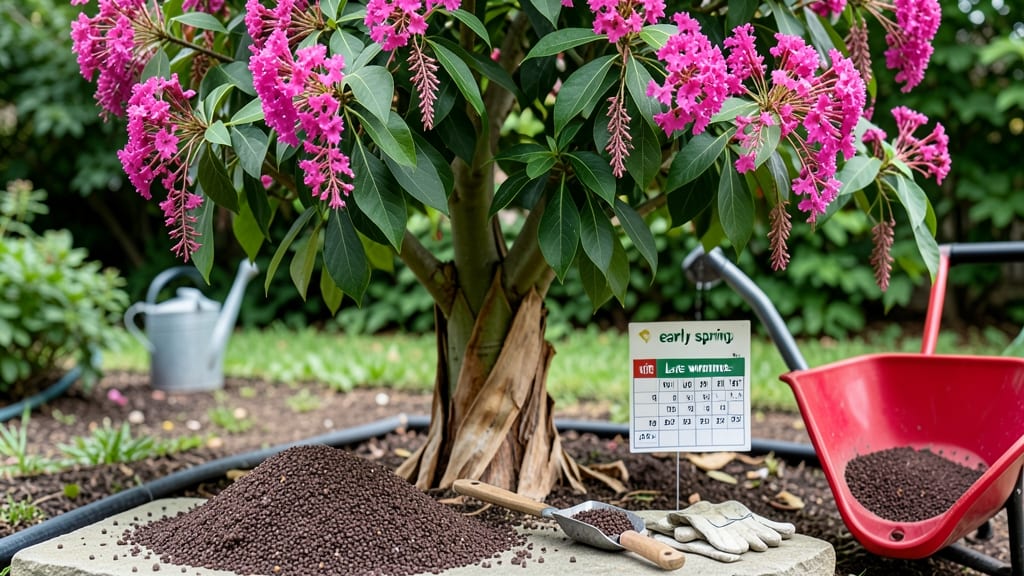
When to fertilize crepe myrtle is the secret to those jaw-dropping blooms that make neighbors stop and stare. Skip the wrong moment, and you might end up with weak growth or even harm your tree—so let me show you exactly when to feed for maximum impact.
Most gardeners make one critical mistake: fertilizing too late in spring or ignoring fall prep entirely. The key is feeding your Crepe Myrtle when it’s hungry—typically early spring before buds swell and again after flowering in late spring. This two-step approach fuels both root development and vibrant blooms.
But here’s where it gets interesting: warmer climates might need an extra feeding in early summer, while established trees in Zone 6a can thrive with just those two spring applications. We’ll break down the exact schedule, plus how to choose the right fertilizer to avoid overdoing it.
Ready to transform your yard from "meh" to "wow"? Let’s dive into the science-backed timing that’ll have your Crepe Myrtle looking like a million bucks—without the guesswork.

Best times to fertilize crepe myrtle for maximum bloom growth
Timing your crepe myrtle fertilization is everything—apply it at the wrong time, and you’ll either stunt growth or waste nutrients. The best windows are early spring and late fall, but young trees and mature specimens have slightly different needs.
Let’s break down the science-backed schedule that’ll turn your tree into a blooming powerhouse.
Crepe myrtles thrive when fed during their active growth phases, which aligns with spring bud break and early summer. Avoid fertilizing in late summer or fall, as this forces new growth that won’t harden off before winter, leaving your tree vulnerable to frost damage.
Think of it like giving your tree a spring vitamin shot and a fall root tonic—no mid-year snacks!
Here’s the golden rule: Fertilize when buds swell in spring (typically March-April in most zones) and skip summer feeding unless you’re using a slow-release organic option.
The myth that mid-summer feeding boosts blooms? It’s just that—a myth. Over-fertilizing then leads to weak wood and fewer flowers next season.
| Season | Fertilization Window | Tree Stage | Fertilizer Type | Key Cue |
|---|---|---|---|---|
| Early Spring | March-April | Young & Mature | Balanced 10-10-10 | Bud swell begins |
| Late Spring | May-June | Established Trees | Slow-release organic | Post-bloom foliage flush |
| Summer | July-August | None (except young) | Avoid synthetic | Heat stress risk |
| Fall | October-November | Mature Trees Only | Potassium-rich | Leaf color change |
| Winter | December-February | Dormant | None | Frost protection |
For young crepe myrtles (under 3 years old), focus on spring feeding only—they need gentle nourishment to establish roots. Use a half-strength fertilizer in early spring and skip summer applications entirely.
Mature trees (3+ years) can handle a second light feeding in early summer, but only if they’ve already bloomed and show signs of nutrient depletion.
Pro tip: Test your soil first—crepe myrtles often thrive in slightly acidic to neutral soil (pH 6.0-7.0). If your soil is too alkaline, the tree can’t absorb nutrients efficiently, making fertilization a waste. A simple $20 soil test kit from your local garden center solves this mystery.
Regional adjustments matter! In warmer climates (Zones 8-10), fertilize in late winter (February) to sync with earlier bud break. In cooler zones (6-7), wait until after last frost (usually mid-April) to avoid frost damage to new growth.
Always check your local frost dates—your crepe myrtle’s survival depends on it.
One common mistake? Over-fertilizing in summer to “boost” blooms. This backfires by producing weak, floppy branches that snap in storms. Instead, focus on root health with compost or mycorrhizal fungi in late summer to prep for next year’s blooms.
Remember: Less is more with crepe myrtles. A well-timed spring feeding and proper fall mulching will give you bigger blooms and healthier wood than monthly summer fertilizing ever could. Your tree will thank you with vibrant pink, purple, or white flowers that last all summer!
Best times to fertilize crepe myrtle for maximum bloom growth
Timing your crepe myrtle fertilization is everything—like catching a wave at just the right moment. The ideal window is early spring, right as buds begin to swell, which typically falls between late March and April in most regions.
This kickstarts vigorous growth before summer’s heat sets in. For young trees (under 3 years old), a second light feeding in early summer can support leaf and stem development.
Many gardeners mistakenly fertilize in mid-summer, but this can lead to excessive leafy growth at the expense of blooms. Crepe myrtles are summer bloomers, and overfeeding during this time disrupts their natural flowering cycle.
Instead, focus on root strengthening in late fall—a light application of organic matter helps prepare the tree for winter dormancy.
Here’s the golden rule: Never fertilize after mid-August. This gives your tree time to harden off before winter, preventing tender new growth that could freeze. In warmer climates (Zones 8-10), you might extend feeding into early fall, but always stop by 6-8 weeks before first frost.
For newly planted crepe myrtles, hold off on fertilization until the second spring—their roots are still establishing, and too much nutrient can stress them. Instead, focus on watering deeply and mulching to encourage root spread.
Once established, your tree will thrive with minimal feeding, but that one perfect spring application makes all the difference in bloom quality.
Pro tip: If your crepe myrtle blooms later than usual, it might be a sign of under-fertilization the previous spring. Next year, time your feed 2-3 weeks earlier to align with bud development. And always water thoroughly before and after applying fertilizer to prevent root burn.
Remember, crepe myrtles are low-maintenance once established—over-fertilizing is far riskier than under-fertilizing. When in doubt, less is more, especially as your tree matures. A well-timed spring feed is your secret weapon for show-stopping blooms every summer.