
Plants
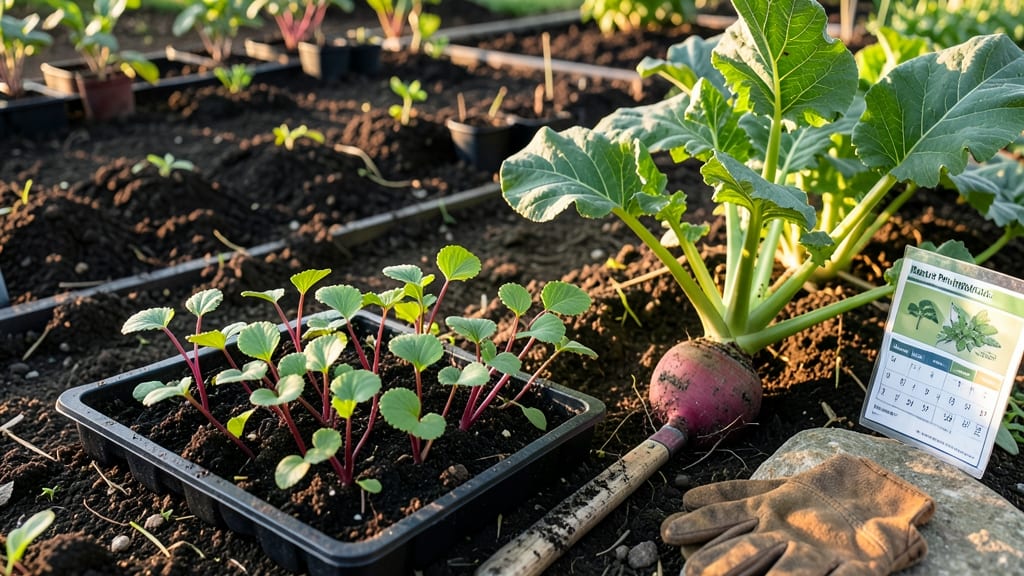
Oregon’s beet planting calendar by USDA Zone (coastal vs. inland timing)
Oregon’s USDA Zones 7b-9a create dramatic differences in beet planting success. Coastal areas like Astoria and Portland have milder winters, while inland zones like Bend and Redmond experience earlier frosts. Understanding these microclimate differences ensures your beets grow sweet and tender rather than bitter or stunted.
Beets thrive when soil temperatures reach 40°F (4°C)—a critical threshold for germination. In Oregon, this typically occurs between late February and early April, depending on your location.
Planting too early in cold, wet soil can lead to rotten seeds or slow growth, while waiting too long risks bolting (premature flowering) in summer’s heat.
For coastal Oregon (Zones 7b-8a), your planting window stretches from mid-March to early May, with a second chance in late August for fall harvests.
Inland areas (Zones 8b-9a) should start 2-3 weeks earlier in late February to early March, with a fall window of mid-August to early September.
Here’s how to align your planting with Oregon’s frost-free windows and soil temperature thresholds for foolproof beet growth:
For coastal gardeners, focus on March and April for spring plantings, as cooler ocean breezes delay soil warming. Inland areas can start 2-3 weeks earlier thanks to faster soil warming. Always check your local frost dates—Oregon’s Oregon State University Extension Service provides updated forecasts.
Pro tip: Use a soil thermometer to confirm temperatures before planting. Beets won’t germinate below 40°F (4°C), and waiting for 50°F (10°C) speeds up growth. In Zone 9a (e.g., Hermiston), you can even plant early February under row covers for a head start.
For fall harvests, aim to plant 8-10 weeks before your first frost. Inland areas should plant by mid-August, while coastal zones can extend to early October. Choose cold-hardy varieties like ‘Detroit Dark Red’ or ‘Golden’ for late-season success.
Remember: Beets are cool-season crops, so avoid planting during summer’s peak heat (July-August). Instead, use shade cloth or focus on succession planting in spring and fall for continuous harvests.
🌱
How to extend your beet harvest in Oregon (successive planting guide)
Oregon gardeners can enjoy fresh beets from early summer to late fall by using a successive planting strategy. This means planting seeds in 3-4 waves spaced 2-3 weeks apart, ensuring a continuous harvest instead of one big crop.
The key is timing these plantings to avoid bolting (going to seed) during summer's heat or freezing before roots mature.
Start your first planting in early March for coastal areas or late March in inland zones. Then, follow up with two more plantings in April and a final one in mid-August to capture the fall harvest window.
This staggered approach works because beets grow quickly—50-70 days to maturity—so you can squeeze multiple crops into Oregon's growing season.
For hot inland areas like Redmond or Bend, use shade cloth (30-50%) during peak summer months to prevent bolting. Coastal gardeners in Portland or Astoria can skip this step, but watch for excessive rain that can cause rot.
Always choose cold-hardy varieties like Detroit Dark Red or Golden for fall plantings to handle Oregon's early frosts.
Here’s how to time your plantings for maximum success in Oregon’s climate:
Don’t forget to harvest regularly to encourage new growth. Beets left in the ground too long become woody and tough. For baby beets, harvest when roots are 1-2 inches in diameter—these are perfect for salads!
Larger roots (2-3 inches) are ideal for roasting or pickling and can store well in a cool, dark root cellar through winter.
With this method, you’ll enjoy homegrown beets for 5-6 months—from late spring to late fall—without the risk of bolting or frost damage. Just remember: consistent soil moisture and proper spacing are your best tools for success in Oregon’s unpredictable climate. 🌱